Fixed vs Programmable Automation
Fixed vs Programmable Automation: Understanding the Key Differences in Industrial Manufacturing
Industrial automation has reshaped modern manufacturing. From automotive assembly plants to electronics factories, automation technologies allow industries to produce goods faster, more consistently, and with far fewer errors than manual production systems.
However, automation is not a single technology or approach. In manufacturing engineering, two of the most commonly discussed automation strategies are fixed automation and programmable automation. Each approach serves a different purpose depending on production volume, product variability, and manufacturing flexibility.
Understanding the differences between these two automation models helps manufacturers choose the right production strategy for their operations. In this guide, we will explore fixed vs programmable automation, explain how they work, compare their advantages and limitations, and identify which industries use each system.
Understanding Industrial Automation in Manufacturing
Industrial automation refers to the use of machines, control systems, robotics, and software to operate industrial processes with minimal human intervention. Automation technologies allow factories to monitor production, control equipment, and maintain consistent product quality.
Automation systems typically include several core components:
- Sensors to measure process variables
- Controllers such as PLCs or industrial computers
- Communication networks connecting machines
- Actuators that perform mechanical tasks
- Monitoring systems such as SCADA and HMI
Together, these technologies create automated systems that improve productivity and reduce operational costs.
Within manufacturing automation, systems are often classified based on their flexibility and production volume. Fixed automation and programmable automation represent two of the most widely used approaches in industrial production environments.
What Is Fixed Automation?
Definition of Fixed Automation
Fixed automation—also known as hard automation—is a manufacturing system designed to perform a specific sequence of operations repeatedly with little or no variation. The production equipment is custom-built and configured to produce a single product or a very limited range of products.
In these systems, the processing steps are built directly into the equipment configuration. Because the sequence of operations is fixed, modifying the system to produce a different product can be difficult and costly.
Fixed automation is therefore most suitable for large-scale manufacturing where product demand is stable and production volumes are very high.
How Fixed Automation Works
In a fixed automation system, production equipment is arranged in a predetermined sequence. Each machine performs a dedicated task as products move along the production line.
A typical process includes:
- Raw materials entering the production system
- Machines performing specialized tasks such as cutting, shaping, or assembling
- Conveyor systems transferring parts between workstations
- Finished products exiting the line for packaging or distribution
Because each workstation performs a single operation repeatedly, fixed automation systems can achieve extremely high production speeds.
Examples of Fixed Automation in Industry
Fixed automation is widely used in industries that produce large quantities of identical products.
Common examples include:
- Automotive assembly lines
- Beverage bottling plants
- Packaging production lines
- Chemical processing plants
- Metal stamping and machining transfer lines
For example, automobile manufacturing plants often use robotic welding systems that perform the same welding operations thousands of times each day.
Advantages of Fixed Automation
Fixed automation offers several important benefits for large-scale manufacturing operations.
High Production Rates
Fixed automation systems are optimized for speed. Because each machine performs a dedicated task, production can run continuously at very high output levels.
Low Unit Cost
Although the initial investment may be significant, the cost per unit becomes very low when production volumes are extremely high.
Consistent Product Quality
Automated machines perform tasks with high precision and repeatability, ensuring consistent product quality.
Limitations of Fixed Automation
Despite its efficiency, fixed automation also has some limitations.
Limited Flexibility
Fixed automation systems are difficult to modify when product designs change.
High Initial Investment
The equipment used in fixed automation is often custom-designed, requiring substantial upfront investment.
Difficult System Modifications
Reconfiguring a fixed automation line may require major equipment redesign or replacement.
Because of these limitations, fixed automation is best suited for mass production environments with stable product designs.
What Is Programmable Automation?
Definition of Programmable Automation
Programmable automation is a manufacturing approach in which production equipment can be reprogrammed to perform different tasks or produce different products.
Instead of relying on dedicated machinery, programmable automation uses general-purpose equipment controlled by software programs. These programs define the sequence of operations performed by the machines.
When a new product needs to be manufactured, engineers modify the control program rather than rebuilding the equipment.
Programmable automation is therefore ideal for batch production environments where product designs change periodically.
How Programmable Automation Works
In programmable automation systems, machines are controlled by digital programs.
These systems typically rely on technologies such as:
- Programmable Logic Controllers (PLCs)
- Computer Numerical Control (CNC) machines
- industrial robots
- computer-based control systems
When a manufacturer needs to produce a different product, engineers update the control program and adjust machine settings accordingly.
However, the production system usually requires some downtime during this reprogramming process.
Examples of Programmable Automation
Programmable automation is widely used in industries that produce products in batches rather than continuous mass production.
Common applications include:
- CNC machining centers
- industrial robotic assembly
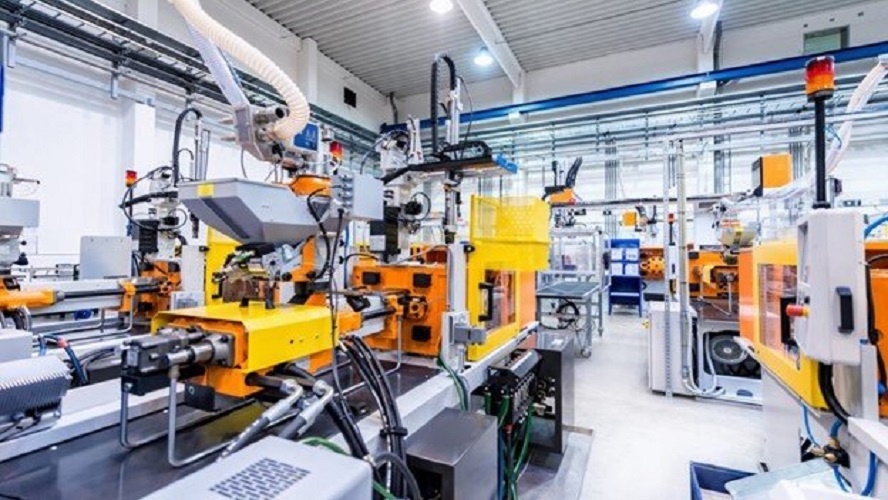
- injection molding machines
- electronics manufacturing
- steel rolling mills
For instance, a CNC milling machine can produce multiple types of parts by simply loading different machining programs.
Advantages of Programmable Automation
Programmable automation offers several benefits for manufacturers who require flexibility.
Greater Production Flexibility
Machines can be reprogrammed to manufacture different products without replacing equipment.
Efficient Batch Production
Programmable automation works well for medium production volumes where product designs change periodically.
Adaptability to Product Design Changes
Manufacturers can update machine programs as product designs evolve.
Limitations of Programmable Automation
Although programmable automation provides flexibility, it also has some limitations.
Lower Production Speed
Production rates are typically lower than fixed automation systems designed for continuous mass production.
Setup Time Between Batches
Machines must be reprogrammed and configured when switching between product batches.
Skilled Personnel Requirements
Programmable automation systems require engineers and technicians who understand programming and industrial control systems.
Fixed vs Programmable Automation: Key Differences
Understanding the difference between fixed and programmable automation is essential when designing a manufacturing system.
The most important differences include production volume, system flexibility, and equipment configuration.
Production Volume
Fixed automation is designed for extremely high production volumes where the same product is manufactured repeatedly.
Programmable automation is better suited for batch production where different products may be produced in smaller quantities.
System Flexibility
Fixed automation systems are highly specialized and difficult to modify.
Programmable automation systems can be reconfigured by changing control programs.
Equipment Design
Fixed automation typically uses custom-built equipment designed for a specific product.
Programmable automation uses general-purpose machines that can perform multiple tasks.
Production Speed
Fixed automation systems generally operate at higher speeds due to their specialized design.
Programmable automation systems sacrifice some speed in exchange for flexibility.
When to Use Fixed Automation
Manufacturers typically choose fixed automation when:
- Production volumes are extremely high
- Product designs rarely change
- Maximum production efficiency is required
- The cost of specialized equipment can be justified
Industries such as automotive manufacturing, consumer goods production, and packaging often rely heavily on fixed automation.
When to Use Programmable Automation
Programmable automation is a better choice when:
- Product designs change regularly
- Production occurs in batches
- Flexibility is more important than maximum speed
- Manufacturers need to produce multiple product variations
Industries such as electronics manufacturing, aerospace component production, and custom machining frequently use programmable automation.
The Future of Automation: Hybrid Manufacturing Systems
Modern manufacturing increasingly combines multiple automation strategies.
Many factories use a hybrid approach, combining fixed automation for high-volume processes with programmable automation for flexible production areas.
Advances in technologies such as:
- industrial robotics
- artificial intelligence
- industrial IoT
- flexible manufacturing systems
are making automation systems more adaptable than ever before.
As industries move toward smart factories and Industry 4.0, automation systems will continue to evolve to provide both efficiency and flexibility.
Recommended Related Articles:
- https://www.automationpioneer.com/news/what-is-industrial-automation
What Is Industrial Automation: - https://www.automationpioneer.com/news/types-of-industrial-automation-systems
Types of Industrial Automation Systems - https://www.automationpioneer.com/news/plc-programming-basics
PLC Programming Basics - https://www.automationpioneer.com/news/what-is-scada-system
What Is SCADA System - https://www.automationpioneer.com/news/industrial-communication-protocols
Industrial Communication Protocols - https://www.automationpioneer.com/news/types-of-industrial-sensors
Types of Industrial Sensors - https://www.automationpioneer.com/news/industrial-iot-guide
Industrial IoT Guide - https://www.automationpioneer.com/news/flow-measurement-technologies
Flow Measurement Technologies
Frequently Asked Questions (FAQ)
What is the difference between fixed automation and programmable automation?
Fixed automation uses specialized equipment designed to perform a specific sequence of operations for mass production. Programmable automation uses software-controlled equipment that can be reprogrammed to produce different products.
Which automation system is better for mass production?
Fixed automation is generally better for mass production because it is optimized for high-speed manufacturing of identical products.
Which industries use programmable automation?
Programmable automation is commonly used in industries such as electronics manufacturing, aerospace component production, CNC machining, and batch production systems.
Why is programmable automation more flexible?
Programmable automation relies on software-based control programs. Engineers can modify these programs to change the production process without replacing the entire machine.
Can factories use both fixed and programmable automation?
Yes. Many modern factories use a combination of fixed and programmable automation systems to balance high production efficiency with manufacturing flexibility.
-
AC Drives 18,160 Products
-
Butterfly Valve236 Products
-
Circuit Breakers2,226 Products
-
Contactors567 Products
-
Counters78 Products
-
Encoder117 Products
-
Fanuc Main Board1,376 Products
-
Flow Transmitter (Flow meter)286 Products
-
HMI/Touch Screen592 Products
-
Inverter911 Products
-
Network/Signal4 Products
-
Others4,668 Products
-
Power Supply218 Products
-
Pressure Transmitter143 Products
-
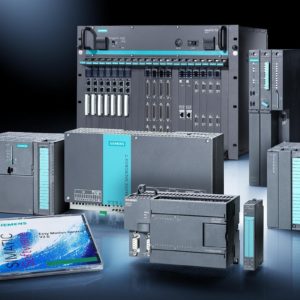
Programmable Logic Controller (PLC)6,288 Products
-
Relay927 Products
-
Sensor2,221 Products
-
Servo Motors & Motor Drives4,363 Products
-
Switch897 Products
-
Timer93 Products
-
Uncategorized1,148 Products
-
Valve Controller & Manifolds15 Products
-
Variable Frequency Drives (VFD)258 Products
-
Yokogawa Remote Indicators16 Products