
How to Choose the Right Industrial Transmitter
Understanding The Right Industrial Transmitter in Industrial Automation System
What is the most important factor when choosing a transmitter?

How to Choose the Right Industrial Transmitter: A Practical Guide for Engineers
Selecting the right industrial transmitter is one of those decisions that looks straightforward on paper—but in practice, it’s where many automation projects succeed or fail. The wrong choice can lead to inaccurate measurements, unstable control loops, frequent maintenance, and even safety risks. The right choice, on the other hand, quietly keeps your process running with precision and reliability.
Industrial transmitters are used to measure variables such as pressure, temperature, flow, and level, converting them into standardized signals (typically 4–20 mA or digital protocols) for control systems.
In this guide, we’ll walk through how experienced engineers approach transmitter selection—focusing on real-world decision factors rather than just datasheets.
Understanding Industrial Transmitters
Before diving into selection, it’s important to understand what you’re actually choosing.
An industrial transmitter is a device that takes a physical process variable—like pressure, temperature, or flow—and converts it into an electrical signal that can be interpreted by a control system such as a PLC or SCADA.
Types of Industrial Transmitters
Industrial transmitters are typically categorized based on what they measure.
Pressure Transmitters
Used to measure pressure in gases, liquids, or steam. They are critical in pipelines, boilers, and hydraulic systems.
Temperature Transmitters
Convert signals from sensors such as RTDs or thermocouples into standardized outputs for monitoring temperature.
Flow Transmitters
Measure the flow rate of liquids, gases, or steam in pipelines and process systems.
Level Transmitters
Used to measure liquid or solid levels in tanks, vessels, or silos.
Each type has its own selection criteria, but the underlying decision-making process remains consistent.
Why Transmitter Selection Matters
Choosing the correct transmitter is not just about measurement—it directly impacts:
- Process control stability
- Product quality
- Equipment lifespan
- Safety and compliance
A poorly selected transmitter can drift, fail prematurely, or deliver inaccurate data, leading to costly operational issues.
Step 1: Define Your Process Requirements
The first mistake many engineers make is jumping straight into specifications without fully understanding the process. The most important step is to clearly define the application.
Understand What You Are Measuring
Start by identifying:
- Is it pressure, flow, temperature, or level?
- Is the medium a gas, liquid, slurry, or solid?
- Is the process continuous or batch-based?
Different transmitters are designed for different measurement types. For example, differential pressure transmitters are often used for flow measurement, while radar transmitters are preferred for level measurement in harsh environments.
Analyze the Process Medium
The characteristics of the medium play a major role in transmitter selection. Consider:
- Is it corrosive?
- Is it viscous or prone to clogging?
- Does it contain solids or bubbles?
Material compatibility is critical. Wetted parts must be resistant to the process medium to prevent damage or measurement errors. For example:
- Corrosive chemicals may require Hastelloy or Tantalum
- Slurries require flush diaphragm designs
- Clean fluids can use standard stainless steel sensors
Evaluate Operating Conditions
Environmental and process conditions significantly affect transmitter performance. Key factors include:
- Temperature (ambient and process)
- Pressure conditions
- Vibration levels
- Hazardous area classification
Transmitters must operate within specified temperature and environmental limits to avoid drift or failure.
Step 2: Select the Right Measurement Type
Once the application is clear, the next step is choosing the correct measurement principle.
Pressure Measurement Types
Pressure transmitters come in three main types:
Gauge Pressure
Measures pressure relative to atmospheric pressure.
Absolute Pressure
Measures pressure relative to a vacuum.
Differential Pressure
Measures the difference between two pressure points and is commonly used in flow and level applications.
Selecting the wrong type here is a common engineering error.
Level Measurement Technologies
Level transmitters offer multiple technologies, each suited for different applications.
Ultrasonic
- Non-contact
- Suitable for clean liquids
Radar
- High accuracy
- Works in harsh environments
Hydrostatic (Pressure-Based)
- Ideal for water and stable liquids
Capacitance
- Suitable for oils and chemicals
Each technology has advantages depending on the process conditions and medium.
Flow Measurement Options
Flow transmitters vary based on measurement principle:
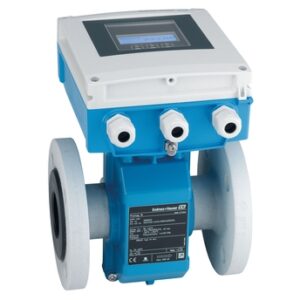
- Electromagnetic (for conductive liquids)
- Coriolis (high accuracy mass flow)
- Vortex (steam and gases)
- Differential pressure (cost-effective)
Choosing the correct flow technology depends heavily on fluid properties and required accuracy.
Step 3: Determine Measurement Range and Accuracy
This is where engineering judgment becomes critical.
Selecting the Right Measurement Range
A transmitter must be sized correctly for the application. Best practice:
- Operating range should fall within 40–80% of full scale
- Maximum range should exceed peak pressure or flow conditions
Selecting a range too large reduces accuracy, while too small a range risks damage or overload.
In many cases, engineers use a safety margin of about 1.5 times the maximum operating value.
Accuracy Requirements
Accuracy requirements depend on the application.
- General industrial use: ±0.5%
- Critical processes: ±0.1% or better
Higher accuracy often comes with higher cost and complexity, so it should match the process requirements.
Stability and Drift
Long-term stability is often overlooked.
A transmitter with poor stability may require frequent recalibration, increasing maintenance costs. Look for:
- Low drift specifications
- Proven performance in similar applications
Step 4: Consider Output Signals and Communication
Your transmitter must integrate seamlessly with your control system.
Analog vs Digital Signals
Common output signals include:
- 4–20 mA (industry standard, highly reliable)
- 0–10 V (less common, more noise-sensitive)
- Digital protocols such as HART, Modbus, or Profibus
Current signals are preferred in industrial environments due to their resistance to electrical noise.
Smart Transmitters
Modern transmitters offer advanced capabilities:
- Remote configuration
- Diagnostics and health monitoring
- Predictive maintenance features
These features are especially valuable in large or complex facilities.
Step 5: Installation and Mechanical Considerations
Even the best transmitter will fail if it is poorly installed.
Mounting Options
Common mounting types include:
- Inline installation
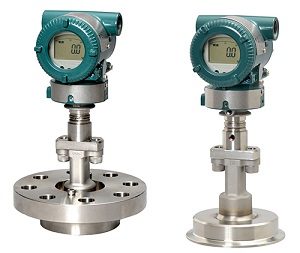
- Flange-mounted
- Remote-mounted with capillary tubes
Each option depends on the application and accessibility requirements.
Process Connections
Ensure compatibility with piping and equipment:
- Threaded connections
- Flanged connections
- Sanitary fittings (food/pharma industries)
Proper sealing is essential to prevent leaks and ensure safety.
Environmental Protection
Choose appropriate protection levels:
- IP ratings for dust and water protection
- Explosion-proof certifications for hazardous areas
These considerations are critical in industries such as oil and gas or chemical processing.
Step 6: Evaluate Cost vs Performance
Cost is always a factor—but it should never be the only factor.
Total Cost of Ownership
Consider:
- Initial purchase cost
- Installation cost
- Maintenance requirements
- Downtime risks
A cheaper transmitter may result in higher long-term costs if it fails frequently or requires constant recalibration.
Standardization
Many facilities standardize on specific transmitter models or brands to:
- Simplify maintenance
- Reduce spare parts inventory
- Improve technician familiarity
This approach can significantly improve operational efficiency.
Recommended Related Articles:
- Industrial Automation Fundamentals
- Industrial Communication Protocols
- Industrial Instrumentation Control
- Industrial Sensors & Measurement
- Motion and Process Control
- PLC Programming & Controllers
- SCADA and DCS Systems
- Servo Motors and Motor Drives
Frequently Asked Questions (FAQ)
What is the most important factor when choosing a transmitter?
The most important factor is understanding your process requirements, including the type of measurement, medium, and operating conditions.
How do I choose the right transmitter range?
Select a range where the normal operating value falls between 40% and 80% of the transmitter’s full scale, while allowing room for pressure or flow spikes.
What is the difference between a sensor and a transmitter?
A sensor detects a physical parameter, while a transmitter converts that signal into a standardized output (such as 4–20 mA) for control systems.
Which output signal is best for industrial applications?
The 4–20 mA signal is the most widely used because it is reliable and resistant to electrical interference.
When should I use a smart transmitter?
Smart transmitters are ideal when you need remote diagnostics, predictive maintenance, and integration with digital control systems.
What industries use industrial transmitters?
Industrial transmitters are used in oil and gas, chemical processing, water treatment, power generation, food processing, and manufacturing industries.
Your One-Stop Source for Reliable Automation & Process Control Equipment
Access trusted process control equipment, expert support, and fast sourcing—all in one place.
-
AC Drives 18,165 Products
-
Butterfly Valve236 Products
-
Circuit Breakers2,226 Products
-
Contactors567 Products
-
Counters78 Products
-
Encoder117 Products
-
Fanuc Main Board1,376 Products
-
Flow Transmitter (Flow meter)552 Products
-
HMI/Touch Screen592 Products
-
Industrial Device Servers125 Products
-
Inverter911 Products
-
Network/Signal2 Products
-
Others4,502 Products
-
Power Supply218 Products
-
Pressure Transmitter146 Products
-
Programmable Logic Controller (PLC)6,290 Products
-
Relay927 Products
-
Sensor2,221 Products
-
Servo Motors & Motor Drives4,675 Products
-
Switch897 Products
-
Timer93 Products
-
Uncategorized1,141 Products
-
Valve Controller & Manifolds17 Products
-
Variable Frequency Drives (VFD)257 Products
-
Yokogawa Remote Indicators16 Products