Flow Measurement Technologies
Understanding Flow Measurement Technologies in Industrial Automation Control
What are the main types of flow measurement technologies?

Flow Measurement Technologies: A Complete Guide for Industrial Applications
Accurate flow measurement sits at the heart of industrial automation. Whether you’re controlling chemical dosing, monitoring steam in a power plant, or balancing water distribution in a treatment facility, knowing exactly how much fluid is moving—and how fast—is critical.
Over the years, engineers have developed a wide range of flow measurement technologies, each based on different physical principles. Some rely on pressure differences, others on electromagnetic fields, sound waves, or even the Coriolis effect. Choosing the right technology is less about preference and more about understanding the process conditions, fluid characteristics, and required accuracy.
This guide breaks down the most important flow measurement technologies used in industry today, how they work, and where each one fits best.
Understanding Flow Measurement Technologies
Flow measurement technologies are methods and instruments used to quantify the movement of liquids, gases, or steam through a pipe or open channel. These measurements can be expressed as:
Volumetric flow rate (e.g., liters per minute)
Mass flow rate (e.g., kilograms per hour)
At a practical level, every flow measurement system answers a simple question: how much fluid is passing through a point over time?
Modern flow measurement technologies rely on fundamental principles of physics, including pressure, velocity, electromagnetic induction, and thermal transfer. Different technologies are suited for different applications depending on fluid type, temperature, pressure, and required accuracy.
Differential Pressure Flow Measurement
What Is Differential Pressure Flow Measurement?
Differential pressure (DP) flow measurement is one of the oldest and most widely used technologies in industry. It works by creating a restriction in the flow path—such as an orifice plate or Venturi tube—and measuring the pressure drop across it.
The basic principle is straightforward: when fluid passes through a restriction, its velocity increases and pressure decreases. By measuring this pressure difference, the flow rate can be calculated using established fluid dynamics equations.
Common DP Flow Devices
Orifice Plates: A simple metal plate with a hole in the center. It’s cost-effective and widely used, though it introduces pressure loss.
Venturi Tubes: Designed to reduce pressure loss while maintaining accuracy. Often used in large pipelines.
Flow Nozzles: Common in steam systems where high velocity and durability are required.
Advantages of Differential Pressure Measurement
Proven and reliable technology
Suitable for liquids, gases, and steam
Relatively low initial cost
Standardized and widely understood
Limitations
Permanent pressure loss
Requires straight pipe runs for accuracy
Lower accuracy compared to modern technologies
DP flow meters remain a workhorse in industries like oil & gas, power generation, and water treatment.
Positive Displacement Flow Measurement
What Is Positive Displacement Flow Measurement?
Positive displacement (PD) flow meters measure flow by dividing the fluid into fixed, measurable volumes and counting how many times these volumes pass through the meter.
You can think of it like filling and emptying a series of small chambers—each cycle represents a known quantity of fluid.
How It Works
Inside the meter, mechanical components such as gears, pistons, or rotating chambers trap and release fluid in discrete volumes. The number of cycles directly corresponds to the total flow.
Applications of PD Flow Meters
Fuel measurement and custody transfer
Oil and lubricant systems
Chemical dosing
Residential gas and water metering
Advantages
Very high accuracy
Excellent performance at low flow rates
Ideal for viscous fluids
Limitations
Moving parts require maintenance
Not suitable for dirty or abrasive fluids
Higher pressure drop compared to other meters
PD meters are often the go-to choice when billing accuracy is critical.
Electromagnetic Flow Measurement
What Is Electromagnetic Flow Measurement?
Electromagnetic (mag) flow meters operate based on Faraday’s Law of Electromagnetic Induction. When a conductive fluid flows through a magnetic field, it generates a voltage proportional to its velocity.
How It Works
A magnetic field is applied across the pipe
Conductive fluid passes through the field
Electrodes measure the induced voltage
Flow rate is calculated from the voltage signal
Applications
Water and wastewater treatment
Chemical processing
Food and beverage production
Slurry and mining applications
Advantages
No moving parts
Minimal pressure drop
High accuracy for conductive fluids
Works well with dirty or corrosive liquids
Limitations
Only works with conductive fluids
Higher initial cost
Electromagnetic flow meters are widely used in industries where reliability and low maintenance are critical.
Ultrasonic Flow Measurement
What Is Ultrasonic Flow Measurement?
Ultrasonic flow meters use sound waves to measure fluid velocity. These meters can be installed externally on pipes, making them a non-intrusive solution.
How It Works
There are two main methods:
Transit-Time Method: Measures the time difference between ultrasonic signals traveling with and against the flow.
Doppler Method: Uses frequency shifts caused by particles or bubbles in the fluid.
Applications
Large pipeline monitoring
Oil and gas transportation
Water distribution systems
Temporary flow measurement installations
Advantages
No pressure loss
Non-invasive installation
Suitable for large pipes
Minimal maintenance
Limitations
Accuracy depends on fluid conditions
Requires proper installation and calibration
Ultrasonic flow measurement is ideal when cutting into the pipe is not practical.
Coriolis Mass Flow Measurement
What Is Coriolis Flow Measurement?
Coriolis flow meters measure mass flow directly, rather than volumetric flow. They use vibrating tubes and detect changes caused by fluid movement.
How It Works
As fluid flows through vibrating tubes, it causes a phase shift due to the Coriolis effect. This shift is directly proportional to the mass flow rate.
Applications
Oil and gas custody transfer
Chemical processing
Pharmaceutical manufacturing
Food and beverage batching
Advantages
Extremely high accuracy
Measures mass flow directly
Also provides density and temperature
Limitations
High cost
Sensitive to vibration
Limited pipe size range
Coriolis meters are often used where precision is non-negotiable.
Vortex Flow Measurement
What Is Vortex Flow Measurement?
Vortex flow meters measure flow by detecting vortices formed when fluid passes around an obstruction.
How It Works
As fluid flows past a bluff body, it creates alternating vortices. The frequency of these vortices is proportional to the flow rate.
Applications
Steam systems
Gas flow measurement
Energy management systems
Advantages
No moving parts
Suitable for steam and gases
Low maintenance
Limitations
Requires stable flow conditions
Less accurate at low flow rates
Vortex meters are widely used in energy and utility applications.
Variable Area Flow Measurement (Rotameters)
What Is a Rotameter?
A rotameter is a variable area flow meter that uses a float inside a tapered tube to measure flow.
How It Works
As flow increases, the float rises in the tube until the upward force from the fluid equals the downward force of gravity. The float position indicates the flow rate.
Applications
Laboratory systems
Low-flow industrial processes
Gas flow measurement
Advantages
Simple design
No external power required
Easy to read and maintain
Limitations
Limited accuracy
Not suitable for high-pressure systems
Rotameters remain popular for simple, low-cost flow monitoring.
Open Channel Flow Measurement
What Is Open Channel Flow Measurement?
Unlike closed pipe systems, open channel flow measurement is used for fluids flowing in partially filled channels such as rivers, sewers, or irrigation systems.
Common Technologies
Parshall Flume: A specially shaped channel that accelerates flow to measure discharge.
Cutthroat Flume: A simplified flume design without a throat section.
Weirs: Structures that measure flow based on water height over a barrier
Applications
Wastewater treatment plants
Irrigation systems
Environmental monitoring
Advantages
Suitable for open flow conditions
Reliable and durable
Low maintenance
Limitations
Requires proper installation
Affected by upstream conditions
How to Choose the Right Flow Measurement Technology
Selecting the right flow measurement technology depends on several factors:
Fluid Type: Is the fluid clean, dirty, corrosive, or conductive?
Accuracy Requirements: High-precision applications may require Coriolis or PD meters.
Installation Constraints: Non-invasive options like ultrasonic meters may be preferred.
Maintenance Considerations: Technologies with no moving parts reduce maintenance needs.
Cost: Initial investment versus long-term operational savings
No single technology fits every application. The best choice balances accuracy, reliability, and cost.
- Industrial Automation Fundamentals
- Industrial Communication Protocols
- Industrial Instrumentation Control
- Industrial Sensors & Measurement
- Motion and Process Control
- PLC Programming & Controllers
- SCADA and DCS Systems
- Servo Motors and Motor Drives
Frequently Asked Questions (FAQ)
What are the main types of flow measurement technologies?
The main types include differential pressure, positive displacement, electromagnetic, ultrasonic, Coriolis, vortex, and variable area flow meters.
Which flow meter is the most accurate?
Coriolis and positive displacement flow meters are generally the most accurate, especially for mass flow and custody transfer applications.
What is the difference between mass flow and volumetric flow?
Mass flow measures the mass of fluid passing through a system, while volumetric flow measures the volume. Mass flow is often more accurate for process control.
Which flow meter is best for water applications?
Electromagnetic flow meters are commonly used for water and wastewater because they provide high accuracy and require minimal maintenance.
What industries use flow measurement technologies?
Flow measurement is used in oil and gas, chemical processing, power generation, water treatment, food and beverage, pharmaceuticals, and many other industries.
Your One-Stop Source for Reliable Automation & Process Control Equipment
Access trusted process control equipment, expert support, and fast sourcing—all in one place.
-
AC Drives 18,165 Products
-
Butterfly Valve236 Products
-
Circuit Breakers2,226 Products
-
Contactors567 Products
-
Counters78 Products
-
Encoder117 Products
-
Fanuc Main Board1,376 Products
-
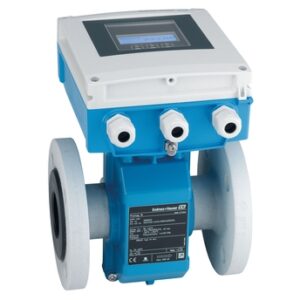
Flow Transmitter (Flow meter)552 Products
-
HMI/Touch Screen592 Products
-
Industrial Device Servers125 Products
-
Inverter911 Products
-
Network/Signal2 Products
-
Others4,504 Products
-
Power Supply218 Products
-
Pressure Transmitter146 Products
-
Programmable Logic Controller (PLC)6,290 Products
-
Relay927 Products
-
Sensor2,221 Products
-
Servo Motors & Motor Drives4,576 Products
-
Switch897 Products
-
Timer93 Products
-
Uncategorized1,141 Products
-
Valve Controller & Manifolds15 Products
-
Variable Frequency Drives (VFD)257 Products
-
Yokogawa Remote Indicators16 Products