Types of Industrial Automation Systems
Understanding Types of Industrial Automation Systems in Modern Manufacturing Factory Automation Control
What is the difference between SCADA and MES in the pyramid?
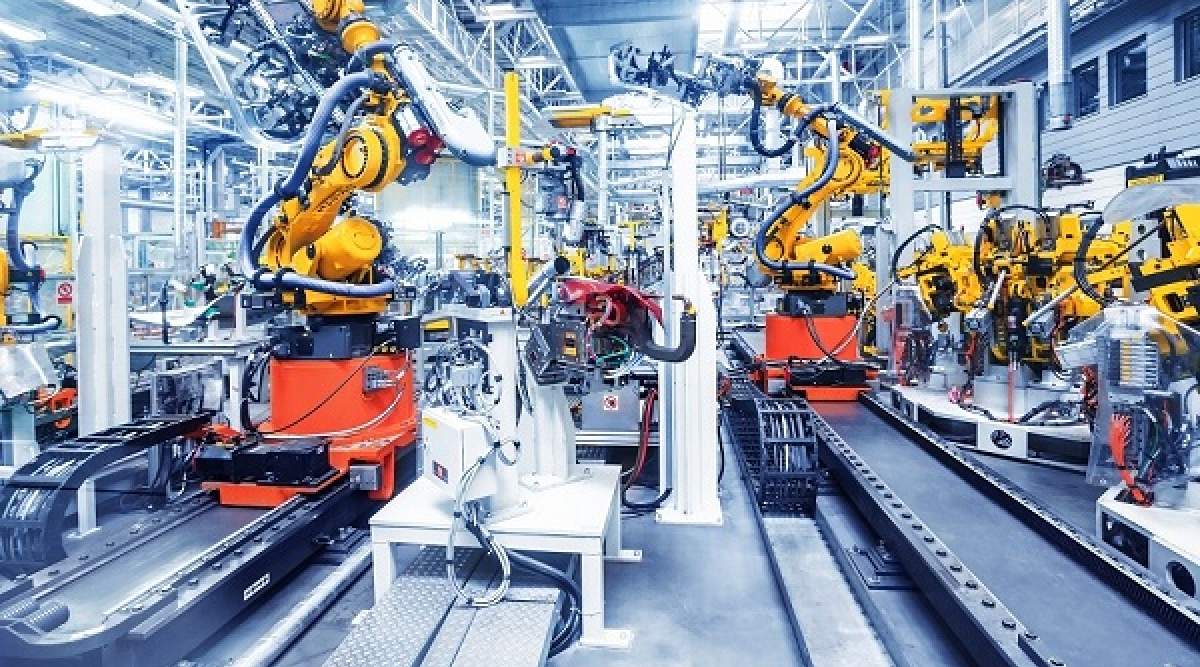
Types of Industrial Automation Systems: A Complete Guide for Modern Manufacturing
Industrial automation has fundamentally transformed the way factories and industrial facilities operate. Modern production lines rely on advanced control systems, robotics, sensors, and intelligent software platforms to manufacture products faster, safer, and with greater consistency than traditional manual processes.
However, automation is not a one-size-fits-all solution. Depending on the production environment, manufacturing volume, and product variability, industries adopt different types of industrial automation systems. Each approach is designed to address specific operational requirements, from high-volume assembly lines to highly adaptable smart factories capable of producing multiple product variants.
In this guide, we’ll explore the four primary types of industrial automation systems, how they work, where they are used, and when each approach makes the most sense for industrial operations.
Understanding Industrial Automation Systems
Industrial automation refers to the use of control systems, computers, robotics, and digital technologies to operate industrial processes with minimal human intervention. These systems monitor production processes, analyze operational data, and adjust machine performance automatically.
A typical industrial automation system includes several key components:
- Sensors that measure process variables such as temperature, pressure, and flow
- Controllers that analyze data and execute control logic
- Communication networks that connect machines and systems
- Actuators that perform mechanical actions
- Supervisory software used to monitor and manage operations
When these components work together, they create an automated ecosystem that improves productivity, reduces human error, and ensures consistent product quality.
Industrial automation systems are generally classified into four major categories:
- Fixed Automation
- Programmable Automation
- Flexible Automation
- Integrated Automation
These classifications are based primarily on production volume, system flexibility, and the level of digital integration within the manufacturing process.
Fixed Automation (Hard Automation)
What Is Fixed Automation?
Fixed automation—often referred to as hard automation—is designed for high-volume production where the manufacturing process rarely changes.
In this type of automation, machines are configured to perform a specific sequence of operations repeatedly at very high speeds. The equipment is dedicated to a particular product design or manufacturing process. Because the production sequence is fixed, changing the product design usually requires significant modifications to the production equipment.
This approach is widely used in industries where demand is stable and products are manufactured in very large quantities.
How Fixed Automation Works
In fixed automation systems, production equipment is arranged in a predetermined sequence of operations.
A typical production process may involve:
- Raw materials entering the production line
- Machines performing specialized tasks such as forming, cutting, or assembling
- Products moving through conveyor systems between workstations
- Finished goods exiting the line ready for packaging or distribution
Since each workstation performs a dedicated function, the entire production line operates continuously and efficiently.
Examples of Fixed Automation
Common applications include:
- Automotive assembly lines
- Beverage bottling plants
- Cement bag filling systems
- High-speed packaging lines
- Metal stamping and forming operations
In automotive manufacturing, for instance, robotic welding stations repeatedly perform identical welding operations on thousands of vehicle frames each day.
Advantages of Fixed Automation
Fixed automation offers several advantages for industries producing large volumes of identical products.
- Extremely high production rates
- Lower manufacturing cost per unit at large production volumes
- Reliable and consistent product quality
- Minimal need for operator intervention
Limitations of Fixed Automation
Despite its efficiency, fixed automation has certain limitations.
- High initial investment cost
- Limited flexibility for design changes
- Difficult to modify production lines
For industries producing millions of identical products, however, fixed automation remains one of the most efficient manufacturing solutions available.
Programmable Automation
What Is Programmable Automation?
Programmable automation allows machines and production systems to be reconfigured through software programming. Instead of being permanently dedicated to a single product, these systems can be programmed to manufacture different products.
This makes programmable automation particularly suitable for batch production environments, where product designs change periodically but production runs remain relatively large.
Programmable automation relies heavily on industrial controllers such as PLCs and CNC machines to manage manufacturing processes.
How Programmable Automation Works
In programmable automation systems, production equipment is controlled by software programs that determine how machines operate.
When a new product needs to be manufactured, engineers modify the control program and adjust machine parameters accordingly. Once the updated program is loaded, production resumes with the new configuration.
Although this method provides flexibility, production typically pauses during the reprogramming and setup process.
Examples of Programmable Automation
Industries commonly using programmable automation include:
- CNC machining centers
- industrial robotics systems
- plastic injection molding
- steel rolling mills
- electronic component manufacturing
A CNC machine, for example, can manufacture different metal components simply by updating the machining program.
Advantages of Programmable Automation
Programmable automation provides greater flexibility than fixed automation.
- Machines can produce multiple product types
- Equipment can be reprogrammed instead of replaced
- Manufacturing processes can be updated as designs evolve
Limitations of Programmable Automation
However, this flexibility also introduces some challenges.
- Lower production speed compared with dedicated automation lines
- Requires skilled engineers or programmers
- Production downtime during reprogramming and setup
Despite these limitations, programmable automation is widely used in modern manufacturing facilities.
Flexible Automation (Soft Automation)
What Is Flexible Automation?
Flexible automation represents a more advanced evolution of programmable automation. It allows production systems to automatically switch between different products with minimal downtime or manual adjustments.
These systems often incorporate advanced technologies such as robotics, computer vision, and intelligent control algorithms to adapt to changing production requirements.
Flexible automation enables manufacturers to produce multiple product variants on the same production line.
How Flexible Automation Works
Flexible automation systems rely on digital instructions stored within control software.
When production requirements change, machines automatically adjust parameters such as:
- Tool configurations
- machine speeds
- robotic movements
- processing sequences
Because these adjustments occur electronically, switching between products can happen quickly without major production interruptions.
Examples of Flexible Automation
Flexible automation is commonly used in industries that require high production flexibility.
Examples include:
- electronics manufacturing
- aerospace component production
- precision engineering industries
- semiconductor fabrication facilities
Modern robotic assembly systems capable of producing different electronic devices are excellent examples of flexible automation.
Advanced robots equipped with machine vision systems can detect product variations and adapt their operations accordingly.
Advantages of Flexible Automation
Flexible automation offers several advantages for manufacturers operating in dynamic markets.
- Rapid product changeover
- Ability to produce multiple product variants
- Improved manufacturing agility
- Reduced production downtime
Limitations of Flexible Automation
Despite its benefits, flexible automation can be complex to implement.
- Higher system complexity
- Significant capital investment
- Requires advanced software and control integration
Nevertheless, flexible automation is becoming increasingly common in modern smart factories.
Integrated Automation Systems
What Is Integrated Automation?
Integrated automation represents the highest level of industrial automation, where machines, control systems, and business processes operate within a unified digital environment.
Instead of functioning as isolated machines, all systems within the factory communicate through industrial networks and shared data platforms.
Integrated automation combines several technologies, including:
- programmable logic controllers (PLCs)
- supervisory control and data acquisition (SCADA) systems
- industrial robots
- manufacturing execution systems (MES)
- enterprise resource planning (ERP) systems
These technologies work together to coordinate production, monitor performance, and optimize manufacturing operations.
How Integrated Automation Works
In an integrated automation environment, information flows throughout the entire production ecosystem.
For example:
- Customer orders are entered into the ERP system
- Production schedules are generated by the MES system
- PLCs control manufacturing equipment on the production floor
- SCADA systems monitor real-time performance
- Production data is automatically recorded and analyzed
This level of integration allows factories to operate as connected digital manufacturing systems, often referred to as smart factories.
Real-World Examples
Industries implementing integrated automation include:
- automotive manufacturing plants
- pharmaceutical production facilities
- semiconductor fabrication plants
- large consumer goods factories
Some advanced facilities even operate “lights-out manufacturing,” where production continues with minimal human presence.
How to Choose the Right Automation System
Selecting the right automation strategy depends on several factors.
Production Volume
High-volume production typically favors fixed automation systems.
Product Variety
Manufacturers producing multiple product types often benefit from programmable or flexible automation.
Capital Investment
More advanced automation solutions require higher initial investment but can deliver long-term efficiency gains.
Digital Integration
Modern smart factories increasingly rely on integrated automation systems to optimize production and decision-making.
- Industrial Automation Fundamentals
- Industrial Communication Protocols
- Industrial Instrumentation Control
- Industrial Sensors & Measurement
- Motion and Process Control
- PLC Programming & Controllers
- SCADA and DCS Systems
- Servo Motors and Motor Drives
Frequently Asked Questions (FAQ)
What are the four types of industrial automation systems?
The four primary types of industrial automation systems are:
- Fixed automation
- Programmable automation
- Flexible automation
- Integrated automation
Each type offers different levels of flexibility and efficiency depending on production requirements.
Which automation system is best for mass production?
Fixed automation is generally the best choice for mass production because it is optimized for high-volume, repetitive manufacturing processes.
What is the difference between programmable and flexible automation?
Programmable automation requires production downtime to change machine programs between batches, while flexible automation allows machines to switch between products with minimal interruption.
Which industries use flexible automation?
Flexible automation is widely used in industries such as electronics manufacturing, aerospace production, semiconductor fabrication, and precision engineering.
What is integrated automation in smart factories?
Integrated automation refers to manufacturing environments where machines, control systems, and enterprise software are connected through digital networks to create highly efficient, data-driven production systems.
Your One-Stop Source for Reliable Automation & Process Control Equipment
Access trusted process control equipment, expert support, and fast sourcing—all in one place.
-
AC Drives 18,165 Products
-
Butterfly Valve236 Products
-
Circuit Breakers2,226 Products
-
Contactors567 Products
-
Counters78 Products
-
Encoder117 Products
-
Fanuc Main Board1,376 Products
-
Flow Transmitter (Flow meter)552 Products
-
HMI/Touch Screen592 Products
-
Industrial Device Servers125 Products
-
Inverter911 Products
-
Network/Signal2 Products
-
Others4,504 Products
-
Power Supply218 Products
-
Pressure Transmitter146 Products
-
Programmable Logic Controller (PLC)6,290 Products
-
Relay927 Products
-
Sensor2,221 Products
-
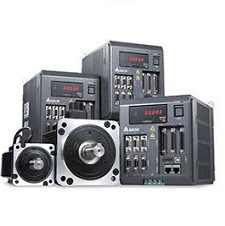
Servo Motors & Motor Drives4,575 Products
-
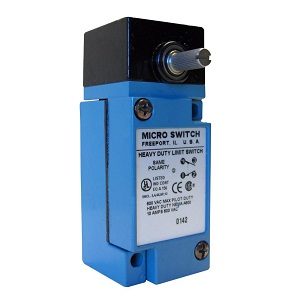
Switch897 Products
-
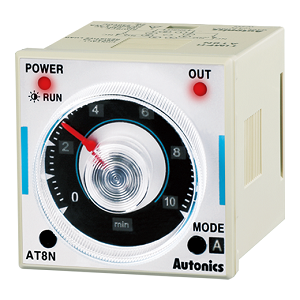
Timer93 Products
-
Uncategorized1,141 Products
-
Valve Controller & Manifolds15 Products
-
Variable Frequency Drives (VFD)257 Products
-
Yokogawa Remote Indicators16 Products