
What is the difference between ABB ACH and ACS?
Understanding the Difference Between ABB ACH and ACS in Industrial Automation & Process Control
What is the main difference between ABB ACH and ACS drives?
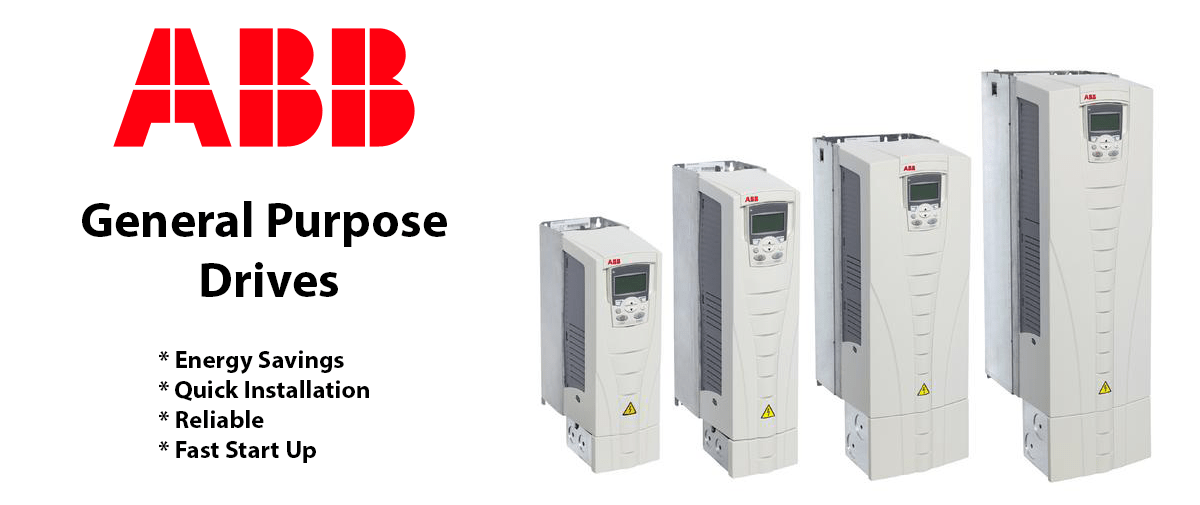
What Is the Difference Between ABB ACH and ACS? A Practical Guide for Engineers
If you’ve worked with variable frequency drives (VFDs), you’ve likely come across ABB’s ACH and ACS series. On the surface, they may look similar—same manufacturer, similar naming conventions, and overlapping capabilities. But in practice, these drives are designed for very different use cases, and selecting the wrong one can lead to unnecessary complexity, cost, or performance issues.
The real distinction comes down to application focus vs versatility. The ACH series is purpose-built for HVAC environments, while the ACS series is designed as a general-purpose solution across industries.
In this guide, we’ll break down the differences in a way that reflects how engineers actually evaluate drives in the field—not just from a datasheet, but from a practical application standpoint.
Understanding ABB Drive Families
Before comparing ACH and ACS, it’s important to understand how ABB structures its drive portfolio. ABB designs its low-voltage AC drives around application-specific families:
- ACS → General-purpose industrial drives
- ACH → HVAC-specific drives
- ACQ → Water and wastewater applications
- ACS880 → High-performance industrial platform
Each family shares a common design philosophy but is optimized for different industries and operational needs.
What Is the ABB ACH Series?
The ABB ACH series is specifically engineered for HVAC (Heating, Ventilation, and Air Conditioning) systems.
These drives are designed to simplify operation in building automation environments, where the primary loads are:
- Fans
- Pumps
- Air handling units
- Cooling towers
Unlike general-purpose drives, ACH drives come with preconfigured HVAC functionality, which reduces engineering effort during commissioning.
What Is the ABB ACS Series?
The ABB ACS series is a general-purpose drive family used across a wide range of industries.
These drives are built to handle diverse applications such as:
- Conveyors
- Compressors
- Mixers
- Pumps and fans
- Manufacturing systems
ACS drives are designed for flexibility, making them suitable for both simple and complex industrial processes.
Core Difference Between ABB ACH and ACS
At a high level, the difference can be summarized like this:
- ACH drives = Application-specific (HVAC-focused)
- ACS drives = General-purpose (multi-industry use)
The ACH series includes built-in features tailored for HVAC, while ACS drives offer broader configurability for industrial environments. This distinction influences everything—from control logic and communication protocols to commissioning and long-term maintenance.
Application Focus: HVAC vs Industrial Use
ABB ACH: Built for HVAC Systems
ACH drives are optimized for building automation systems where reliability, energy efficiency, and ease of integration are critical. Key characteristics include:
- Dedicated fan and pump control
- Built-in HVAC macros (e.g., supply fan, return fan, cooling tower)
- Integration with building management systems (BMS)
- Energy optimization features
These features make ACH drives particularly well-suited for:
- Commercial buildings
- Hospitals
- Data centers
- Airports
- HVAC contractors and integrators
In practice, ACH drives reduce engineering time because many HVAC functions are already pre-configured.
ABB ACS: Designed for Industrial Applications
ACS drives, on the other hand, are designed for broad industrial use. They support:
- Variable torque applications (fans, pumps)
- Constant torque applications (conveyors, mixers)
- High-performance industrial processes
Because of their flexibility, ACS drives are used in:
- Manufacturing plants
- Oil and gas facilities
- Food and beverage processing
- Material handling systems
- Mining and heavy industry
They are not limited to a specific industry, which is why they are often referred to as “workhorse drives.”
Functional Differences in Features and Capabilities
HVAC-Specific Features in ACH Drives
ACH drives include several features tailored specifically for HVAC systems:
- Built-in PID control for temperature and pressure regulation
- Fire mode and safety interlocks
- Sleep and wake-up functions for energy savings
- BACnet and building automation communication support
These features are designed to reduce the need for external controllers or complex programming.
General-Purpose Capabilities of ACS Drives
ACS drives offer broader functionality but require more configuration. Typical capabilities include:
- Advanced motor control algorithms
- Customizable control logic
- Wide communication protocol support
- Scalability across different industrial applications
While ACS drives are more flexible, they typically require more engineering effort during setup compared to ACH drives.
Control and Programming Differences
Simplified Configuration in ACH Drives
ACH drives are designed to be plug-and-play for HVAC systems. They include preloaded macros such as:
- Supply fan control
- Booster pump control
- Cooling tower operation
This allows technicians to commission systems quickly without extensive programming.
Custom Programming in ACS Drives
ACS drives are more configurable but less preconfigured. Engineers often need to:
- Define control logic manually
- Configure parameters for specific processes
- Integrate with external control systems
This flexibility is valuable in complex industrial environments but requires greater expertise.
Communication and Integration
ACH Drives and Building Management Systems
ACH drives are optimized for integration with building automation systems.
They support protocols commonly used in HVAC environments, such as:
- BACnet
- LonWorks
- Modbus
This makes them easy to integrate into centralized building control systems.
ACS Drives and Industrial Networks
ACS drives support a wider range of industrial communication protocols, including:
- Modbus
- PROFIBUS
- PROFINET
- EtherNet/IP
These protocols are commonly used in industrial automation systems, making ACS drives suitable for complex manufacturing environments.
Performance and Flexibility Comparison
ACH: Optimized Efficiency for HVAC
ACH drives are optimized for:
- Energy savings in fan and pump systems
- Smooth operation in HVAC environments
- Reduced commissioning time
They are not designed for highly dynamic or complex industrial processes.
ACS: High Flexibility Across Industries
ACS drives offer:
- Greater adaptability
- Broader performance range
- Compatibility with multiple applications
They are capable of handling both simple and advanced motor control scenarios.
When to Choose ABB ACH vs ACS
Choose ABB ACH When:
- You are working on HVAC systems
- You need fast commissioning
- You require built-in HVAC functionality
- Integration with building systems is critical
Choose ABB ACS When:
- You need a general-purpose drive
- Your application involves industrial machinery
- You require customization and flexibility
- Your system uses industrial communication networks
Real-World Example
Consider two scenarios:
Scenario 1: Office Building HVAC System
An engineer installing drives for air handling units and cooling towers would choose ACH drives because they include built-in HVAC logic and integrate easily with building systems.
Scenario 2: Manufacturing Conveyor System
A plant engineer controlling conveyors and mixers would choose ACS drives due to their flexibility and ability to handle various industrial processes.
- Industrial Automation Fundamentals
- Industrial Communication Protocols
- Industrial Instrumentation Control
- Industrial Sensors & Measurement
- Motion and Process Control
- PLC Programming & Controllers
- SCADA and DCS Systems
- Servo Motors and Motor Drives
Frequently Asked Questions (FAQ)
What is the main difference between ABB ACH and ACS drives?
The main difference is that ACH drives are designed specifically for HVAC applications, while ACS drives are general-purpose and used across various industrial applications.
Can an ABB ACS drive replace an ACH drive?
In some cases, yes—but it depends on the application. If HVAC-specific features are required, replacing an ACH drive with an ACS drive may lead to reduced functionality or require additional programming.
Are ACH drives only used for HVAC?
Yes, ACH drives are specifically designed for HVAC systems and include features tailored for fan and pump control in building environments.
Are ACS drives suitable for HVAC applications?
ACS drives can be used in HVAC systems, but they lack the built-in HVAC features found in ACH drives, which means additional configuration may be required.
Which drive is more flexible?
ACS drives are more flexible because they are designed for a wide range of industrial applications, whereas ACH drives are specialized for HVAC.
Which drive is easier to install?
ACH drives are generally easier to install and commission in HVAC systems because they come with preconfigured settings and application-specific features.
Your One-Stop Source for Reliable Automation & Process Control Equipment
Access trusted process control equipment, expert support, and fast sourcing—all in one place.
-
AC Drives 18,165 Products
-
Butterfly Valve236 Products
-
Circuit Breakers2,226 Products
-
Contactors567 Products
-
Counters78 Products
-
Encoder117 Products
-
Fanuc Main Board1,376 Products
-
Flow Transmitter (Flow meter)552 Products
-
HMI/Touch Screen592 Products
-
Industrial Device Servers125 Products
-
Inverter911 Products
-
Network/Signal2 Products
-
Others4,502 Products
-
Power Supply218 Products
-
Pressure Transmitter146 Products
-
Programmable Logic Controller (PLC)6,290 Products
-
Relay927 Products
-
Sensor2,221 Products
-
Servo Motors & Motor Drives4,604 Products
-
Switch897 Products
-
Timer93 Products
-
Uncategorized1,141 Products
-
Valve Controller & Manifolds17 Products
-
Variable Frequency Drives (VFD)257 Products
-
Yokogawa Remote Indicators16 Products