
What is the life expectancy of an ABB VFD?
Understanding the Life Expectancy of an ABB VFD in Industrial Automation & Process Control
What is the average lifespan of an ABB VFD?
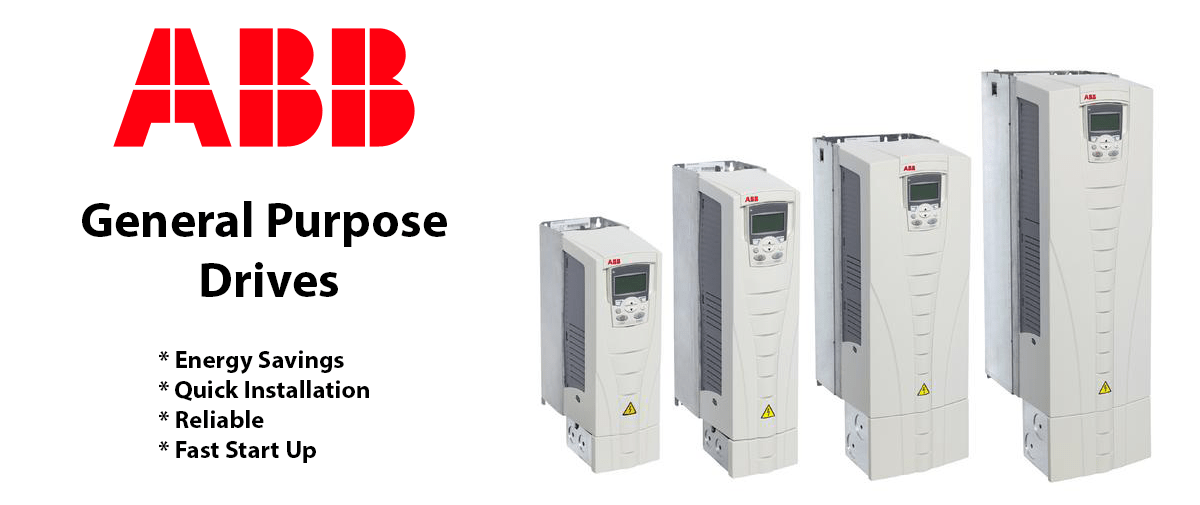
What Is the Life Expectancy of an ABB VFD? A Practical Guide for Engineers and Plant Managers
Variable Frequency Drives (VFDs) are among the most critical components in modern industrial systems. Whether you’re running pumps, fans, conveyors, or compressors, your entire operation often depends on the reliability of these drives.
A common—and important—question that comes up in the field is: What is the life expectancy of an ABB VFD?
The short answer is this: Most ABB VFDs are designed to last 10 to 15 years under normal operating conditions, and in many real-world installations, they can last significantly longer with proper maintenance and environmental control.
But that number only tells part of the story. In practice, the lifespan of a VFD depends far less on the brand and far more on how the drive is applied, installed, and maintained. In this guide, we’ll break down what actually determines ABB VFD longevity—and how to get the most life out of your investment.
Understanding ABB VFD Lifespan
What Does “Life Expectancy” Really Mean?
When manufacturers or engineers talk about the lifespan of a VFD, they’re not referring to a fixed expiration date. Instead, they’re describing a statistical expectation based on design conditions and component wear.
ABB designs its drives to exceed 10 years of operation under typical industrial conditions, assuming proper maintenance and environmental control.
However, many drives continue operating well beyond that window:
- 10–15 years → Typical expected lifespan
- 15–20+ years → Common with good maintenance
- 20+ years → Possible in controlled environments
The key takeaway: lifespan is condition-driven, not time-driven.
Typical Life Expectancy of ABB VFDs
From both manufacturer data and field experience, the following benchmarks are widely accepted:
- Low-voltage VFDs: ~10 years average
- Medium-voltage VFDs: 15–20 years or more
- Critical components (capacitors, fans): 5–10 years
These numbers align with broader industry expectations for VFD systems.
What matters more than the drive itself is how its internal components age over time.
Key Factors That Affect ABB VFD Lifespan
Operating Environment
The environment where a VFD is installed has one of the largest impacts on its longevity.
Heat is the biggest enemy of electronic components. Elevated ambient temperatures accelerate the aging of capacitors, semiconductors, and insulation systems. Other environmental risks include:
- Dust accumulation
- Moisture and humidity
- Corrosive gases
- Vibration
Poor environmental conditions can significantly reduce lifespan by causing overheating, contamination, and electrical degradation.
Load Profile and Duty Cycle
How a VFD is used matters just as much as where it’s installed.
Drives operating under stable, moderate loads tend to last much longer than those subjected to:
- Frequent start-stop cycles
- Rapid speed changes
- Continuous operation at maximum load
- Overloading conditions
When a drive is consistently pushed near its limits, internal components experience thermal and electrical stress, leading to premature failure.
Power Quality
VFDs are highly sensitive to electrical supply conditions. Common issues that shorten lifespan include:
- Voltage spikes
- Harmonic distortion
- Phase imbalance
- Electrical noise
Poor power quality introduces stress into internal circuitry, weakening components over time. Installing protective devices such as:
- Line reactors
- Surge protectors
- Harmonic filters
can significantly improve drive reliability.
Maintenance Practices
If there’s one factor that separates a 10-year VFD from a 20-year VFD, it’s maintenance. Routine maintenance tasks include:
- Cleaning cooling fans and heat sinks
- Inspecting terminals and connections
- Checking for overheating or discoloration
- Monitoring drive performance
Neglecting maintenance allows small issues—like dust buildup or failing fans—to escalate into major failures.
Critical Components That Determine VFD Life
DC Bus Capacitors
Capacitors are often the first components to fail in a VFD. They are responsible for smoothing voltage within the drive and are highly sensitive to temperature.
Typical lifespan: 5–10 years depending on operating conditions. Signs of capacitor degradation include:
- Increased ripple voltage
- Overheating
- Bulging or leakage
Replacing capacitors proactively can extend the overall life of the VFD.
Cooling Fans
Cooling fans are mechanical components and therefore subject to wear.
Typical lifespan: 3–7 years depending on usage. If cooling fans fail, internal temperatures rise rapidly, accelerating failure of other components.
Power Electronics (IGBTs)
Insulated Gate Bipolar Transistors (IGBTs) are the switching devices inside the VFD.
They are generally robust but can fail due to:
- Overheating
- Electrical surges
- Improper load conditions
Under normal operation, IGBTs often last the life of the drive.
Control Boards
Control boards handle logic, communication, and processing. They are typically reliable but vulnerable to:
- Moisture
- Dust
- Electrical noise
In clean, controlled environments, control boards can last well beyond 15 years.
ABB Drive Lifecycle and Real-World Performance
ABB follows a structured lifecycle model for its drives:
- Active phase (full support and production)
- Classic phase (limited production, full support)
- Limited phase (spares only)
- Obsolete phase (end-of-life support)
This lifecycle approach helps users plan maintenance, upgrades, and replacements proactively.
Interestingly, ABB notes that while theoretical reliability models may suggest very long lifespans, real-world installations typically align closer to 10–15 years, depending on application conditions.
How to Extend the Life of an ABB VFD
Maintain Proper Cooling
Ensure adequate ventilation and cooling. Best practices include:
- Installing drives in climate-controlled panels
- Avoiding heat sources
- Cleaning air filters regularly
Even a small reduction in temperature can significantly extend component life.
Perform Routine Inspections
Regular inspections help catch early signs of failure. Look for:
- Loose wiring
- Dust buildup
- Fan noise or failure
- Overheating indicators
Preventive maintenance is always cheaper than unplanned downtime.
Monitor Electrical Conditions
Install monitoring systems to track:
- Voltage levels
- Current draw
- Harmonics
- Power disturbances
Early detection of electrical issues prevents long-term damage.
Replace Wear Components Proactively
Certain components should be replaced before failure:
- Capacitors
- Cooling fans
- Relays
Planned replacement avoids unexpected shutdowns.
Keep Firmware Updated
Modern ABB drives include firmware updates that improve:
- Performance
- Stability
- Diagnostics
Keeping software current helps ensure optimal operation.
When Should You Replace an ABB VFD?
Even a well-maintained drive eventually reaches a point where replacement makes more sense than repair. Common indicators include:
- Frequent faults or trips
- Increasing maintenance costs
- Obsolete components or lack of spare parts
- Reduced efficiency compared to modern drives
A practical rule used in many facilities:
- Evaluate replacement after 10 years
- Plan replacement by 15 years (depending on condition)
- Industrial Automation Fundamentals
- Industrial Communication Protocols
- Industrial Instrumentation Control
- Industrial Sensors & Measurement
- Motion and Process Control
- PLC Programming & Controllers
- SCADA and DCS Systems
- Servo Motors and Motor Drives
Frequently Asked Questions (FAQ)
What is the average lifespan of an ABB VFD?
Most ABB VFDs last between 10 and 15 years, depending on operating conditions and maintenance practices.
Can an ABB VFD last more than 20 years?
Yes. In clean environments with proper maintenance, some ABB drives can operate for 20 years or more, although this is not typical for all installations.
What is the most common cause of VFD failure?
The most common causes include:
- Overheating
- Capacitor failure
- Poor power quality
- Lack of maintenance
How often should VFD components be replaced?
- Capacitors: every 5–10 years
- Cooling fans: every 3–7 years
- General inspection: annually
How can I extend the life of my ABB VFD?
To maximize lifespan:
- Maintain proper cooling
- Perform regular maintenance
- Monitor power quality
- Replace aging components proactively
Should I repair or replace an old VFD?
If the drive is over 10–15 years old and experiencing frequent issues, replacement is often more cost-effective than repair—especially when factoring in downtime risk.
Your One-Stop Source for Reliable Automation & Process Control Equipment
Access trusted process control equipment, expert support, and fast sourcing—all in one place.
-
AC Drives 18,165 Products
-
Butterfly Valve236 Products
-
Circuit Breakers2,226 Products
-
Contactors567 Products
-
Counters78 Products
-
Encoder117 Products
-
Fanuc Main Board1,376 Products
-
Flow Transmitter (Flow meter)552 Products
-
HMI/Touch Screen592 Products
-
Industrial Device Servers125 Products
-
Inverter911 Products
-
Network/Signal2 Products
-
Others4,502 Products
-
Power Supply218 Products
-
Pressure Transmitter146 Products
-
Programmable Logic Controller (PLC)6,290 Products
-
Relay927 Products
-
Sensor2,221 Products
-
Servo Motors & Motor Drives4,763 Products
-
Switch897 Products
-
Timer93 Products
-
Uncategorized1,141 Products
-
Valve Controller & Manifolds17 Products
-
Variable Frequency Drives (VFD)257 Products
-
Yokogawa Remote Indicators16 Products