
Difference Between ABB ACS550 vs ACH550
Understanding the Differences Between ABB ACS550 vs. ACH550 in Industrial Automation System
What is the main difference between ACS550 and ACH550?
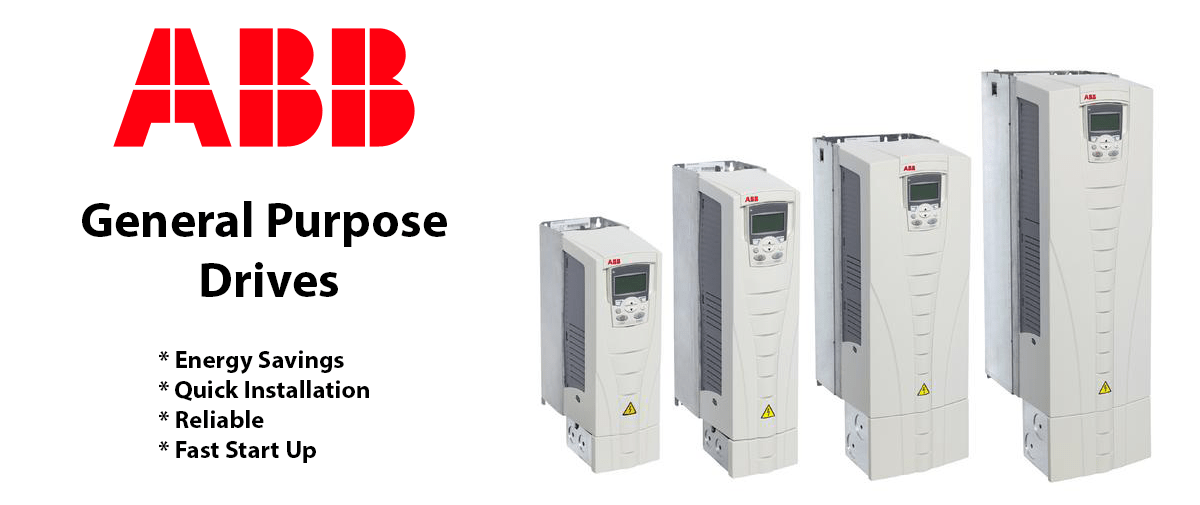
Difference Between ABB ACS550 vs ACH550: A Practical Guide for Engineers, Technicians, and System Integrators
Choosing the right variable frequency drive (VFD) is not just a technical decision—it directly impacts system performance, energy efficiency, and long-term maintenance costs. Two of the most widely used low-voltage drives from ABB are the ACS550 and ACH550 series.
At first glance, these drives appear very similar. They share the same power range, voltage class, and core architecture. But in practice, they are built for very different use cases. Understanding those differences is critical if you want to avoid costly mismatches in your application.
This guide breaks down the real-world differences between ABB ACS550 vs ACH550, not just from a datasheet perspective, but from how they behave in actual industrial environments.
Overview of ABB ACS550 and ACH550 Drives
Before comparing them, it helps to understand what each drive is designed to do. Both ACS550 and ACH550 are low-voltage AC drives (VFDs) used to control motor speed by adjusting frequency and voltage. They are commonly used in applications involving:
- Pumps
- Fans
- Compressors
- Conveyors
Both drives also share similar specifications:
- Power range: 0.75 kW to 355 kW
- Voltage range: 208V to 480V
- Enclosure types: IP21 and IP54
However, their design philosophy and application focus are completely different.
Core Difference Between ACS550 vs ACH550
The most important distinction is straightforward:
- ACS550 → General-purpose industrial drive
- ACH550 → HVAC-specific drive
This is not just marketing—it affects everything from software logic to built-in features. The ACS550 is designed to be flexible across multiple industries, while the ACH550 is engineered specifically for heating, ventilation, and air conditioning (HVAC) systems.
Application Focus and Industry Use
ACS550 – General Industrial Applications
The ACS550 is built for versatility. It is widely used across industries where motor control requirements vary. Typical applications include:
- Manufacturing systems
- Water and wastewater plants
- Conveyor systems
- Pumps and fans in industrial environments
- Material handling systems
Because of its flexibility, the ACS550 is often the default choice for engineers working in general automation environments. It is designed to be easy to install, configure, and operate without extensive customization.
ACH550 – HVAC and Building Automation
The ACH550, on the other hand, is purpose-built for HVAC systems. Typical applications include:
- Air handling units (AHUs)
- Cooling towers
- HVAC pumps
- Ventilation systems
- Building automation systems
It includes built-in functionality specifically designed for HVAC environments, such as:
- Fan and pump control optimization
- Energy-saving algorithms for airflow systems
- Building automation protocol integration
This specialization allows the ACH550 to deliver significant energy savings—up to 70% in some HVAC applications.
Feature Comparison – ACS550 vs ACH550
Control Philosophy
The ACS550 uses a general-purpose control approach, meaning it can handle a wide range of industrial processes. The ACH550 uses a process-specific control logic, optimized for HVAC applications such as maintaining airflow, pressure, and temperature.
Built-In Application Macros
One of the most overlooked differences is in the application macros.
ACS550 Macros
- General motor control
- Standard pump and fan control
- Basic automation setups
ACH550 Macros
- Supply fan control
- Return fan control
- Cooling tower fan
- Booster pump control
- HVAC-specific PID loops
- Bypass operation modes
These HVAC-specific macros make commissioning significantly faster for building systems.
Communication and Integration
ACS550
- Supports multiple industrial communication protocols
- Works well with PLC-based systems
- Flexible for integration into industrial networks
ACH550
- Includes HVAC-specific communication protocols such as:
- BACnet
- LonWorks
- Building automation interfaces
This makes the ACH550 much easier to integrate into building management systems (BMS).
User Interface and Diagnostics
Both drives feature user-friendly interfaces, but the ACH550 includes more application-specific diagnostics.
ACS550
- General fault diagnostics
- Standard control panel
- Energy monitoring features
ACH550
- Plain-language diagnostic assistant
- HVAC-specific fault detection
- Real-time clock for event tracking
In practice, this means HVAC technicians can troubleshoot faster without needing deep programming knowledge.
Energy Efficiency Optimization
Both drives offer energy-saving features, but they approach it differently.
ACS550
- General energy optimization
- Tracks energy consumption and savings
- Reduces harmonic distortion
ACH550
- Optimized for variable airflow systems
- Adjusts fan and pump speeds dynamically
- Includes energy calculators for HVAC systems
Because HVAC systems are highly dynamic, the ACH550 often delivers better efficiency in those environments.
Bypass and Redundancy Features
One of the standout features of the ACH550 is its integrated bypass functionality. This allows the system to continue operating even if the drive fails—critical for HVAC systems where uptime is essential (e.g., hospitals, data centers). The ACS550 typically requires external solutions for similar redundancy.
Similarities Between ACS550 and ACH550
Despite their differences, these drives share several important features:
- Same power and voltage range
- Similar hardware platform
- Easy installation and commissioning
- Built-in energy monitoring tools
- Compatibility with multiple fieldbus options
Both drives were designed as part of ABB’s standard drive platform, making them reliable and widely adopted globally.
Key Differences at a Glance
| Feature | ACS550 | ACH550 |
|---|---|---|
| Primary Use | General industrial | HVAC systems |
| Flexibility | High | Application-specific |
| Built-in Macros | General purpose | HVAC-specific |
| Communication | Industrial protocols | Building automation protocols |
| Energy Optimization | General | HVAC optimized |
| Bypass Function | External required | Built-in available |
| Diagnostics | Standard | HVAC-focused |
When to Choose ACS550 vs ACH550
Choose ACS550 If:
- You need a general-purpose drive
- Your application is industrial (not HVAC-specific)
- You require flexibility across multiple processes
- You are integrating with PLC-based automation systems
H3: Choose ACH550 If:
- You are working with HVAC systems
- You need built-in support for building automation
- Energy efficiency in airflow systems is critical
- You require simplified commissioning and diagnostics
Important Consideration: Product Lifecycle
Both the ACS550 and ACH550 are now considered legacy products and have been replaced by newer ABB drive series such as the ACS580 and ACH580. This means:
- Spare parts may become limited over time
- Replacement projects may require migration
- New installations should consider updated models
However, these drives are still widely used in existing installations worldwide.
- Industrial Automation Fundamentals
- Industrial Communication Protocols
- Industrial Instrumentation Control
- Industrial Sensors & Measurement
- Motion and Process Control
- PLC Programming & Controllers
- SCADA and DCS Systems
- Servo Motors and Motor Drives
Frequently Asked Questions (FAQ)
What is the main difference between ACS550 and ACH550?
The main difference is that the ACS550 is a general-purpose industrial drive, while the ACH550 is specifically designed for HVAC applications.
Can ACS550 be used in HVAC systems?
Yes, but it lacks HVAC-specific features found in the ACH550, such as dedicated control macros and building automation integration.
Is ACH550 better than ACS550?
Neither is “better” universally. The ACH550 is better for HVAC systems, while the ACS550 is more suitable for general industrial applications.
Do both drives support the same power range?
Yes. Both drives typically support power ranges from 0.75 kW to 355 kW and similar voltage levels.
Can ACH550 replace ACS550?
Only in certain cases. Because the ACH550 includes HVAC-specific features, replacing one with the other may require system adjustments.
Are ACS550 and ACH550 still available?
They are considered legacy products and have largely been replaced by newer ABB drive series, although they are still widely used in existing installations.
Your One-Stop Source for Reliable Automation & Process Control Equipment
Access trusted process control equipment, expert support, and fast sourcing—all in one place.
-
AC Drives 18,165 Products
-
Butterfly Valve236 Products
-
Circuit Breakers2,226 Products
-
Contactors567 Products
-
Counters78 Products
-
Encoder117 Products
-
Fanuc Main Board1,376 Products
-
Flow Transmitter (Flow meter)552 Products
-
HMI/Touch Screen592 Products
-
Industrial Device Servers125 Products
-
Inverter911 Products
-
Network/Signal2 Products
-
Others4,502 Products
-
Power Supply218 Products
-
Pressure Transmitter146 Products
-
Programmable Logic Controller (PLC)6,290 Products
-
Relay927 Products
-
Sensor2,221 Products
-
Servo Motors & Motor Drives4,741 Products
-
Switch897 Products
-
Timer93 Products
-
Uncategorized1,141 Products
-
Valve Controller & Manifolds17 Products
-
Variable Frequency Drives (VFD)257 Products
-
Yokogawa Remote Indicators16 Products