
Understanding Variable Frequency Drives (VFDs)
Understanding Variable Frequency Drives (VFDs) in Industrial Automation System
What does a Variable Frequency Drive (VFD) do?
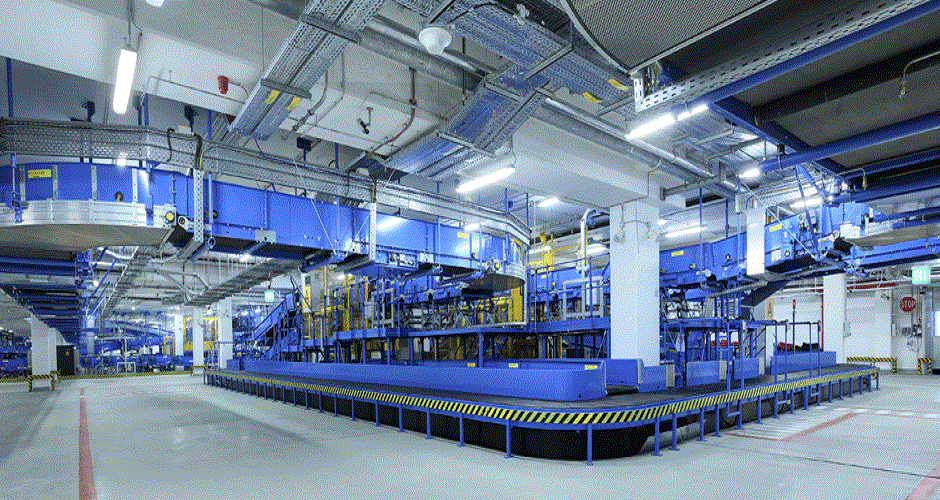
Understanding Variable Frequency Drives (VFDs): A Practical Guide for Industrial Automation
Electric motors power most industrial processes—from pumps and compressors to conveyors and machine tools. In many facilities, motors run continuously at full speed even when the process doesn’t require it. That’s where Variable Frequency Drives (VFDs) come in.
A Variable Frequency Drive is an electronic device used to control the speed and torque of an AC motor by adjusting the frequency and voltage of the electrical power supplied to the motor.
For engineers and plant managers, VFDs are one of the most powerful tools for improving energy efficiency, optimizing process control, and extending equipment life. In fact, the widespread adoption of VFDs has become a cornerstone of modern industrial automation systems.
This article explores how VFDs work, their key components, benefits, common applications, and how they integrate with automation systems.
What Is a Variable Frequency Drive?
A Variable Frequency Drive (VFD)—also known as a variable speed drive or AC drive—is an electronic control system that regulates the speed of an AC motor by changing the frequency of the electrical supply.
The rotational speed of an AC motor is directly related to the frequency of the power supplied to it. When the frequency increases, the motor spins faster. When the frequency decreases, the motor slows down.
In most power grids, electricity is supplied at a constant frequency (typically 50 or 60 Hz). Without a VFD, motors run at a fixed speed determined by that frequency. A VFD allows operators to adjust the frequency electronically, giving them precise control over motor speed and torque.
This capability is essential in modern industrial systems where process conditions constantly change.
How Variable Frequency Drives Work
Understanding the internal operation of a VFD helps explain why these devices are so effective in controlling motor performance.
A typical VFD converts incoming AC power into a controlled output that can vary in both frequency and voltage.
The process usually involves three main stages.
Rectifier Stage
The first stage of a VFD converts incoming alternating current (AC) into direct current (DC).
This process is carried out by a rectifier, which uses electronic components such as diodes or thyristors to convert AC input power into DC power.
Once converted, the DC power is stored temporarily in a section called the DC bus.
DC Bus
The DC bus acts as an intermediate energy storage stage.
In this stage: Capacitors smooth the DC voltage, Filters remove electrical noise, Energy is stabilized before conversion
The DC bus provides a stable power source for the final stage of the VFD.
Inverter Stage
The inverter is the most critical part of the VFD.
It converts the DC power back into AC power, but this time at a controlled frequency and voltage.
This conversion is achieved using high-speed switching devices such as IGBTs (Insulated Gate Bipolar Transistors) combined with a technique called Pulse Width Modulation (PWM).
By adjusting the switching patterns of the inverter, the VFD generates an output signal with a precise frequency and voltage suitable for the motor.
Key Components of a Variable Frequency Drive
Modern VFD systems consist of several integrated components that work together to control motor performance.
Power Electronics
The core of every VFD is its power electronics.
These include: Rectifiers, IGBT transistors, capacitors, power filters
These components handle the conversion and regulation of electrical power.
Control Processor
Modern drives include microprocessors that control how the VFD operates.
These processors manage: motor acceleration, speed control, torque limits, protection features, communication with control systems
Many advanced VFDs can communicate directly with PLCs and SCADA systems.
User Interface and Control Panels
Operators typically interact with the VFD through a control panel or digital interface.
Typical settings include: motor speed adjustment, acceleration and deceleration times, overload protection, fault diagnostics
Modern VFDs often include Ethernet connectivity and remote monitoring capabilities.
Types of Variable Frequency Drives
Different applications require different VFD control strategies. While the basic function remains the same, VFDs can operate in several control modes.
Volts-per-Hertz (V/Hz) Control
This is the simplest and most common control method.
In V/Hz control, the drive maintains a constant ratio between voltage and frequency to keep motor magnetic flux stable.
This method works well for: pumps, fans, conveyors, HVAC systems
It is widely used because it is simple and reliable.
Vector Control
Vector control—also called field-oriented control—provides more precise control of motor torque and speed.
This approach allows the drive to control motor current components independently.
Vector control is often used in: high-performance machinery, robotics, elevators, precision manufacturing equipment
Direct Torque Control (DTC)
Direct Torque Control is an advanced control strategy that allows extremely fast motor response and high torque accuracy.
DTC systems are commonly used in applications requiring: rapid acceleration, high dynamic performance, heavy industrial loads
Benefits of Using Variable Frequency Drives
VFDs offer several advantages for industrial facilities.
Energy Efficiency
One of the biggest advantages of VFDs is energy savings.
Instead of running motors at full speed all the time, VFDs adjust motor speed to match the actual load requirements. This reduces unnecessary energy consumption and lowers electricity costs.
In applications such as pumps and fans, even small reductions in speed can result in significant energy savings.
Improved Process Control
Because VFDs allow precise speed adjustments, they enable much better control of industrial processes.
For example:
conveyors can run at optimal speeds
mixers can maintain consistent product quality
pumps can regulate flow more accurately
This leads to better production consistency and reduced waste.
Reduced Mechanical Stress
Traditional motor starting methods can place significant stress on mechanical systems.
VFDs provide soft start and soft stop capabilities that gradually accelerate and decelerate motors. This reduces mechanical wear on motors, belts, and gearboxes.
Lower Maintenance Costs
By reducing mechanical stress and optimizing motor operation, VFDs help extend equipment life and reduce maintenance requirements.
Facilities using VFDs often experience: fewer mechanical failures, longer motor lifespan, reduced downtime
Applications of Variable Frequency Drives
VFDs are widely used across many industries because most industrial processes rely on electric motors.
Pump Systems
Pump systems are one of the most common applications for VFDs.
In water treatment plants, chemical processing facilities, and HVAC systems, VFDs regulate pump speed to maintain consistent flow and pressure.
This eliminates the need for throttling valves and significantly reduces energy consumption.
Conveyor Systems
Conveyors are used in manufacturing, packaging, and logistics operations.
VFDs allow operators to adjust conveyor speed depending on production requirements, ensuring smoother operation and improved throughput.
HVAC Systems
In commercial buildings and industrial plants, VFDs control fan speeds and compressor operation in HVAC systems.
By adjusting airflow based on demand, these systems improve energy efficiency and maintain comfortable environmental conditions.
Industrial Manufacturing Equipment
Many manufacturing processes require precise speed control.
Examples include: extrusion machines, mixers and agitators, machine tools, centrifuges, textile equipment
VFDs allow these machines to maintain consistent performance and product quality.
Integrating VFDs into Industrial Automation Systems
In modern automation systems, VFDs rarely operate as standalone devices.
They are usually integrated into larger control systems that include PLCs, SCADA platforms, and industrial communication networks.
For example:
PLCs send speed commands to VFDs
sensors provide process feedback
SCADA systems monitor drive performance
operators adjust parameters through HMI interfaces
This integration allows automation engineers to create highly responsive and efficient industrial control systems.
- Industrial Automation Fundamentals
- Industrial Communication Protocols
- Industrial Instrumentation Control
- Industrial Sensors & Measurement
- Motion and Process Control
- PLC Programming & Controllers
- SCADA and DCS Systems
- Servo Motors and Motor Drives
Frequently Asked Questions (FAQ)
What does a Variable Frequency Drive do?
A Variable Frequency Drive controls the speed and torque of an AC motor by adjusting the frequency and voltage of the electrical supply.
Why are VFDs used in industrial automation?
VFDs allow precise motor control, improve energy efficiency, reduce mechanical stress on equipment, and enhance overall process performance.
Do VFDs save energy?
Yes. By matching motor speed to process requirements, VFDs reduce unnecessary energy consumption and can significantly lower electricity costs.
What industries commonly use VFDs?
VFDs are widely used in manufacturing, water treatment, oil and gas, HVAC systems, food processing, and many other industrial sectors.
What is the difference between a VFD and a soft starter?
A soft starter only reduces the starting current of a motor during startup, while a VFD continuously controls motor speed and torque during operation.
Your One-Stop Source for Reliable Automation & Process Control Equipment
Access trusted process control equipment, expert support, and fast sourcing—all in one place.
-
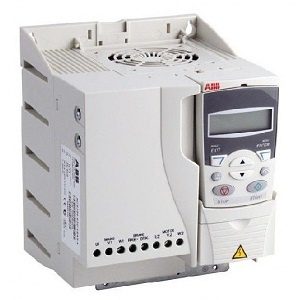
AC Drives 18,165 Products
-
Butterfly Valve236 Products
-
Circuit Breakers2,226 Products
-
Contactors567 Products
-
Counters78 Products
-
Encoder117 Products
-
Fanuc Main Board1,376 Products
-
Flow Transmitter (Flow meter)552 Products
-
HMI/Touch Screen592 Products
-
Industrial Device Servers125 Products
-
Inverter911 Products
-
Network/Signal2 Products
-
Others4,502 Products
-
Power Supply218 Products
-
Pressure Transmitter146 Products
-
Programmable Logic Controller (PLC)6,290 Products
-
Relay927 Products
-
Sensor2,221 Products
-
Servo Motors & Motor Drives4,741 Products
-
Switch897 Products
-
Timer93 Products
-
Uncategorized1,141 Products
-
Valve Controller & Manifolds17 Products
-
Variable Frequency Drives (VFD)257 Products
-
Yokogawa Remote Indicators16 Products