
Difference Between PROFIBUS vs PROFINET?
Understanding Difference Between PROFIBUS vs PROFINET in Factory Automation Control
What is the main difference between PROFIBUS and PROFINET?
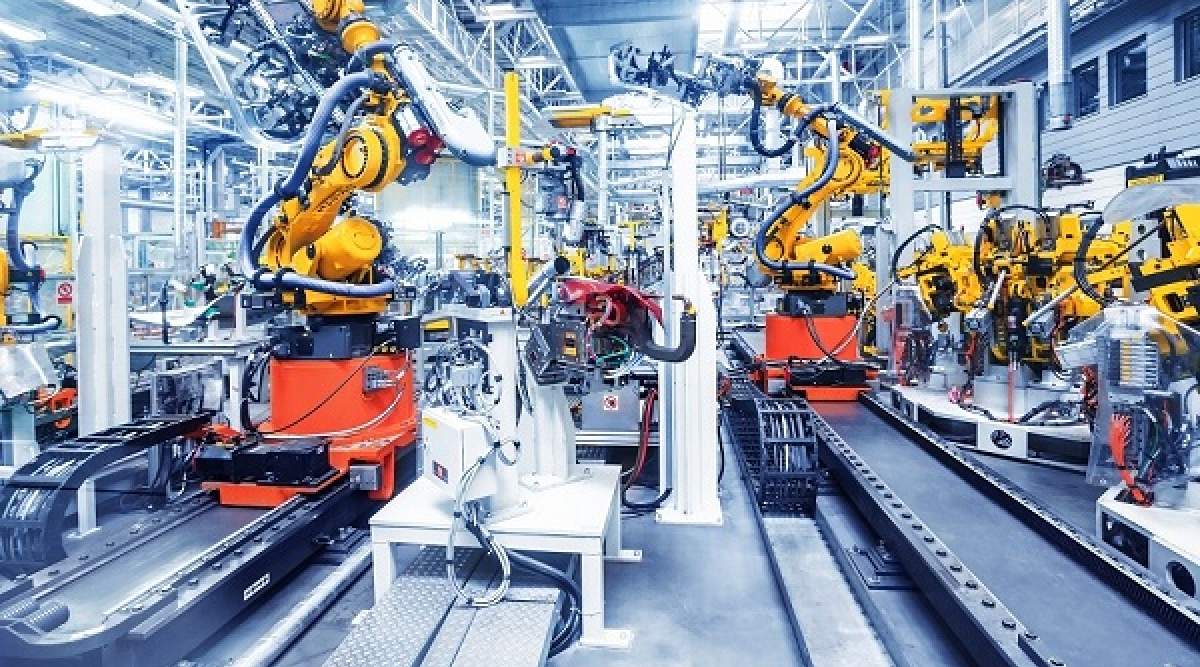
The Difference Between Profinet vs Profibus Industrial Ethernet Protocol
Industrial communication protocols are the backbone of modern automation systems. If you’ve worked with PLCs, distributed I/O, or process control systems, you’ve likely encountered PROFIBUS and PROFINET—two of the most widely used protocols in industrial networking.
At a glance, they may seem similar. After all, both originate from the same organization and are used to connect controllers, sensors, and field devices. But in practice, they serve very different roles in industrial automation.
Understanding the difference between PROFINET and PROFIBUS is not just academic—it directly impacts system design, performance, scalability, and future readiness.
Understanding PROFIBUS and PROFINET
Before comparing them, it’s important to understand what each protocol is and where it fits within an automation architecture.
What Is PROFIBUS?
PROFIBUS (Process Field Bus) is a serial communication protocol developed in the late 1980s for industrial automation. It was designed to enable reliable communication between controllers and field devices such as sensors, actuators, and drives.
PROFIBUS operates using RS-485 serial communication, which transmits data sequentially over a single cable. Over time, it became one of the most widely adopted fieldbus technologies in manufacturing and process industries.
Key Characteristics of PROFIBUS
- Serial communication (RS-485)
- Master-slave architecture
- Deterministic data exchange
- Typically supports up to 126 devices per network
- Data rates up to 12 Mbps
Types of PROFIBUS
PROFIBUS comes in two main variants:
- PROFIBUS DP (Decentralized Peripherals) – used in factory automation for fast communication between PLCs and devices
- PROFIBUS PA (Process Automation) – used in hazardous environments such as chemical plants
What Is PROFINET?
PROFINET (Process Field Network) is a modern industrial Ethernet protocol developed in the early 2000s to meet the growing demand for high-speed, real-time communication. Unlike PROFIBUS, PROFINET is based on standard Ethernet technology and integrates seamlessly with IT systems.
PROFINET enables communication between controllers and devices using Ethernet infrastructure, allowing for faster data transfer, flexible network design, and advanced diagnostics.
Key Characteristics of PROFINET
- Ethernet-based communication (TCP/IP)
- Real-time and deterministic communication
- High data speeds (100 Mbps to 1 Gbps)
- Flexible network topologies (star, line, ring, tree)
- Supports large-scale networks with virtually unlimited devices
Real-Time Performance in PROFINET
One of PROFINET’s biggest advantages is its ability to support real-time communication. It offers different performance levels:
- Standard Ethernet communication
- Real-Time (RT) communication
- Isochronous Real-Time (IRT) for motion control
This allows PROFINET to handle time-critical applications such as robotics and high-speed manufacturing.
Core Differences Between PROFINET and PROFIBUS
While both protocols serve similar purposes, their underlying technologies and capabilities differ significantly.
Communication Technology: Serial vs Ethernet
The most fundamental difference lies in how data is transmitted.
- PROFIBUS uses serial communication (RS-485)
- PROFINET uses Ethernet-based communication
This difference alone affects speed, scalability, and integration capabilities. Serial communication is reliable but limited in bandwidth. Ethernet, on the other hand, allows high-speed data transfer and integration with modern IT infrastructure.
Speed and Performance
PROFINET significantly outperforms PROFIBUS in terms of speed.
- PROFIBUS: up to 12 Mbps
- PROFINET: 100 Mbps to 1 Gbps
Additionally, PROFINET supports faster cycle times and real-time communication, making it suitable for high-performance applications such as motion control.
Network Topology
PROFIBUS networks are typically limited to linear (daisy-chain) topologies. PROFINET, by contrast, supports multiple topologies:
- Star
- Ring
- Tree
- Line
This flexibility makes PROFINET easier to design, expand, and maintain in complex industrial environments.
Scalability and Device Integration
PROFIBUS has a limit of approximately 126 devices per network. PROFINET does not have this limitation and can support large, complex networks with many devices. It also allows seamless integration with:
- IT systems
- cloud platforms
- industrial IoT solutions
Data Handling and Communication Model
PROFIBUS uses a master-slave communication model, where a central controller communicates with field devices. PROFINET uses a provider-consumer model, which allows devices to exchange data more efficiently and flexibly. This architecture supports advanced communication patterns and real-time data exchange.
Installation and Cabling
The physical layer also differs significantly:
- PROFIBUS uses shielded twisted-pair cables (RS-485)
- PROFINET uses industrial Ethernet cables (RJ45 or fiber optic)
PROFINET can also leverage standard Ethernet infrastructure, reducing installation costs and improving flexibility.
Diagnostics and Maintenance
PROFINET offers advanced diagnostic capabilities through standard Ethernet tools. This makes it easier to:
- Monitor network performance
- Detect faults
- Perform predictive maintenance
PROFIBUS diagnostics are more limited and often require specialized tools.
When to Use PROFIBUS vs PROFINET
Choosing between PROFIBUS and PROFINET depends on your application requirements.
When PROFIBUS Is Still a Good Choice
Despite being older, PROFIBUS is still widely used in many industries. It is suitable for:
- Legacy systems already using PROFIBUS
- Simple automation networks
- Cost-sensitive applications
- Long-distance communication requirements
In many plants, PROFIBUS continues to operate reliably without the need for immediate upgrades.
When PROFINET Is the Better Option
PROFINET is the preferred choice for modern automation systems. It is ideal for:
- High-speed manufacturing
- robotics and motion control
- smart factories and Industry 4.0
- systems requiring real-time data
PROFINET’s ability to integrate with IT systems makes it essential for digital transformation initiatives.
PROFIBUS vs PROFINET: Side-by-Side Comparison
| Feature | PROFIBUS | PROFINET |
|---|---|---|
| Communication Type | Serial (RS-485) | Ethernet |
| Speed | Up to 12 Mbps | 100 Mbps – 1 Gbps |
| Topology | Linear | Star, ring, tree, line |
| Devices | Limited (~126) | Virtually unlimited |
| Real-Time Capability | Limited | Advanced (RT, IRT) |
| Integration | Limited | Full IT integration |
| Diagnostics | Basic | Advanced |
Migration from PROFIBUS to PROFINET
Many industries are transitioning from PROFIBUS to PROFINET as part of modernization efforts. This shift is driven by:
- Demand for higher data speeds
- Need for real-time communication
- Integration with digital systems
- Industry 4.0 adoption
However, migration is often gradual. Many facilities operate hybrid systems where PROFINET networks coexist with legacy PROFIBUS devices using gateways or proxies.
Recommended Related Articles:
- Industrial Automation Fundamentals
- Industrial Communication Protocols
- Industrial Instrumentation Control
- Industrial Sensors & Measurement
- Motion and Process Control
- PLC Programming & Controllers
- SCADA and DCS Systems
- Servo Motors and Motor Drives
Frequently Asked Questions (FAQ)
What is the main difference between PROFIBUS and PROFINET?
The main difference is that PROFIBUS is a serial communication protocol, while PROFINET is based on industrial Ethernet, offering higher speed and flexibility.
Is PROFINET replacing PROFIBUS?
Yes, in many modern applications, PROFINET is gradually replacing PROFIBUS due to its higher performance and compatibility with digital technologies. However, PROFIBUS is still widely used in existing systems.
Which is faster: PROFIBUS or PROFINET?
PROFINET is significantly faster, supporting speeds up to 1 Gbps, compared to PROFIBUS which typically operates up to 12 Mbps.
Can PROFINET and PROFIBUS work together?
Yes. Many industrial systems use gateways or proxies to integrate PROFIBUS devices into PROFINET networks.
Which protocol is better for Industry 4.0?
PROFINET is better suited for Industry 4.0 because it supports Ethernet communication, real-time data exchange, and integration with IT and cloud systems.
Do I need to upgrade from PROFIBUS to PROFINET?
Not necessarily. If your system is performing well and meets operational requirements, there may be no immediate need to upgrade. However, new installations typically favor PROFINET for future scalability.
Your One-Stop Source for Reliable Automation & Process Control Equipment
Access trusted process control equipment, expert support, and fast sourcing—all in one place.
-
AC Drives 18,165 Products
-
Butterfly Valve236 Products
-
Circuit Breakers2,226 Products
-
Contactors567 Products
-
Counters78 Products
-
Encoder117 Products
-
Fanuc Main Board1,376 Products
-
Flow Transmitter (Flow meter)552 Products
-
HMI/Touch Screen592 Products
-
Industrial Device Servers125 Products
-
Inverter911 Products
-
Network/Signal2 Products
-
Others4,502 Products
-
Power Supply218 Products
-
Pressure Transmitter146 Products
-
Programmable Logic Controller (PLC)6,290 Products
-
Relay927 Products
-
Sensor2,221 Products
-
Servo Motors & Motor Drives4,604 Products
-
Switch897 Products
-
Timer93 Products
-
Uncategorized1,141 Products
-
Valve Controller & Manifolds17 Products
-
Variable Frequency Drives (VFD)257 Products
-
Yokogawa Remote Indicators16 Products