
Understanding PROFIBUS Protocol
Understanding Understanding PROFIBUS Protocol and How It Works in Factory Automation Control
What is the difference between PROFIBUS DP and PA?
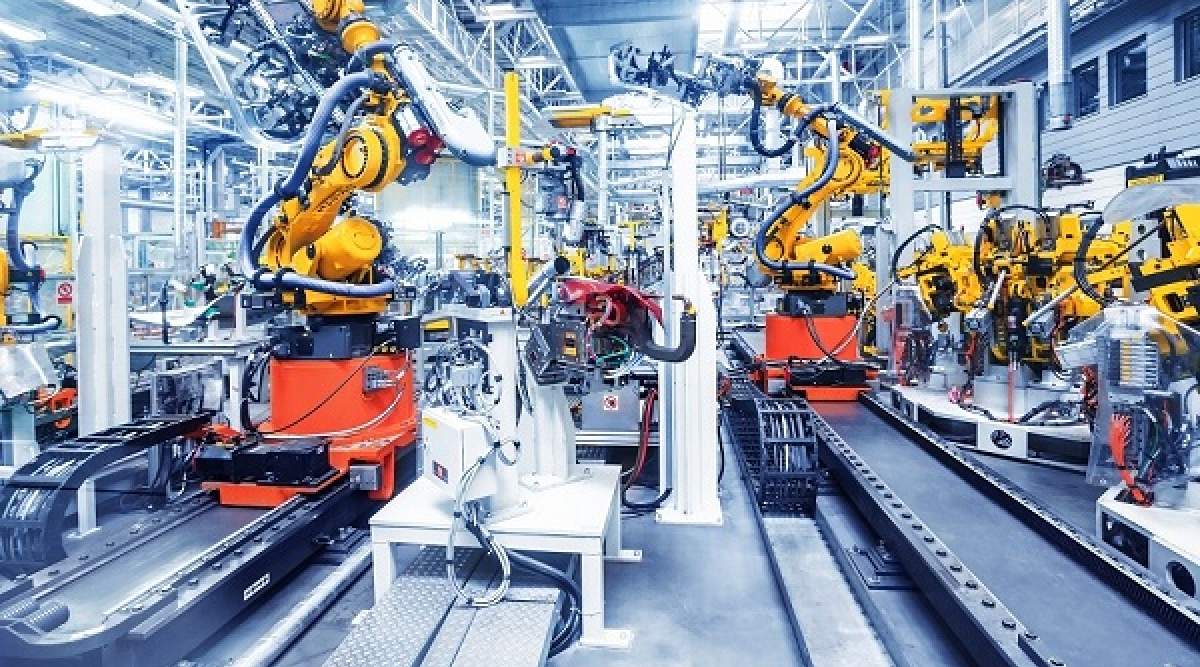
Understanding PROFIBUS Protocol and How It Works
Industrial communication is the backbone of any automation system. Without reliable data exchange between controllers, sensors, and field devices, even the most advanced automation setup would fail to operate efficiently. One of the most proven and widely adopted communication standards in this space is PROFIBUS.
If you’ve worked in manufacturing, process control, or plant automation, chances are you’ve encountered PROFIBUS networks. Despite the rise of Ethernet-based systems, PROFIBUS remains deeply embedded in industrial infrastructure worldwide due to its reliability, determinism, and simplicity.
This guide breaks down PROFIBUS in practical terms—what it is, how it works, and why it continues to be relevant in modern automation systems.
What Is PROFIBUS?
PROFIBUS (Process Field Bus) is a standardized digital communication protocol used in industrial automation to connect controllers with field devices such as sensors, actuators, and distributed I/O systems. It was originally developed in Germany in the late 1980s to provide a unified communication solution for industrial environments.
At its core, PROFIBUS replaces traditional point-to-point wiring with a single communication cable (bus), allowing multiple devices to communicate over the same network. This significantly reduces wiring complexity and installation costs. What makes PROFIBUS particularly valuable is that it is:
- Vendor-independent and standardized (IEC 61158)
- Designed for real-time industrial communication
- Capable of connecting a wide range of devices
- Highly reliable in harsh industrial environments
Key Concepts Behind PROFIBUS
To understand PROFIBUS properly, it helps to think of it as a field-level communication system. Instead of each sensor or actuator being wired individually to a control system, PROFIBUS allows all devices to connect to a shared communication line. This enables centralized control and decentralized device communication. Key characteristics include:
- Multi-drop bus topology (multiple devices on one cable)
- Deterministic communication (predictable timing)
- Real-time data exchange between devices
- Support for both factory and process automation
How PROFIBUS Works
At a practical level, PROFIBUS works by enabling communication between a central controller and multiple field devices through a structured communication protocol.
Master-Slave Communication Principle
PROFIBUS primarily operates using a master-slave architecture.
- The master device (usually a PLC) controls communication
- Slave devices (sensors, actuators, drives) respond to requests
The master sends commands or requests, and the slave devices return data or execute instructions accordingly. This ensures that communication is:
- Organized
- Predictable
- Free from data collisions
In more complex systems, multiple masters can exist, using a token-passing mechanism to coordinate communication between them.
Cyclic and Acyclic Communication
PROFIBUS supports two types of communication:
Cyclic Communication
- Continuous data exchange
- Used for real-time control
- Fast and predictable
Example: Reading sensor values or controlling motor speeds.
Acyclic Communication
- On-demand data exchange
- Used for diagnostics, configuration, and alarms
This combination allows PROFIBUS to handle both real-time control and system monitoring efficiently.
Network Topology and Physical Layer
PROFIBUS networks typically use a bus topology, where all devices are connected along a single communication cable. Key features include:
- RS-485 communication (most common)
- Twisted-pair cabling
- Termination resistors at both ends of the network
- Support for long distances (up to ~1200 meters per segment)
Other transmission options include:
- Fiber optics
- MBP (Manchester Bus Powered) for process environments
Proper termination and cable installation are critical—poor wiring is one of the most common causes of communication failures.
OSI Model and Communication Layers
PROFIBUS is structured around a simplified version of the OSI model, focusing on three main layers:
Physical Layer
Defines how data is transmitted (e.g., RS-485, MBP).
Data Link Layer
Handles communication control, including:
- Token passing
- Master-slave communication
- Error detection
Application Layer
Manages:
- Process data exchange
- Diagnostics
- Alarms
- Configuration
This layered approach ensures reliable and structured communication across industrial systems.
Types of PROFIBUS Protocols
PROFIBUS is not a single protocol but a family of communication profiles designed for different applications.
PROFIBUS DP (Decentralized Peripherals)
PROFIBUS DP is the most widely used version and is optimized for high-speed communication in factory automation. Key characteristics:
- Fast data exchange (up to 12 Mbps)
- Used for remote I/O, drives, and machine control
- Operates over RS-485
Typical applications:
- Manufacturing lines
- Robotics systems
- Conveyor systems
- CNC machines
PROFIBUS PA (Process Automation)
PROFIBUS PA is designed for process industries, particularly in hazardous environments. Key features:
- Intrinsic safety for explosive environments
- Power and communication over the same cable
- Lower data speed (31.25 kbps)
Typical applications:
- Chemical plants
- Oil and gas facilities
- Pharmaceutical production
- Water treatment plants
PROFIBUS FMS (Fieldbus Message Specification)
PROFIBUS FMS was designed for complex communication between controllers and higher-level systems. However, it is largely obsolete today and has been replaced by simpler and faster solutions like PROFIBUS DP.
Key Components of a PROFIBUS Network
A working PROFIBUS system consists of several essential components.
Master Devices
Master devices control communication on the network. Examples include:
- Programmable Logic Controllers (PLCs)
- Distributed Control Systems (DCS)
They initiate communication, send commands, and manage data exchange.
Slave Devices
Slave devices respond to master requests. Examples include:
- Sensors
- Actuators
- Drives
- Remote I/O modules
These devices provide process data or execute control commands.
Cables and Connectors
PROFIBUS typically uses:
- Shielded twisted-pair cables
- Specialized connectors
- Termination resistors
Correct installation is critical for maintaining signal integrity and avoiding communication errors.
Addressing and Configuration
Each device on a PROFIBUS network has a unique address. Configuration involves:
- Assigning device addresses
- Uploading device description files (GSD files)
- Defining communication parameters
Proper configuration ensures smooth communication across the network.
Advantages of PROFIBUS
Despite newer technologies, PROFIBUS remains widely used due to its practical advantages.
Proven Reliability
PROFIBUS has been deployed in millions of devices worldwide and is known for its stable performance in industrial environments.
Deterministic Communication
The protocol guarantees predictable communication timing, which is critical for real-time control applications.
Reduced Wiring Costs
Using a single bus cable instead of multiple point-to-point connections significantly reduces installation and maintenance costs.
Vendor Interoperability
Because PROFIBUS is standardized, devices from different manufacturers can work together seamlessly.
Strong Ecosystem
A large installed base and wide device compatibility make PROFIBUS a reliable choice for both new installations and legacy systems.
PROFIBUS vs Other Industrial Protocols
Understanding where PROFIBUS fits requires comparing it with other communication protocols.
PROFIBUS vs PROFINET
- PROFIBUS: Serial communication (RS-485), fieldbus-based
- PROFINET: Ethernet-based, higher speed and scalability
PROFINET is often used in new installations, while PROFIBUS remains dominant in existing systems.
PROFIBUS vs Modbus
- PROFIBUS: Deterministic, structured communication
- Modbus: Simpler but less deterministic
PROFIBUS is generally preferred for complex, time-critical applications.
PROFIBUS vs EtherNet/IP
- PROFIBUS: Reliable fieldbus communication
- EtherNet/IP: High-speed Ethernet communication
Ethernet-based systems offer more flexibility, but PROFIBUS remains robust for legacy systems.
Real-World Applications of PROFIBUS
PROFIBUS is used across a wide range of industries.
Manufacturing
- Assembly lines
- Robotics
- Material handling systems
Oil and Gas
- Pipeline monitoring
- Refinery automation
- Safety systems
Power Generation
- Turbine control
- Boiler automation
- Grid monitoring
Process Industries
- Chemical processing
- Pharmaceutical production
- Water and wastewater treatment
Its ability to handle both discrete and process automation makes PROFIBUS highly versatile.
Recommended Related Articles:
- Industrial Automation Fundamentals
- Industrial Communication Protocols
- Industrial Instrumentation Control
- Industrial Sensors & Measurement
- Motion and Process Control
- PLC Programming & Controllers
- SCADA and DCS Systems
- Servo Motors and Motor Drives
Frequently Asked Questions (FAQ)
What is PROFIBUS in simple terms?
PROFIBUS is an industrial communication protocol that allows controllers and field devices to communicate over a single network cable in real time.
How does PROFIBUS communication work?
PROFIBUS uses a master-slave system where a controller sends requests to devices, and those devices respond with data or actions.
What is the difference between PROFIBUS DP and PA?
PROFIBUS DP is used for fast communication in manufacturing, while PROFIBUS PA is designed for process industries and hazardous environments.
Is PROFIBUS still used today?
Yes. Although newer technologies like PROFINET are growing, PROFIBUS remains widely used due to its reliability and large installed base.
What are the advantages of PROFIBUS?
Key advantages include:
- Reliable communication
- Real-time performance
- Reduced wiring
- Wide device compatibility
Can PROFIBUS be integrated with modern systems?
Yes. PROFIBUS can be integrated with modern systems using gateways and hybrid architectures that connect it to Ethernet-based networks.
Your One-Stop Source for Reliable Automation & Process Control Equipment
Access trusted process control equipment, expert support, and fast sourcing—all in one place.
-
AC Drives 18,165 Products
-
Butterfly Valve236 Products
-
Circuit Breakers2,226 Products
-
Contactors567 Products
-
Counters78 Products
-
Encoder117 Products
-
Fanuc Main Board1,376 Products
-
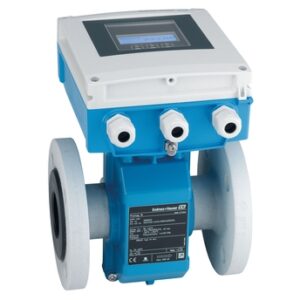
Flow Transmitter (Flow meter)552 Products
-
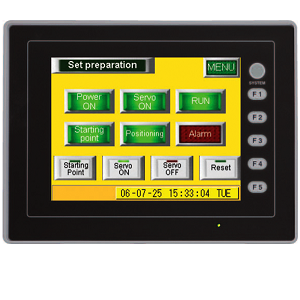
HMI/Touch Screen592 Products
-
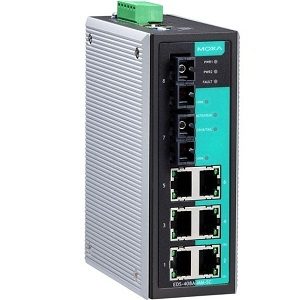
Industrial Device Servers125 Products
-
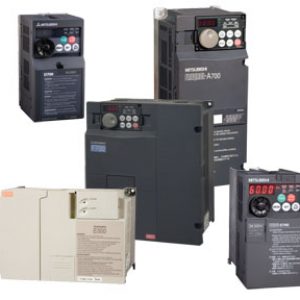
Inverter911 Products
-
Network/Signal2 Products
-
Others4,502 Products
-
Power Supply218 Products
-
Pressure Transmitter146 Products
-
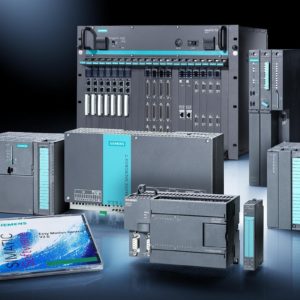
Programmable Logic Controller (PLC)6,290 Products
-
Relay927 Products
-
Sensor2,221 Products
-
Servo Motors & Motor Drives4,604 Products
-
Switch897 Products
-
Timer93 Products
-
Uncategorized1,141 Products
-
Valve Controller & Manifolds17 Products
-
Variable Frequency Drives (VFD)257 Products
-
Yokogawa Remote Indicators16 Products