
Understanding PROFINET Protocol
Understanding PROFINET Protocol and How It Works in Factory Automation Control
What is PROFINET in simple terms and how it works?
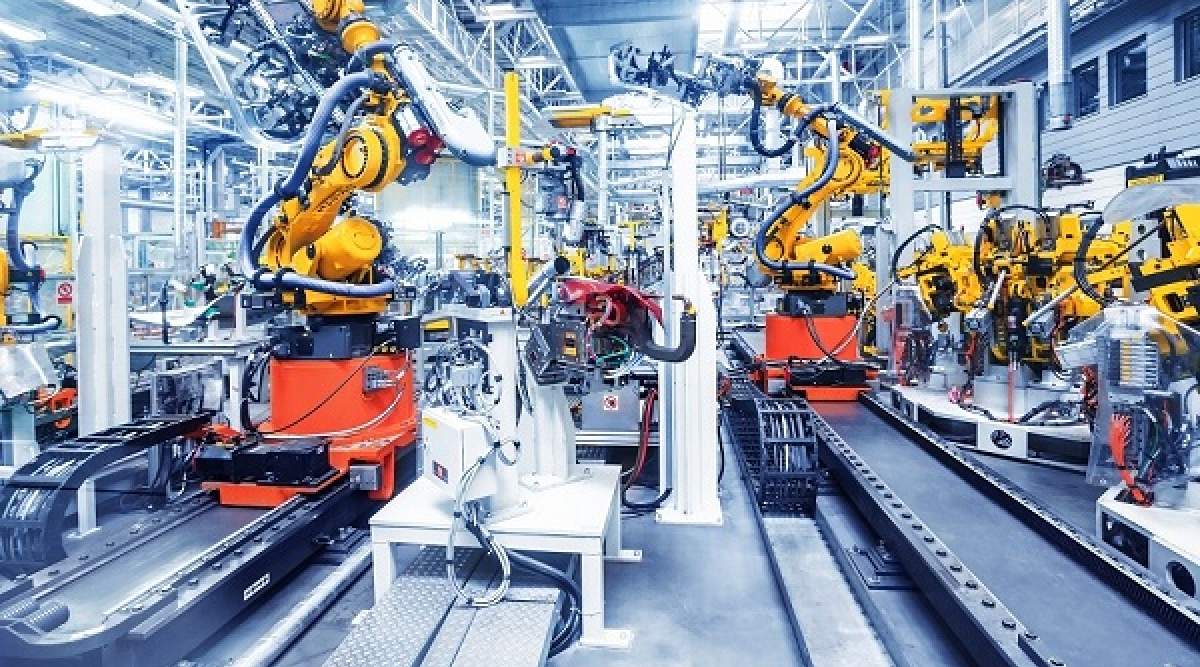
Understanding PROFINET Protocol and How It Works
In modern industrial automation, communication is everything. Machines, controllers, sensors, and software systems must exchange data in real time to keep production lines running efficiently. That’s where PROFINET comes in.
PROFINET is one of the most widely adopted Industrial Ethernet protocols, designed specifically for fast, reliable, and deterministic communication in automation systems. If you’re working with PLCs, drives, robotics, or process control systems, chances are PROFINET is either already in your plant—or it should be on your radar.
This guide breaks down PROFINET in practical terms: what it is, how it works, why it matters, and how it fits into modern automation architectures.
What Is PROFINET?
PROFINET (short for Process Field Network) is an open Industrial Ethernet communication protocol used to exchange data between controllers and field devices in automation systems. Unlike traditional fieldbus systems, PROFINET is built on standard Ethernet technology, which allows it to integrate seamlessly with IT networks while still delivering the speed and reliability required for industrial environments. At its core, PROFINET enables communication between:
- PLCs and controllers
- Remote I/O systems
- Sensors and actuators
- Drives and motion control systems
- HMIs and SCADA platforms
The protocol is designed to handle both standard data communication and time-critical control signals, making it suitable for everything from simple monitoring to high-speed motion control.
Why PROFINET Is Important in Industrial Automation
Industrial environments demand more from communication networks than typical office networks. Timing, reliability, and determinism are critical. PROFINET addresses these challenges by providing:
- Real-time communication for control applications
- High-speed data transfer using Ethernet
- Deterministic behavior for time-sensitive operations
- Seamless integration with existing IT infrastructure
Traditional Ethernet lacks the ability to guarantee timing precision, which is essential for automation tasks. PROFINET extends Ethernet capabilities to meet industrial requirements such as low latency and predictable data delivery.
How PROFINET Works
To understand PROFINET, it helps to look at how data moves through an industrial automation system. At a high level, PROFINET enables communication between devices over Ethernet using a combination of standard and real-time communication methods.
PROFINET Communication Model
In a typical PROFINET network, there are three main components:
- IO Controller – Usually a PLC that controls the system
- IO Device – Field devices such as sensors, actuators, and drives
- IO Supervisor – Engineering tools or HMIs used for configuration and monitoring
The IO controller sends commands to IO devices and receives feedback data in return. This communication happens continuously during operation.
Cyclic and Acyclic Communication
PROFINET uses two types of communication:
Cyclic Communication
This is real-time data exchange between the controller and field devices.
- Used for control signals
- Occurs continuously
- Ensures deterministic performance
Acyclic Communication
This is used for non-time-critical data.
- Device configuration
- Diagnostics
- Parameter updates
PROFINET supports both types simultaneously, allowing systems to handle control tasks and monitoring functions efficiently.
PROFINET Communication Channels
One of the defining features of PROFINET is its ability to use different communication channels depending on the application.
TCP/IP Communication
Used for:
- Configuration
- Diagnostics
- Data logging
This channel is not time-critical and behaves like standard Ethernet communication.
Real-Time (RT) Communication
This is where PROFINET becomes powerful.
- Bypasses standard TCP/IP processing
- Reduces latency
- Enables fast and deterministic communication
PROFINET achieves this by sending data directly at the Ethernet layer, avoiding delays caused by higher-level protocols.
Isochronous Real-Time (IRT)
IRT is used for extremely time-sensitive applications.
- Cycle times below 1 millisecond
- Required for motion control and robotics
- Ensures precise synchronization
This level of performance is critical in applications like robotic assembly lines or high-speed packaging systems.
Network Topologies in PROFINET
PROFINET supports multiple network topologies, allowing engineers to design systems based on operational needs. Common topologies include:
- Star topology
- Line topology
- Ring topology
This flexibility makes it easier to scale systems and adapt to different industrial environments.
Key Components of a PROFINET System
A PROFINET network is made up of several interconnected components that work together to enable communication.
Controllers (PLCs)
The PLC acts as the central control unit in a PROFINET system. It:
- Sends commands to devices
- Receives feedback data
- Executes control logic
To understand PLCs in more depth, see:
https://www.automationpioneer.com/news/plc-programming-basics
IO Devices
IO devices include sensors, actuators, drives, and other field equipment. These devices:
- Collect process data
- Execute commands from the controller
- Provide real-time feedback
Industrial Ethernet Switches
Switches connect devices within the PROFINET network. They ensure:
- Reliable data transmission
- Network segmentation
- Efficient communication between nodes
Engineering Tools
Engineering software is used to configure and manage PROFINET systems. These tools allow engineers to:
- Assign device addresses
- Configure communication parameters
- Monitor system performance
PROFINET vs Traditional Ethernet
At first glance, PROFINET may look like standard Ethernet—but the differences are significant.
Standard Ethernet is designed for office environments, where delays of milliseconds or even seconds are acceptable. Industrial automation, however, requires precise timing and deterministic behavior. PROFINET solves this by:
- Prioritizing time-critical data
- Using real-time communication channels
- Ensuring predictable data delivery
It essentially transforms Ethernet into a protocol suitable for industrial control.
Advantages of PROFINET
PROFINET has become one of the leading industrial communication protocols for several reasons.
High-Speed Communication
PROFINET supports data transmission rates up to gigabit speeds, enabling fast communication across industrial networks.
Real-Time Performance
The protocol ensures deterministic communication, which is essential for time-critical control applications.
Scalability
PROFINET networks can easily expand to accommodate additional devices or production lines.
Flexibility
Supports multiple communication types within the same network, including IT and industrial traffic.
Interoperability
As an open standard, PROFINET allows devices from different manufacturers to work together seamlessly.
Applications of PROFINET
PROFINET is used across a wide range of industries.
Manufacturing
Used in:
- Assembly lines
- Robotics
- Packaging systems
- Material handling
Process Industries
Common in:
- Oil and gas
- Chemical plants
- Water treatment facilities
Motion Control
PROFINET IRT is widely used in:
- Robotics
- CNC machines
- High-speed conveyors
Smart Factories and Industry 4.0
PROFINET plays a key role in digital transformation by enabling connectivity between machines, systems, and enterprise platforms.
PROFINET vs Other Industrial Protocols
PROFINET is often compared with other industrial communication protocols. Compared to fieldbus systems like PROFIBUS, PROFINET offers:
- Higher speed
- Better integration with IT systems
- Greater scalability
Compared to other Industrial Ethernet protocols, PROFINET stands out for its:
- Real-time performance
- Wide adoption
- Strong ecosystem
Recommended Related Articles:
- Industrial Automation Fundamentals
- Industrial Communication Protocols
- Industrial Instrumentation Control
- Industrial Sensors & Measurement
- Motion and Process Control
- PLC Programming & Controllers
- SCADA and DCS Systems
- Servo Motors and Motor Drives
Frequently Asked Questions (FAQ)
What is PROFINET in simple terms?
PROFINET is an Industrial Ethernet communication protocol that allows controllers and devices in automation systems to exchange data in real time.
How does PROFINET work?
PROFINET works by transmitting data over Ethernet using different communication channels, including TCP/IP for standard tasks and real-time channels for time-critical operations.
What is the difference between PROFINET and Ethernet?
Standard Ethernet is designed for general data communication, while PROFINET is optimized for industrial automation with real-time and deterministic communication capabilities.
What industries use PROFINET?
PROFINET is used in manufacturing, oil and gas, chemical processing, power generation, and smart factory environments.
What is PROFINET RT and IRT?
- RT (Real-Time) is used for most automation tasks requiring fast communication
- IRT (Isochronous Real-Time) is used for high-speed motion control requiring precise synchronization
Is PROFINET part of Industry 4.0?
Yes. PROFINET is a key technology in Industry 4.0, enabling real-time communication and integration between machines, systems, and enterprise platforms.
Your One-Stop Source for Reliable Automation & Process Control Equipment
Access trusted process control equipment, expert support, and fast sourcing—all in one place.
-
AC Drives 18,165 Products
-
Butterfly Valve236 Products
-
Circuit Breakers2,226 Products
-
Contactors567 Products
-
Counters78 Products
-
Encoder117 Products
-
Fanuc Main Board1,376 Products
-
Flow Transmitter (Flow meter)552 Products
-
HMI/Touch Screen592 Products
-
Industrial Device Servers125 Products
-
Inverter911 Products
-
Network/Signal2 Products
-
Others4,502 Products
-
Power Supply218 Products
-
Pressure Transmitter146 Products
-
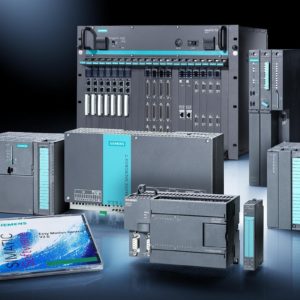
Programmable Logic Controller (PLC)6,290 Products
-
Relay927 Products
-
Sensor2,221 Products
-
Servo Motors & Motor Drives4,604 Products
-
Switch897 Products
-
Timer93 Products
-
Uncategorized1,141 Products
-
Valve Controller & Manifolds17 Products
-
Variable Frequency Drives (VFD)257 Products
-
Yokogawa Remote Indicators16 Products