
Understanding EtherNet/IP Protocol
Understanding EtherNet/IP Protocol and How It Works in Factory Automation Control
Advantages of EtherNet/IP in Industrial Automation
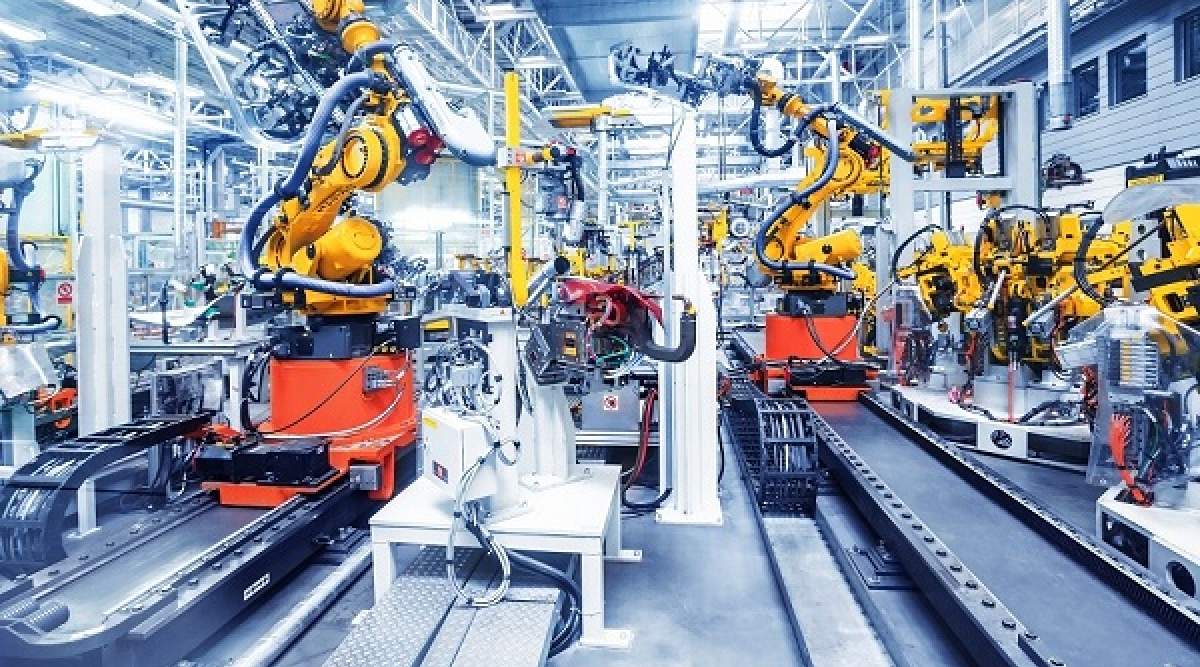
Understanding EtherNet/IP Protocol and How It Works
In modern industrial automation, communication is everything. Machines, controllers, sensors, and software systems must exchange data continuously—and reliably—for production to run smoothly. One of the most widely adopted protocols enabling this communication is EtherNet/IP.
If you’ve worked with PLC-based systems, especially in North America, you’ve almost certainly encountered EtherNet/IP. But despite its widespread use, many engineers still misunderstand what it actually is and how it works under the hood.
This guide breaks it down in practical terms—how EtherNet/IP works, why it matters, and how it fits into real-world industrial networks.
What Is EtherNet/IP?
EtherNet/IP (Ethernet Industrial Protocol) is an industrial communication protocol that combines standard Ethernet technology with the Common Industrial Protocol (CIP) to enable communication between automation devices. Unlike traditional fieldbus systems, EtherNet/IP does not reinvent networking from scratch. Instead, it leverages widely used Ethernet infrastructure—cables, switches, and TCP/IP—while adding a structured communication model designed specifically for industrial control systems. At a practical level, EtherNet/IP allows devices such as:
- PLCs
- Variable frequency drives (VFDs)
- Remote I/O modules
- HMIs
- Sensors and actuators
to communicate seamlessly across a shared industrial network.
Why EtherNet/IP Is Widely Used
EtherNet/IP has become dominant in many industries because it strikes a balance between standard IT networking and industrial control requirements. Key advantages include:
- Uses standard Ethernet hardware
- Supports real-time and non-real-time communication
- Scales from small machines to large plant networks
- Strong vendor ecosystem and interoperability
Because it runs on standard Ethernet, engineers can integrate automation networks with enterprise IT systems more easily than with legacy protocols.
The Architecture Behind EtherNet/IP
To understand how EtherNet/IP works, you need to look at its layered architecture. Unlike simpler protocols, EtherNet/IP builds on existing networking standards while adding an industrial communication layer.
EtherNet/IP and the OSI Model
EtherNet/IP operates across multiple layers of the OSI model:
- Physical & Data Link Layer: Standard Ethernet (IEEE 802.3)
- Network Layer: Internet Protocol (IP)
- Transport Layer: TCP and UDP
- Application Layer: Common Industrial Protocol (CIP)
This layered structure allows EtherNet/IP to separate concerns:
- Ethernet handles physical communication
- IP handles addressing and routing
- TCP/UDP handle data transport
- CIP defines how industrial data is structured and exchanged
This is one of the key reasons EtherNet/IP is both flexible and scalable.
The Role of CIP (Common Industrial Protocol)
CIP is the “brain” of EtherNet/IP. It defines:
- Device models
- Data structures
- Communication services
- Messaging behavior
CIP uses an object-oriented approach, meaning every device exposes data in a standardized format. For example:
- A motor drive exposes speed, torque, and status
- A sensor exposes measurement values
- A PLC exposes control variables
Because all devices follow the same structure, integration becomes significantly easier.
How EtherNet/IP Works in Practice
At its core, EtherNet/IP enables devices to exchange data using two primary communication methods. Understanding these is critical if you’re designing or troubleshooting industrial networks.
Explicit Messaging (TCP/IP Communication)
Explicit messaging is used for non-time-critical communication such as:
- Configuration
- Diagnostics
- Parameter reading/writing
This type of communication uses TCP/IP, which ensures reliable delivery of data. Think of explicit messaging as a request-response system:
- A PLC asks a device for information
- The device responds with the requested data
This is similar to how web communication works.
Implicit Messaging (UDP/IP Communication)
Implicit messaging is used for real-time control data exchange. Examples include:
- Motor speed commands
- Sensor feedback
- I/O signals
This communication uses UDP/IP, which is faster but does not guarantee delivery. Instead, data is sent continuously in a cyclic manner.
This is often referred to as I/O messaging and operates on a fixed update interval known as the Requested Packet Interval (RPI).
Implicit messaging is what allows machines to operate in real time.
Cyclic vs Acyclic Communication
EtherNet/IP supports both:
Cyclic Communication
- Continuous data exchange
- Used for real-time control
- Example: PLC controlling a motor
Acyclic Communication
- On-demand data exchange
- Used for diagnostics and configuration
- Example: Reading device parameters
This dual communication model is one of the reasons EtherNet/IP is so versatile.
Key Components of an EtherNet/IP Network
An EtherNet/IP network consists of several interconnected devices working together.
PLCs and Controllers
PLCs act as the central control units in most EtherNet/IP systems. They:
- Execute control logic
- Send commands to devices
- Receive feedback data
For deeper understanding, see:
https://www.automationpioneer.com/news/plc-programming-basics
I/O Devices and Field Equipment
Field devices include:
- Sensors
- Actuators
- Remote I/O modules
These devices collect data and execute commands from controllers.
Learn more here:
https://www.automationpioneer.com/news/types-of-industrial-sensors
Industrial Switches and Network Infrastructure
EtherNet/IP networks rely on standard Ethernet hardware such as:
- Managed switches
- Industrial routers
- Ethernet cables
Industrial-grade switches are often used to ensure reliability and support features like VLANs and QoS.
HMIs and SCADA Systems
These systems provide visibility and control over industrial processes. They:
- Display real-time data
- Allow operator interaction
- Monitor system performance
Related article:
https://www.automationpioneer.com/news/what-is-scada-system
Advantages of EtherNet/IP in Industrial Automation
EtherNet/IP has gained widespread adoption due to several key benefits.
Interoperability
EtherNet/IP supports devices from multiple manufacturers, making it easier to integrate systems.
Scalability
It can be used in:
- Small machine-level networks
- Large plant-wide systems
Real-Time Performance
Through implicit messaging, EtherNet/IP supports real-time control applications such as motion systems.
Integration with IT Systems
Because it uses standard Ethernet and TCP/IP, EtherNet/IP allows seamless integration with enterprise networks.
Flexibility
It supports both control and diagnostic communication within a single network.
EtherNet/IP vs Other Industrial Protocols
EtherNet/IP is often compared with other industrial communication protocols.
EtherNet/IP vs PROFINET
- EtherNet/IP is dominant in North America
- PROFINET is more common in Europe
- Both support real-time Ethernet communication
EtherNet/IP vs Modbus TCP
- EtherNet/IP uses CIP (more structured and complex)
- Modbus TCP is simpler but less feature-rich
EtherNet/IP vs EtherCAT
- EtherCAT offers faster deterministic performance
- EtherNet/IP offers broader compatibility and ecosystem
Choosing the right protocol depends on your application, existing infrastructure, and performance requirements.
Real-World Applications of EtherNet/IP
EtherNet/IP is used across a wide range of industries.
Manufacturing
Used in:
- Assembly lines
- Robotics
- Packaging systems
Automotive Industry
Supports:
- Robotic welding systems
- Motion control applications
- Quality inspection systems
Oil and Gas
Used for:
- Process monitoring
- Remote I/O communication
- Safety systems
Food and Beverage
Supports:
- Bottling lines
- Packaging systems
- Process control
- Industrial Automation Fundamentals
- Industrial Communication Protocols
- Industrial Instrumentation Control
- Industrial Sensors & Measurement
- Motion and Process Control
- PLC Programming & Controllers
- SCADA and DCS Systems
- Servo Motors and Motor Drives
Frequently Asked Questions (FAQ)
What does EtherNet/IP stand for?
EtherNet/IP stands for Ethernet Industrial Protocol. It is not the same as Internet Protocol, even though it uses IP networking.
Is EtherNet/IP the same as Ethernet?
No. Ethernet is the physical networking technology, while EtherNet/IP is a communication protocol that runs on top of Ethernet.
What is the role of CIP in EtherNet/IP?
CIP defines how devices communicate, including data structures, messaging, and services. It is the core protocol behind EtherNet/IP.
What is the difference between implicit and explicit messaging?
Implicit messaging is used for real-time cyclic data exchange, while explicit messaging is used for configuration and diagnostics.
Where is EtherNet/IP commonly used?
EtherNet/IP is widely used in manufacturing, automotive, oil and gas, food processing, and other industrial sectors.
Is EtherNet/IP part of Industry 4.0?
Yes. EtherNet/IP plays a critical role in Industry 4.0 by enabling connected devices, real-time data exchange, and integration with digital systems.
Your One-Stop Source for Reliable Automation & Process Control Equipment
Access trusted process control equipment, expert support, and fast sourcing—all in one place.
-
AC Drives 18,165 Products
-
Butterfly Valve236 Products
-
Circuit Breakers2,226 Products
-
Contactors567 Products
-
Counters78 Products
-
Encoder117 Products
-
Fanuc Main Board1,376 Products
-
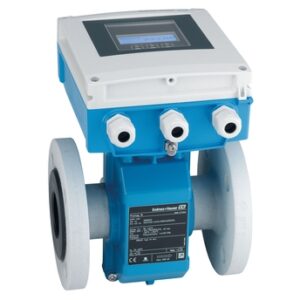
Flow Transmitter (Flow meter)552 Products
-
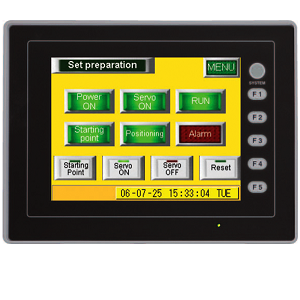
HMI/Touch Screen592 Products
-
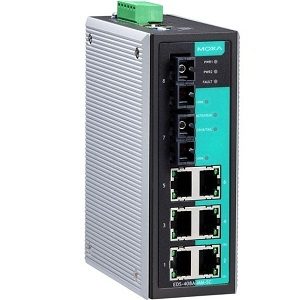
Industrial Device Servers125 Products
-
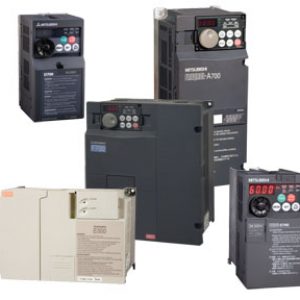
Inverter911 Products
-
Network/Signal2 Products
-
Others4,502 Products
-
Power Supply218 Products
-
Pressure Transmitter146 Products
-
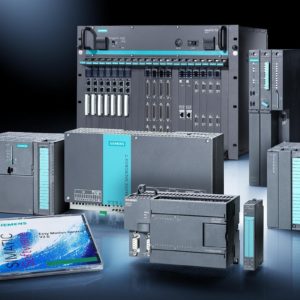
Programmable Logic Controller (PLC)6,290 Products
-
Relay927 Products
-
Sensor2,221 Products
-
Servo Motors & Motor Drives4,604 Products
-
Switch897 Products
-
Timer93 Products
-
Uncategorized1,141 Products
-
Valve Controller & Manifolds17 Products
-
Variable Frequency Drives (VFD)257 Products
-
Yokogawa Remote Indicators16 Products