
EtherCAT vs Profinet vs EtherNet/IP Protocols
Understanding The Difference Between EtherCAT vs Profinet vs EtherNet/IP Protocols in Industrial Automation Control
What is the main difference between EtherCAT, Profinet, and EtherNet/IP? and Which protocol is most widely used?
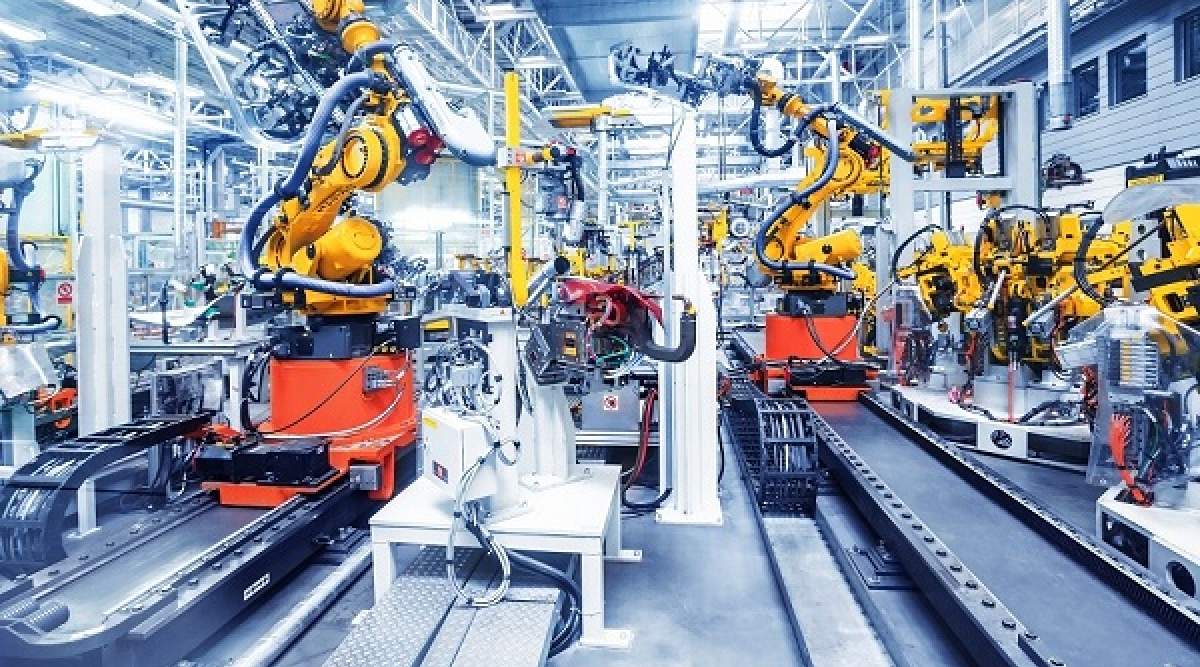
The Difference Between EtherCAT vs Profinet vs EtherNet/IP Protocols
Industrial Ethernet has become the backbone of modern automation systems. As factories evolve into highly connected, data-driven environments, the choice of communication protocol directly impacts performance, scalability, and long-term reliability. Among the most widely used industrial Ethernet protocols today are EtherCAT, Profinet, and EtherNet/IP. While they all operate over Ethernet infrastructure, their architectures, performance characteristics, and ideal use cases differ significantly.
If you’ve worked in automation long enough, you’ll know this isn’t just a theoretical comparison—it’s a practical engineering decision that affects machine performance, commissioning time, and even maintenance costs.
This guide breaks down the real differences between EtherCAT, Profinet, and EtherNet/IP, in a way that reflects how engineers actually evaluate them in the field.
Understanding Industrial Ethernet Protocols
Industrial Ethernet protocols are adaptations of standard Ethernet designed for real-time control, determinism, and industrial reliability. Unlike office networks, industrial networks must:
- Deliver data within strict time constraints
- Ensure deterministic communication (predictable timing)
- Support synchronization for motion control
- Operate reliably in harsh environments
EtherCAT, Profinet, and EtherNet/IP each take a different approach to achieving these requirements while still leveraging Ethernet hardware.
What Makes Industrial Ethernet Different?
Standard Ethernet is designed for data delivery—not timing precision. Industrial protocols modify Ethernet behavior to ensure:
- Real-time communication
- Low latency
- Minimal jitter
- High synchronization accuracy
This is why choosing the right protocol is critical for applications like robotics, motion control, and high-speed manufacturing.
Overview of EtherCAT, Profinet, and EtherNet/IP
Before comparing them directly, it’s important to understand how each protocol fundamentally works.
What Is EtherNet/IP?
EtherNet/IP (Ethernet Industrial Protocol) is built on standard TCP/IP and UDP/IP communication, making it highly compatible with existing IT infrastructure. It uses the Common Industrial Protocol (CIP) to organize and exchange data between devices.
Key Characteristics
- Uses standard Ethernet hardware (switches, routers)
- Integrates easily with enterprise networks
- Supports both real-time and non-real-time communication
- Widely adopted in North America
EtherNet/IP is often the preferred choice when integration with IT systems and scalability are top priorities.
What Is Profinet?
Profinet is an industrial Ethernet protocol developed from PROFIBUS, designed to deliver deterministic and real-time communication.
It supports multiple performance levels:
- Standard Profinet (RT) for general automation
- Profinet IRT (Isochronous Real-Time) for high-speed motion control
Profinet is widely used in Europe and large-scale manufacturing environments.
What Is EtherCAT?
EtherCAT (Ethernet for Control Automation Technology) is designed for ultra-fast, real-time communication. Unlike traditional Ethernet protocols, EtherCAT processes data “on the fly” as it passes through devices, rather than stopping at each node. This architecture enables:
- Extremely low latency
- High synchronization accuracy
- Sub-millisecond cycle times
EtherCAT is commonly used in high-performance motion control and robotics applications.
Key Differences Between EtherCAT, Profinet, and EtherNet/IP
Understanding the differences between these protocols comes down to four critical factors:
- Communication architecture
- Real-time performance
- Network topology
- Application suitability
Communication Architecture
The way each protocol handles data transmission is the single biggest differentiator.
EtherNet/IP: TCP/IP-Based Communication
EtherNet/IP uses standard TCP/IP and UDP protocols.
- Data is sent as messages between devices
- Each device has an IP address
- Communication follows a client-server model
This makes EtherNet/IP highly flexible but less deterministic.
Profinet: Optimized Ethernet Communication
Profinet improves standard Ethernet by prioritizing real-time data.
- Uses prioritized data packets
- Supports deterministic communication modes
- Allows hybrid IT and automation traffic
EtherCAT: On-the-Fly Processing
EtherCAT uses a completely different approach.
- Data frames pass through each device without delay
- Devices read/write data in real time
- No need for traditional switching
This “processing on the fly” architecture is what gives EtherCAT its speed advantage.
Real-Time Performance and Speed
In industrial automation, speed isn’t just about bandwidth—it’s about deterministic timing.
EtherNet/IP Performance
- Typical cycle times: 1–10 ms
- Not inherently deterministic
- Requires extensions (CIP Motion) for high-speed control
Profinet Performance
- Standard RT: millisecond-level performance
- IRT mode: sub-millisecond deterministic control
- Suitable for motion control and synchronized systems
EtherCAT Performance
- Sub-millisecond cycle times
- Extremely low latency
- Highly deterministic
EtherCAT consistently delivers the fastest performance among the three protocols.
Network Topology
Each protocol supports different network structures, which impacts system design.
EtherNet/IP
- Star topology
- Ring topology (Device Level Ring)
- Linear topology
Uses standard Ethernet switches.
Profinet
- Star, line, and ring topologies
- Media Redundancy Protocol (MRP) support
- Flexible network design
EtherCAT
- Line topology (most common)
- Ring and tree configurations possible
- No traditional switches required
EtherCAT networks are often simpler but more specialized.
Hardware and Infrastructure Requirements
EtherNet/IP
- Uses standard Ethernet hardware
- No special components required
- Easy to deploy and maintain
Profinet
- Uses standard Ethernet hardware
- Some advanced features require specialized switches
EtherCAT
- Requires EtherCAT-compatible devices
- Uses specialized controllers or chips
- Not directly compatible with standard Ethernet devices
This is one of the biggest practical limitations of EtherCAT.
Use Cases and Applications
Each protocol excels in different environments.
EtherNet/IP Applications
- Large manufacturing systems
- Process industries
- Systems requiring IT integration
- Distributed control systems
Profinet Applications
- Automotive manufacturing
- Factory automation
- Motion control (IRT mode)
- Large-scale production plants
EtherCAT Applications
- Robotics
- High-speed packaging machines
- CNC machines
- Precision motion control systems
Practical Comparison: Which Protocol Should You Choose?
From an engineering perspective, the decision often comes down to trade-offs.
When to Choose EtherNet/IP
Choose EtherNet/IP if:
- You need seamless integration with IT networks
- You want to use standard Ethernet infrastructure
- Your application does not require ultra-fast real-time performance
When to Choose Profinet
Choose Profinet if:
- You need a balance between performance and flexibility
- You require deterministic communication
- You are working with Siemens-based systems
When to Choose EtherCAT
Choose EtherCAT if:
- You need ultra-fast cycle times
- Your application involves precision motion control
- Synchronization accuracy is critical
Recommended Related Articles:
- Industrial Automation Fundamentals
- Industrial Communication Protocols
- Industrial Instrumentation Control
- Industrial Sensors & Measurement
- Motion and Process Control
- PLC Programming & Controllers
- SCADA and DCS Systems
- Servo Motors and Motor Drives
Frequently Asked Questions (FAQ)
What is the main difference between EtherCAT, Profinet, and EtherNet/IP?
The main difference lies in how they handle communication. EtherCAT uses on-the-fly processing for ultra-fast performance, Profinet offers deterministic real-time communication, and EtherNet/IP relies on standard TCP/IP for flexibility and integration.
Which protocol is fastest?
EtherCAT is generally the fastest due to its unique communication architecture that minimizes delays and enables sub-millisecond cycle times.
Which protocol is best for motion control?
EtherCAT and Profinet IRT are best suited for motion control applications. EtherNet/IP can support motion control but typically requires additional extensions.
Is EtherNet/IP deterministic?
EtherNet/IP is not inherently deterministic because it relies on standard TCP/IP communication. However, extensions like CIP Motion can improve its real-time performance.
Can these protocols work together?
Yes, but typically through gateways or protocol converters. Direct interoperability is not native.
Which protocol is most widely used?
EtherNet/IP and Profinet are widely used globally, with EtherNet/IP more common in North America and Profinet dominant in Europe.
Your One-Stop Source for Reliable Automation & Process Control Equipment
Access trusted process control equipment, expert support, and fast sourcing—all in one place.
-
AC Drives 18,165 Products
-
Butterfly Valve236 Products
-
Circuit Breakers2,226 Products
-
Contactors567 Products
-
Counters78 Products
-
Encoder117 Products
-
Fanuc Main Board1,376 Products
-
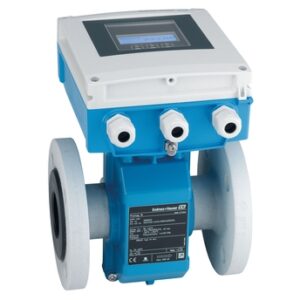
Flow Transmitter (Flow meter)552 Products
-
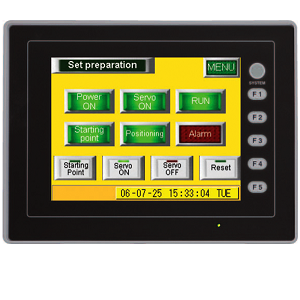
HMI/Touch Screen592 Products
-
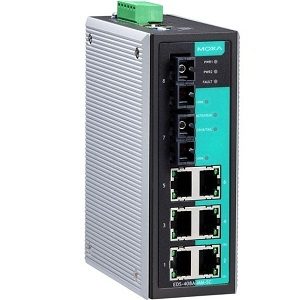
Industrial Device Servers125 Products
-
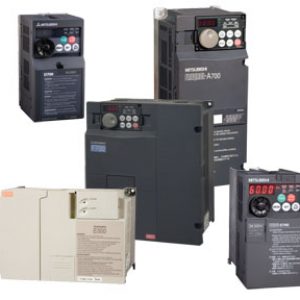
Inverter911 Products
-
Network/Signal2 Products
-
Others4,502 Products
-
Power Supply218 Products
-
Pressure Transmitter146 Products
-
Programmable Logic Controller (PLC)6,290 Products
-
Relay927 Products
-
Sensor2,221 Products
-
Servo Motors & Motor Drives4,675 Products
-
Switch897 Products
-
Timer93 Products
-
Uncategorized1,141 Products
-
Valve Controller & Manifolds17 Products
-
Variable Frequency Drives (VFD)257 Products
-
Yokogawa Remote Indicators16 Products