Automation Pioneer

Full Industrial Automation

What Is Full Industrial Automation?

Industrial Automation is the process of using digital logical programming and mechanized equipment to operate machines and minimize the need for human intervention in decision making and manual commands. Examples include using machine learning (ML) for predictive maintenance or to identify issues on a production line, and deployment of robots operating autonomously within fixed physical boundaries in a warehouse.

Autonomous systems are also already enhancing aspects of smart manufacturing and warehousing to optimize production lines and associated logistics or resourcing.

The traditional automation pyramid consists of three main levels. At the top are supervisory computers that frequently run specialized industrial process control software and communicate via an industrial LAN or WLAN ethernet. Next is the control level where automation-related programs are executed using equipment such as Programmable Logic Controllers (PLCs) to provide real-time computing. Finally, field sensors and actuators interface with the controllers through a field bus and communicate via point-to-point connections. The boundaries between those levels are being redefined to eventually give way to ‘smart factories’.

Why Is Industrial Automation Important?

Relatively recent technological advancements in digitalization and connectivity combined with a proliferation of IoT technology like sensors, has allowed us to bring industrial automation to its next level: Industry 4.0. The result has been a significant increase in overall production, improved product quality through integrated control checks in the production process, faster, more efficient production, and a dramatic reduction in human-related costs, all of which contribute to increased business profits.

Environmental benefits include a reduction in pollutants, reduced energy use and a more efficient use of raw materials.

From the human perspective, tedious physical work has been reduced, the need to work in dangerous production environments has been minimized, and challenging tasks like the lifting of heavy objects have been reassigned to machinery. In short, industrial automation will improve human life and increase the standard of the living.
Types of Industrial Automation

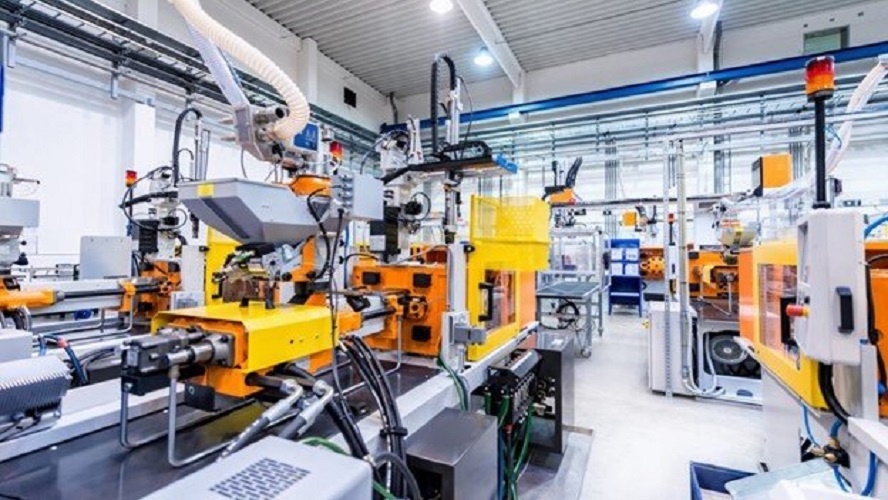
Industrial automation can be categorized into several types based on the level of flexibility and adaptability of the system. Understanding the different types of industrial automation is essential for selecting the most suitable solution for a specific application or industry. The three main types of industrial automation are fixed automation, programmable automation, and flexible automation.

Fixed Automation

Fixed automation, or hard automation, is an industrial process with predetermined sequences for a specific product or process. The machinery is designed exclusively for that purpose, resulting in high production rates and low flexibility. It is suitable for mass production, such as automobile assembly lines or bottling plants. While advantageous for optimized production and low unit costs, fixed automation has limitations in adaptability, requiring significant time and expense for modifications when changes are needed. Initial costs are often high due to specialized equipment requirements.

Programmable Automation

Programmable automation is an industrial automation type where production equipment can adapt to different product configurations by changing the sequence of operations. Controlled by a program, these systems are common in batch production, such as machining and robotic assembly. The main advantage is flexibility, enabling quick reconfiguration for various products. However, drawbacks include lower production rates compared to fixed automation, higher unit costs, and the need for skilled personnel to create and maintain programs. Programmable automation systems often require advanced computational power and control systems for interpreting programs and managing multiple sequences.

Flexible Automation

Flexible automation, a pinnacle of adaptability in industrial processes, enables swift reconfiguration of production equipment for a diverse product range. It relies on programmable machinery and advanced control systems for managing intricate operation sequences, making it beneficial for unpredictable demand and short product life cycles in industries like flexible manufacturing and robotic assembly. The system’s paramount advantage lies in its ability to promptly respond to market changes. Through simple program adjustments, manufacturers can reconfigure the system to produce different products, facilitating quick adaptation to shifting demands. This flexibility is particularly advantageous in markets where customization is crucial.

However, the benefits of flexible automation come with trade-offs. While offering unparalleled adaptability, these systems entail higher complexity and costs. The machinery and equipment used tend to be more expensive than their fixed or programmable counterparts, and the control systems require a higher level of technical expertise for operation and maintenance. Additionally, flexible automation often demands substantial computational power and sophisticated control systems to handle complex operation sequences and adapt to changes in product design or production schedules. Despite these challenges, the adaptability of flexible automation remains crucial in dynamic markets, where the ability to produce a wide variety of products in small quantities is a key strategic advantage.

Facebook
Twitter
LinkedIn
Pinterest
Scroll to Top