What Is Industrial Automation?
Understanding What Is Industrial Automation in Modern Factory Automation Control
What are the main components of industrial automation?
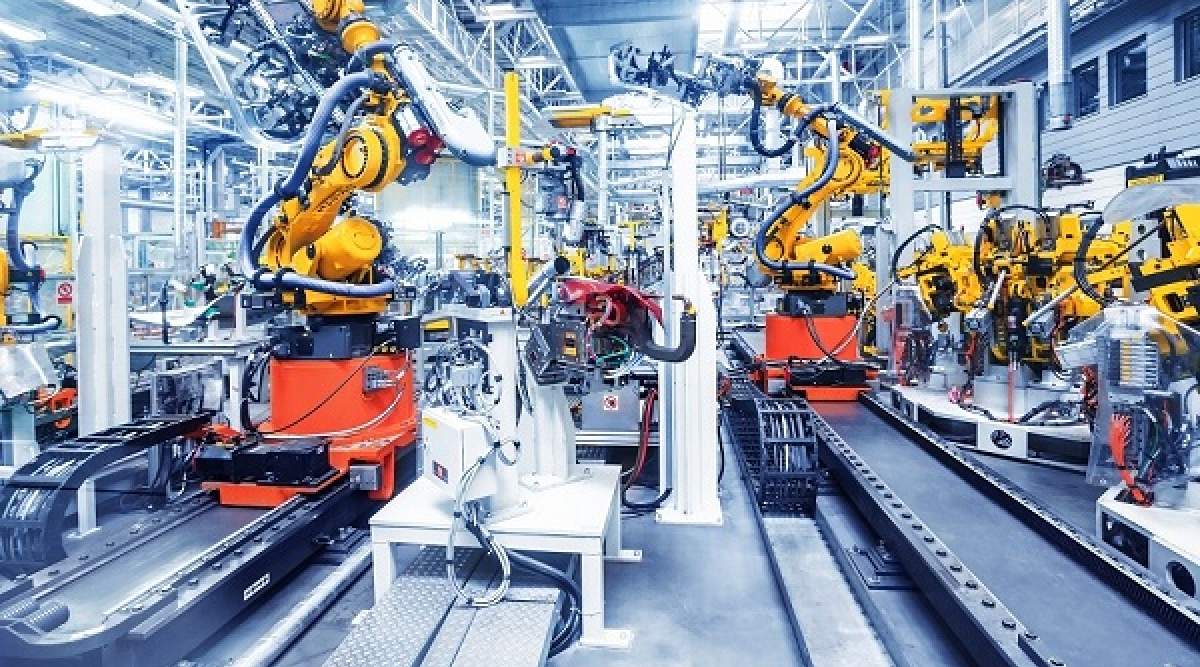
What Is Industrial Automation? A Complete Guide for Modern Industry.
Industrial automation has become a cornerstone of modern manufacturing and industrial operations. From automotive production lines to advanced energy facilities, automation technologies are transforming the way industries produce goods, manage processes, and ensure safety.
In simple terms, industrial automation uses machines, control systems, and advanced software to perform tasks that were once done manually. These systems monitor production processes, analyze data, and make adjustments automatically, allowing factories and industrial plants to operate efficiently with minimal human intervention.
Today, automation is not limited to large manufacturing plants. It is widely used in industries such as oil and gas, chemical processing, power generation, food production, water treatment, and logistics. As industries continue to embrace digital technologies, automation has become a key component of modern smart factories and Industry 4.0 systems.
This guide explains what industrial automation is, how it works, the technologies involved, and why it plays such a critical role in modern industry.
Understanding Industrial Automation
Industrial automation refers to the use of control systems, computers, robotics, and information technologies to manage industrial processes automatically. These systems replace manual operations with intelligent machines capable of monitoring and controlling production activities in real time.
Automation systems are designed to improve efficiency, increase production speed, and maintain consistent product quality. By reducing reliance on manual labor, industries can operate continuously, minimize human error, and achieve higher levels of productivity.
Modern automation systems combine several technologies, including sensors, programmable logic controllers, industrial networks, and supervisory software. Together, these components create an integrated system that monitors industrial processes and ensures they operate within defined parameters.
In practical terms, industrial automation allows machines to perform repetitive tasks such as assembly, packaging, welding, inspection, and material handling. Instead of relying on human operators for every step, automated systems follow preprogrammed instructions and adapt to changing conditions through real-time data analysis.
Automation also plays a critical role in industries where safety and precision are essential. For example, chemical plants, oil refineries, and power stations rely heavily on automated systems to maintain safe operating conditions.
Definition of Industrial Automation
Industrial automation can be defined as the application of control technologies to operate industrial equipment and processes with minimal human involvement.
At its core, automation involves replacing manual control with automated decision-making. Machines and systems collect information about the process, analyze the data, and make adjustments automatically.
Key characteristics of industrial automation include:
Automatic monitoring of production processes
Real-time control of machinery and equipment
Integration of sensors and control systems
Reduced need for manual operation
This approach allows industries to achieve higher accuracy and efficiency than traditional manual systems.
Evolution of Industrial Automation
Industrial automation did not appear overnight. It evolved gradually as industries adopted new technologies to improve productivity.
Early Mechanization
The first stage of automation began during the Industrial Revolution when machines were introduced to replace manual labor. Mechanical systems such as steam engines and automated looms significantly increased production capacity.
Relay-Based Control Systems
In the early 20th century, industrial control systems began using electrical relays to automate machinery. These systems allowed machines to perform simple automated tasks but were difficult to modify or expand.
The PLC Revolution
The introduction of the programmable logic controller (PLC) in the late 1960s transformed industrial automation. PLCs allowed engineers to program machines using software instead of complex wiring systems.
Today, PLCs remain one of the most important components in automation systems.
Industry 4.0 and Smart Manufacturing
Modern automation is increasingly integrated with digital technologies such as artificial intelligence, cloud computing, and the Industrial Internet of Things (IIoT). These technologies enable factories to become more connected, intelligent, and adaptable.
How Industrial Automation Works
Industrial automation systems operate through a coordinated network of devices that collect data, analyze it, and control machinery accordingly.
At a basic level, an automation system follows a continuous cycle:
Sensors collect information from machines and industrial processes.
Controllers process the data and determine the required action.
Control signals are sent to actuators or machines.
The system monitors results and adjusts operations if necessary.
This feedback loop allows automated systems to maintain stable operating conditions and respond to changes in the production environment.
Sensors and Field Devices
Sensors are the foundation of industrial automation. They measure physical variables within industrial processes and convert them into signals that control systems can interpret.
Common measurements include:
Temperature
Pressure
Flow rate
Liquid level
Position and motion
Speed and vibration
These sensors are often referred to as field devices because they are installed directly in the industrial environment.
For example, a temperature sensor in a chemical reactor continuously measures the temperature and sends that data to a control system. If the temperature exceeds a preset limit, the system can automatically adjust cooling systems or trigger alarms.
Programmable Logic Controllers (PLC)
Programmable Logic Controllers are the central control units of many automation systems.
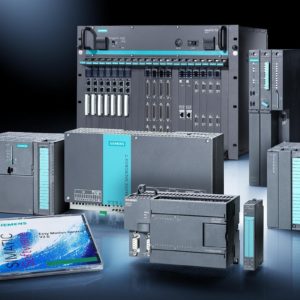
A PLC is a rugged industrial computer designed to control machines, assembly lines, and production equipment. Unlike standard computers, PLCs are built to operate reliably in harsh environments with high temperatures, electrical noise, and vibration.
PLCs perform several important functions:
Receive input signals from sensors
Execute programmed logic instructions
Send control signals to motors, valves, and other equipment
Monitor system performance
Automation engineers typically program PLCs using languages such as ladder logic or structured text.
For readers who want to explore this topic further, see:
PLC Programming Basics
https://www.automationpioneer.com/plc-programming-basics
SCADA Systems and Human-Machine Interfaces
While PLCs control machinery at the equipment level, supervisory systems provide higher-level monitoring and control.
Supervisory Control and Data Acquisition (SCADA) systems collect data from multiple controllers across a facility and present the information through graphical displays. Operators can view system performance, track production data, and respond to alarms in real time.
Human-Machine Interfaces (HMIs) are the visual dashboards that allow operators to interact with automated systems. These interfaces display key process variables, system alerts, and control options.
To learn more about this technology, see:
What Is SCADA System
https://www.automationpioneer.com/what-is-scada-system
Industrial Communication Networks
Automation systems rely on communication networks to exchange data between devices.
Industrial networks connect sensors, controllers, and computers so that information can flow across the entire production system.
Common industrial communication protocols include:
Modbus
Profibus
Profinet
EtherNet/IP
OPC UA
These communication standards allow equipment from different manufacturers to work together within the same automation environment.
For a deeper explanation, see:
Industrial Communication Protocols Guide
https://www.automationpioneer.com/industrial-communication-protocols
Types of Industrial Automation Systems
Industrial automation systems can be categorized based on their flexibility and production capabilities.
Fixed Automation
Fixed automation is designed for high-volume production with a fixed sequence of operations. Once installed, the system performs the same tasks repeatedly with very little variation.
This type of automation is commonly used in industries where large quantities of identical products are manufactured.
Examples include:
Automotive assembly lines
Beverage bottling plants
High-speed packaging systems
Although fixed automation delivers high efficiency, it offers limited flexibility for product changes.
Programmable Automation
Programmable automation allows production equipment to be reprogrammed for different products or manufacturing processes.
This type of automation is widely used in batch production environments where different product types are manufactured in smaller quantities.
Examples include:
CNC machining systems
PLC-controlled manufacturing equipment
Industrial batch processing plants
Because machines can be reprogrammed, programmable automation offers greater flexibility than fixed automation.
Flexible Automation
Flexible automation represents the most advanced form of automation. These systems can quickly adapt to different products with minimal downtime.
Flexible automation is commonly found in modern smart factories where robotics, advanced control systems, and digital technologies work together to optimize production.
Examples include robotic assembly lines that automatically adjust to produce different product variations.
Key Components of Industrial Automation
Industrial automation systems rely on several integrated components that work together to control industrial processes.
Industrial Robots
Industrial robots are automated machines capable of performing complex tasks with high precision and speed.
They are widely used in manufacturing for tasks such as:
Welding
Painting
Assembly
Packaging
Material handling
Robots are particularly valuable in environments where tasks are repetitive or hazardous for human workers.
Actuators and Control Devices
Actuators are devices that convert control signals into physical movement.
Examples include:
Electric motors
Pneumatic cylinders
Hydraulic systems
Control valves
These devices perform the actual mechanical work required to operate industrial machinery.
Industrial Control Software
Software platforms play a critical role in managing automated systems.
Examples include:
SCADA software for monitoring operations
Manufacturing Execution Systems (MES) for production management
Industrial analytics platforms for performance optimization
These tools allow engineers to track production data, identify performance issues, and improve operational efficiency.
Benefits of Industrial Automation
Industrial automation provides numerous benefits that make it essential for modern industry.
Increased Productivity
Automated systems can operate continuously without fatigue. Machines can perform repetitive tasks faster than human workers, significantly increasing production output.
Improved Product Quality
Automation ensures consistent manufacturing processes, reducing variations and defects. This leads to higher product quality and fewer rejected items.
Enhanced Workplace Safety
Automation reduces the need for workers to perform dangerous tasks. Hazardous operations such as chemical processing, heavy lifting, or high-temperature manufacturing can be handled by machines.
Reduced Operational Costs
Although automation requires initial investment, it reduces long-term operating costs by improving efficiency, minimizing waste, and reducing labor requirements.
Applications of Industrial Automation
Industrial automation is widely used across many sectors.
Manufacturing Industry
Manufacturing remains the largest user of automation technologies. Automated systems control production lines, perform quality inspections, and manage logistics operations.
Oil and Gas Industry
Automation systems monitor pipelines, refineries, and drilling operations to ensure safe and efficient performance.
Power Generation
Power plants rely on automated control systems to regulate turbines, boilers, and electrical systems.
Food and Beverage Industry
Automation improves hygiene and efficiency in food processing plants through automated packaging, sorting, and labeling systems.
- Industrial Automation Fundamentals
- Industrial Communication Protocols
- Industrial Instrumentation Control
- Industrial Sensors & Measurement
- Motion and Process Control
- PLC Programming & Controllers
- SCADA and DCS Systems
- Servo Motors and Motor Drives
Frequently Asked Questions (FAQ)
What is industrial automation in simple terms?
Industrial automation is the use of machines, control systems, and software to automatically operate industrial processes with minimal human intervention.
What are the main components of industrial automation?
The main components include sensors, controllers such as PLCs, communication networks, actuators, and industrial software systems.
What industries use industrial automation?
Industrial automation is widely used in manufacturing, oil and gas, power generation, chemical processing, food production, and water treatment.
What is the difference between PLC and SCADA?
A PLC controls machinery at the equipment level, while SCADA systems monitor and supervise multiple machines and processes across an entire facility.
Is industrial automation part of Industry 4.0?
Yes. Industrial automation is one of the core technologies behind Industry 4.0, enabling smart factories and connected manufacturing systems.
Your One-Stop Source for Reliable Automation & Process Control Equipment
Access trusted process control equipment, expert support, and fast sourcing—all in one place.
-
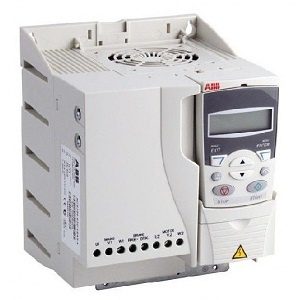
AC Drives 18,165 Products
-
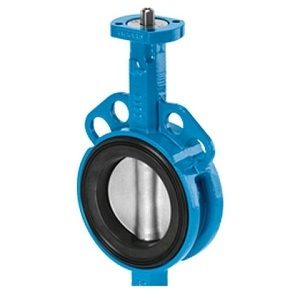
Butterfly Valve236 Products
-
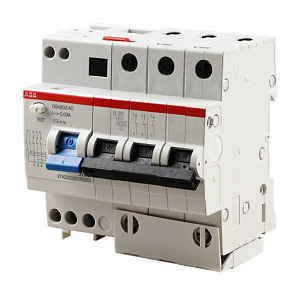
Circuit Breakers2,226 Products
-
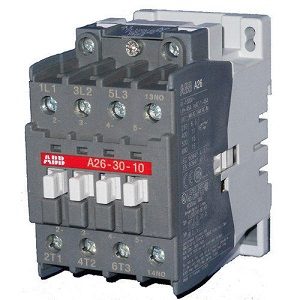
Contactors567 Products
-
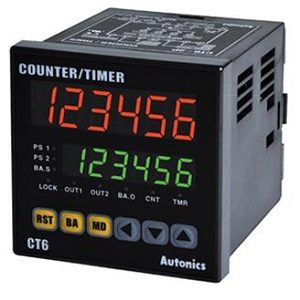
Counters78 Products
-
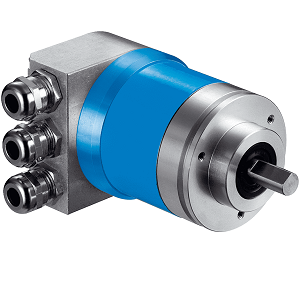
Encoder117 Products
-
Fanuc Main Board1,376 Products
-
Flow Transmitter (Flow meter)552 Products
-
HMI/Touch Screen592 Products
-
Inverter911 Products
-
Network/Signal4 Products
-
Others4,613 Products
-
Power Supply218 Products
-
Pressure Transmitter146 Products
-
Programmable Logic Controller (PLC)6,290 Products
-
Relay927 Products
-
Sensor2,221 Products
-
Servo Motors & Motor Drives4,499 Products
-
Switch897 Products
-
Timer93 Products
-
Uncategorized1,143 Products
-
Valve Controller & Manifolds15 Products
-
Variable Frequency Drives (VFD)257 Products
-
Yokogawa Remote Indicators16 Products