Types of Industrial Automation Sensors and Their Applications
Understanding The Types of Industrial Automation Sensors and Their Applications in Factory Automation Control
What are industrial automation sensors? and What are the most common types of industrial sensors?
Types of Industrial Automation Sensors and Their Applications
Industrial automation doesn’t work on guesswork—it runs on data. And at the very front of that data pipeline are sensors. If controllers like PLCs are the brain of an automation system, then sensors are its eyes, ears, and nervous system. They detect what’s happening in the real world and convert it into signals that machines can understand and act on.
In modern manufacturing, sensors are responsible for monitoring everything from temperature and pressure to motion, flow, and position. Without them, automation simply wouldn’t function. They enable real-time control, predictive maintenance, safety systems, and quality assurance across virtually every industry.
This guide breaks down the major types of industrial automation sensors and their real-world applications, helping you understand where each sensor fits and why it matters.
Understanding Industrial Automation Sensors
Industrial automation sensors are devices that detect physical or environmental changes and convert them into electrical signals for processing by control systems. These signals are then used by controllers such as PLCs or SCADA systems to make decisions and control equipment. Sensors are essential because they provide the real-time data required to monitor, control, and optimize industrial processes. They measure variables like temperature, pressure, motion, flow, and level, enabling systems to operate efficiently and safely. In a typical automation loop:
Sensors detect process conditions
Controllers analyze the data
Actuators respond accordingly
Without accurate sensing, even the most advanced automation system becomes unreliable.
How Sensors Work in Automation Systems
At a functional level, most sensors follow a similar structure:
A sensing element detects a physical parameter
A transducer converts it into an electrical signal
Signal conditioning processes the data
The output is sent to a controller
This process allows machines to interpret real-world conditions and respond intelligently.
Temperature Sensors and Their Applications
What Are Temperature Sensors?
Temperature sensors measure thermal energy within a system and convert it into a readable signal. Temperature is one of the most commonly monitored variables in industrial environments.
Types of Temperature Sensors
Thermocouples
Widely used for high-temperature applications due to durability and wide range.
RTDs (Resistance Temperature Detectors)
Highly accurate sensors commonly used in precision industrial processes.
Thermistors
Fast response sensors ideal for applications requiring quick temperature changes.
Applications of Temperature Sensors
Temperature sensors are used across nearly every industrial sector:
Monitoring machinery to prevent overheating
Controlling chemical reactions in process industries
HVAC systems in industrial facilities
Food processing for safety and compliance
Power plants for turbine and boiler monitoring
Maintaining accurate temperature control is critical for both product quality and equipment safety.
Pressure Sensors and Their Applications
What Are Pressure Sensors?
Pressure sensors measure the force exerted by gases or liquids and convert it into an electrical signal. These sensors are essential in systems involving fluids and gases.
Types of Pressure Sensors
Gauge pressure sensors
Absolute pressure sensors
Differential pressure sensors
Each type serves different measurement requirements depending on the application.
Applications of Pressure Sensors
Pressure sensors are widely used in:
Oil and gas pipelines
Hydraulic and pneumatic systems
Water treatment plants
Chemical processing facilities
Flow measurement systems
They also help monitor variables such as liquid levels and flow rates in industrial systems.
Proximity Sensors and Their Applications
What Are Proximity Sensors?
Proximity sensors detect the presence or absence of objects without physical contact. They are critical in automated production lines where precise object detection is required.
Types of Proximity Sensors
Inductive Sensors
Detect metallic objects using electromagnetic fields.
Capacitive Sensors
Detect both metallic and non-metallic materials, including liquids.
Photoelectric Sensors
Use light beams to detect objects at longer distances.
Ultrasonic Sensors
Use sound waves to detect object distance and presence.
Applications of Proximity Sensors
Proximity sensors are used in:
Conveyor systems for object detection
Robotics for positioning and alignment
Packaging and assembly lines
Safety systems and machine guarding
They are especially valuable in environments where physical contact is not feasible or could cause damage.
Flow Sensors and Their Applications
What Are Flow Sensors?
Flow sensors measure the rate at which liquids or gases move through a system. They are essential in process industries where precise flow control is required.
Types of Flow Sensors
Electromagnetic flow meters
Ultrasonic flow meters
Turbine flow sensors
Mass flow sensors
Applications of Flow Sensors
Flow sensors are widely used in:
Chemical processing plants
Water and wastewater treatment systems
Oil and gas pipelines
Food and beverage production
Pharmaceutical manufacturing
Accurate flow measurement ensures efficient resource use and consistent production quality.
Level Sensors and Their Applications
What Are Level Sensors?
Level sensors measure the amount of material—liquid or solid—inside a container or tank.
Types of Level Sensors
Float level sensors
Ultrasonic level sensors
Capacitive level sensors
Radar level sensors
Applications of Level Sensors
Level sensors are used in:
Storage tanks in oil and gas industries
Water reservoirs and treatment plants
Chemical processing systems
Food and beverage tanks
They are essential for preventing overflows, maintaining inventory, and ensuring process continuity.
Motion and Position Sensors
What Are Motion Sensors?
Motion sensors detect movement, acceleration, or vibration within a system. Many of these sensors are based on MEMS (Micro-Electro-Mechanical Systems) technology.
Types of Motion and Position Sensors
Accelerometers
Gyroscopes
Encoders
Linear position sensors
Applications
These sensors are widely used in:
Robotics and automated machinery
Conveyor belt systems
CNC machines
Predictive maintenance systems
They help ensure precise control of movement and positioning in industrial processes.
Optical and Vision Sensors
What Are Optical Sensors?
Optical sensors detect light, color, or visual patterns. They are often used in quality control and inspection systems.
Types of Optical Sensors
Photoelectric sensors
Laser sensors
Machine vision systems
Applications
Optical sensors are used for:
Quality inspection in manufacturing
Barcode reading and tracking
Defect detection
Sorting and classification systems
These sensors play a key role in maintaining high product quality standards.
Smart Sensors and IIoT Integration
What Are Smart Sensors?
Smart sensors are advanced devices that combine sensing capabilities with data processing and communication features. They are designed for integration into Industrial Internet of Things (IIoT) systems. Modern smart sensors can:
Process data locally
Communicate with cloud platforms
Provide predictive analytics
Enable remote monitoring
They are a key driver of digital transformation in manufacturing.
Applications of Smart Sensors
Predictive maintenance systems
Smart factories and Industry 4.0
Energy monitoring systems
Remote industrial operations
Smart sensors allow industries to move from reactive to data-driven decision-making.
Applications of Industrial Automation Sensors Across Industries
Industrial sensors are used across a wide range of industries:
Manufacturing: Used for process control, quality assurance, and machine monitoring.
Oil and Gas: Monitor pressure, flow, and safety conditions in pipelines and refineries.
Power Generation: Ensure efficient operation of turbines, boilers, and electrical systems.
Food and Beverage: Maintain hygiene, temperature control, and product consistency.
Pharmaceuticals: Enable precise control of production environments and quality standards.
Sensors are critical to achieving efficiency, safety, and reliability in all these sectors.
Recommended Related Articles:
- Industrial Automation Fundamentals
- Industrial Communication Protocols
- Industrial Instrumentation Control
- Industrial Sensors & Measurement
- Motion and Process Control
- PLC Programming & Controllers
- SCADA and DCS Systems
- Servo Motors and Motor Drives
Frequently Asked Questions (FAQ)
What are industrial automation sensors?
Industrial automation sensors are devices that detect physical or environmental changes and convert them into signals used by control systems to monitor and control industrial processes.
What are the most common types of industrial sensors?
The most common types include temperature sensors, pressure sensors, proximity sensors, flow sensors, level sensors, and motion sensors.
Why are sensors important in automation?
Sensors provide real-time data that allows automation systems to monitor conditions, make decisions, and control machinery efficiently and safely.
What industries use industrial sensors?
Industries such as manufacturing, oil and gas, power generation, food processing, and pharmaceuticals rely heavily on industrial sensors.
What are smart sensors in Industry 4.0?
Smart sensors are advanced sensors with built-in processing and communication capabilities that enable data-driven automation and integration with IIoT systems.
Your One-Stop Source for Reliable Automation & Process Control Equipment
Access trusted process control equipment, expert support, and fast sourcing—all in one place.
-
AC Drives 18,165 Products
-
Butterfly Valve236 Products
-
Circuit Breakers2,226 Products
-
Contactors567 Products
-
Counters78 Products
-
Encoder117 Products
-
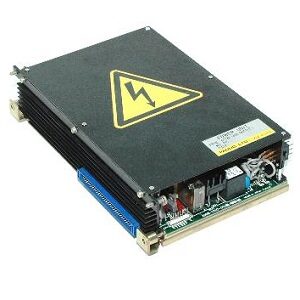
Fanuc Main Board1,376 Products
-
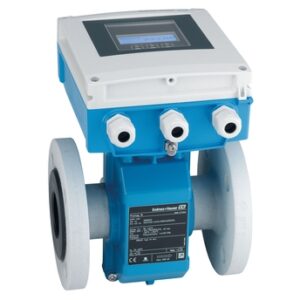
Flow Transmitter (Flow meter)552 Products
-
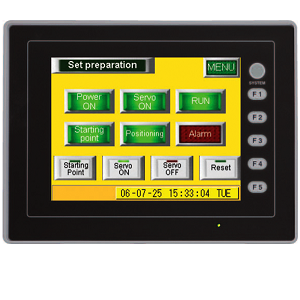
HMI/Touch Screen592 Products
-
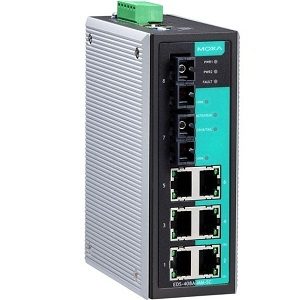
Industrial Device Servers125 Products
-
Inverter911 Products
-
Network/Signal2 Products
-
Others4,502 Products
-
Power Supply218 Products
-
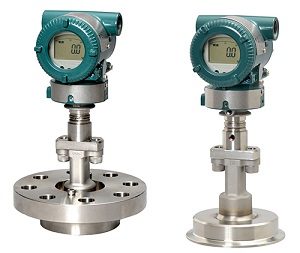
Pressure Transmitter146 Products
-
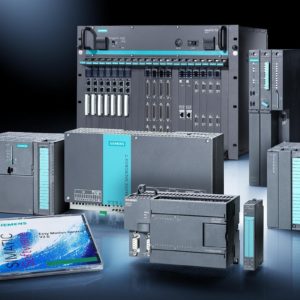
Programmable Logic Controller (PLC)6,290 Products
-
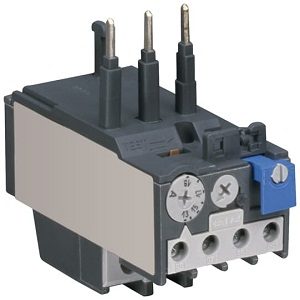
Relay927 Products
-
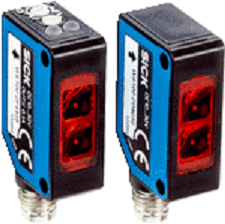
Sensor2,221 Products
-
Servo Motors & Motor Drives4,722 Products
-
Switch897 Products
-
Timer93 Products
-
Uncategorized1,141 Products
-
Valve Controller & Manifolds17 Products
-
Variable Frequency Drives (VFD)257 Products
-
Yokogawa Remote Indicators16 Products