
Understand EtherCAT Protocol
Understand EtherCAT Protocol and How It Works in Factory Automation Control
What is EtherCAT? and How is EtherCAT different from standard Ethernet?
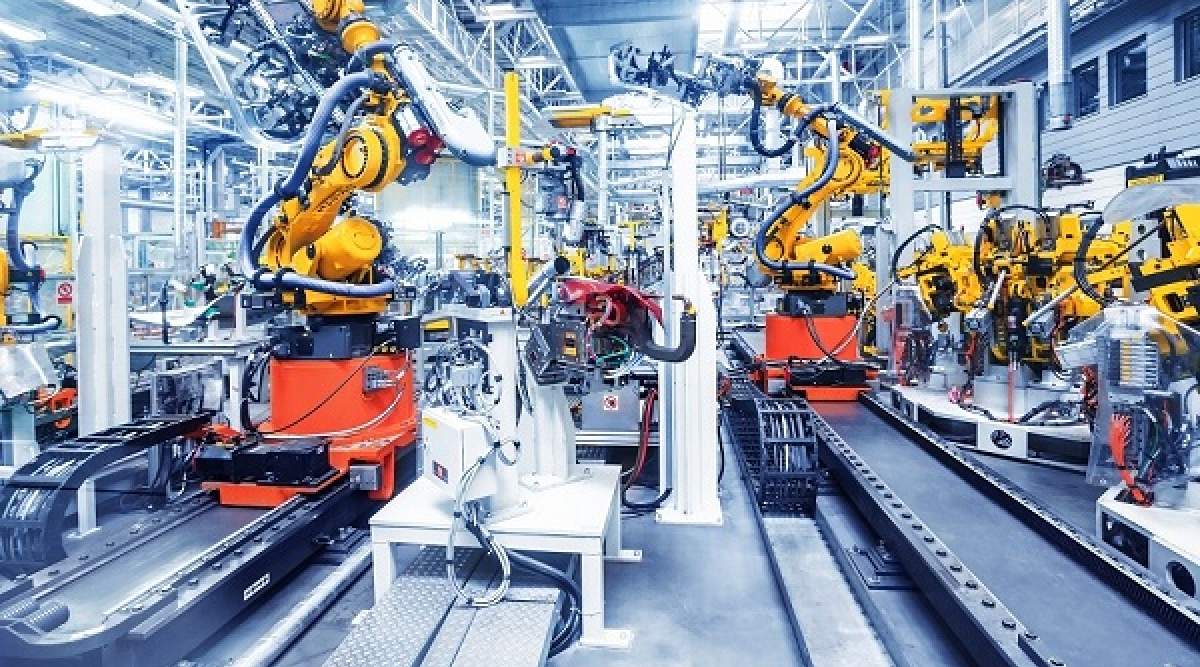
Understand EtherCAT Protocol and How It Works
EtherCAT has become one of the most widely adopted industrial communication protocols in high-performance automation systems. If you’ve worked with motion control, robotics, or high-speed manufacturing lines, chances are you’ve encountered EtherCAT—or at least felt its impact on system performance. Unlike traditional industrial networks, EtherCAT is engineered from the ground up for real-time, deterministic communication. It doesn’t just move data—it does so with speed, precision, and efficiency that conventional Ethernet simply cannot match.
In this guide, we’ll break down what EtherCAT is, how it works, why it’s so fast, and where it fits into modern industrial automation.
What Is EtherCAT?
EtherCAT (Ethernet for Control Automation Technology) is a real-time Industrial Ethernet protocol designed specifically for automation, motion control, and high-speed data exchange between devices. It is based on standard Ethernet (IEEE 802.3) but optimized to eliminate delays and ensure deterministic communication—meaning data arrives exactly when it is expected.
Originally developed by Beckhoff Automation, EtherCAT is now maintained by the EtherCAT Technology Group and supported by thousands of vendors worldwide.
Why EtherCAT Was Developed
Standard Ethernet works well in office networks but struggles in industrial environments where timing is critical. Traditional Ethernet limitations include:
- Non-deterministic communication (data timing is unpredictable)
- High latency due to packet handling and switching
- Inefficient bandwidth usage for small data exchanges
EtherCAT was designed to solve these issues by introducing a new way of handling data transmission—one that prioritizes speed, synchronization, and efficiency.
Where EtherCAT Is Used
EtherCAT is widely used in industries that require high-speed and precise control, including:
- Robotics and motion control systems
- CNC machines
- Packaging and assembly lines
- Semiconductor manufacturing
- Test and measurement systems
- Power and energy systems
Its ability to deliver sub-microsecond synchronization and extremely fast cycle times makes it ideal for demanding applications.
How EtherCAT Works
At the core of EtherCAT is a concept that sets it apart from other industrial protocols: processing data “on the fly.” Instead of sending separate messages to each device, EtherCAT uses a single data frame that passes through all devices in the network.
EtherCAT Network Architecture
EtherCAT follows a Master–Slave architecture (now often called MainDevice–SubDevice).
- The Master (MainDevice) controls communication
- The Slaves (SubDevices) include sensors, drives, I/O modules, and actuators
The master sends a single Ethernet frame that travels through each device in sequence.
On-the-Fly Data Processing
Here’s where EtherCAT becomes unique. As the Ethernet frame passes through each slave device:
- The device reads only the data intended for it
- It inserts its own data into the same frame
- The frame continues to the next device without stopping
This process happens in hardware and in real time, without buffering delays. Because of this:
- Multiple devices communicate using a single frame
- Network bandwidth is used efficiently
- Communication latency is extremely low
This is often referred to as “frame summation” or “on-the-fly processing.”
EtherCAT Communication Cycle
A typical EtherCAT communication cycle works like this:
- The master sends a frame containing commands and data
- Each slave processes its portion of the frame in real time
- Each slave inserts its response data into the frame
- The frame returns to the master with all device data included
This entire cycle can occur in microseconds, enabling high-speed control loops.
Why EtherCAT Is So Fast
EtherCAT achieves its speed through several key mechanisms:
1. Single Frame Communication
Instead of sending multiple frames, EtherCAT uses one frame for many devices.
2. Hardware-Based Processing
Devices process data directly in hardware, avoiding software delays.
3. No Switches Required
EtherCAT eliminates the need for network switches, reducing latency.
4. Efficient Bandwidth Usage
Nearly 100% of available bandwidth is utilized.
As a result, EtherCAT can achieve cycle times below 100 microseconds and synchronization accuracy below 1 microsecond.
Key Features of EtherCAT Protocol
EtherCAT isn’t just fast—it’s also highly flexible and scalable.
Deterministic Real-Time Communication
Deterministic communication means data is delivered at predictable intervals. This is critical for applications like:
- Motion control
- Robotics synchronization
- High-speed assembly
EtherCAT ensures that every device receives data exactly when required.
Distributed Clocks and Synchronization
EtherCAT uses a distributed clock mechanism to synchronize all devices on the network. This allows multiple axes of motion or machines to operate in perfect coordination. Synchronization accuracy can reach nanosecond-level precision, which is essential in advanced automation systems.
Flexible Network Topology
EtherCAT supports multiple network structures, including:
- Line (daisy chain)
- Star
- Tree
- Ring
Unlike traditional Ethernet, EtherCAT does not rely on switches, allowing flexible and scalable system design.
High Scalability
EtherCAT networks can support a large number of devices without significant performance loss. This makes it suitable for:
- Large manufacturing systems
- Distributed I/O architectures
- Complex automation networks
Cost Efficiency
Because EtherCAT uses standard Ethernet hardware and does not require switches or specialized infrastructure, it is often more cost-effective than traditional fieldbus systems.
EtherCAT vs Traditional Ethernet
Understanding EtherCAT becomes easier when compared to standard Ethernet.
Standard Ethernet
- Sends individual frames to each device
- Relies on switches and routing
- Non-deterministic communication
- Higher latency
EtherCAT
- Uses a single frame for all devices
- Eliminates switches
- Deterministic real-time communication
- Extremely low latency
In short, EtherCAT transforms Ethernet into a real-time control network.
Advantages of EtherCAT in Industrial Automation
EtherCAT offers several practical advantages for industrial systems.
High-Speed Performance
EtherCAT is one of the fastest industrial protocols available, making it ideal for applications requiring rapid response times.
Precise Synchronization
Its distributed clock system ensures accurate synchronization across multiple devices.
Reduced System Complexity
Without the need for switches or complex network infrastructure, system design becomes simpler.
Improved Efficiency
EtherCAT reduces CPU load and improves overall system efficiency by optimizing data transmission.
Flexibility in System Design
Engineers can design networks that match machine layouts rather than being constrained by network limitations.
Applications of EtherCAT
EtherCAT is widely used across various industrial sectors.
Motion Control Systems
EtherCAT is commonly used in servo drives and motion control systems where precise timing is critical.
Robotics
Industrial robots rely on EtherCAT for synchronized movement and high-speed communication.
Manufacturing and Assembly Lines
EtherCAT enables real-time coordination of machines in automated production lines.
Semiconductor and Electronics Industry
High precision and synchronization make EtherCAT ideal for semiconductor manufacturing processes.
Test and Measurement Systems
EtherCAT supports fast data acquisition and real-time monitoring.
Recommended Related Articles:
https://www.automationpioneer.com/plc-programming-basics
PLC Programming Basics
https://www.automationpioneer.com/what-is-scada-system
What Is SCADA System
https://www.automationpioneer.com/plc-vs-dcs
PLC vs DCS Explained
https://www.automationpioneer.com/types-of-industrial-sensors
Types of Industrial Sensors
https://www.automationpioneer.com/industrial-communication-protocols
Industrial PLC Communication Protocols Guide
https://www.automationpioneer.com/pressure-transmitters-guide
Pressure Transmitter Guide
https://www.automationpioneer.com/industrial-iot-guide
Industrial IoT Guide
Frequently Asked Questions (FAQ)
What is EtherCAT in simple terms?
EtherCAT is a high-speed industrial communication protocol that allows machines and devices to exchange data in real time using a single Ethernet frame.
How is EtherCAT different from standard Ethernet?
EtherCAT processes data “on the fly” as it passes through devices, while standard Ethernet sends separate data packets to each device, resulting in higher latency.
Why is EtherCAT so fast?
EtherCAT is fast because it uses:
- Single-frame communication
- Hardware-based processing
- No switches or delays
- Efficient bandwidth utilization
What industries use EtherCAT?
EtherCAT is widely used in robotics, manufacturing, motion control systems, semiconductor production, and industrial automation.
Is EtherCAT part of Industrial Ethernet?
Yes. EtherCAT is a type of Industrial Ethernet protocol designed specifically for real-time control and automation applications.
Can EtherCAT work with PLC systems?
Yes. EtherCAT is commonly used with PLCs and industrial controllers to manage I/O devices, drives, and sensors in automation systems.
Is EtherCAT better than other protocols like Modbus or Profinet?
It depends on the application. EtherCAT is generally preferred for high-speed, real-time control, while protocols like Modbus or Profinet may be sufficient for less time-critical applications.
Your One-Stop Source for Reliable Automation & Process Control Equipment
Access trusted process control equipment, expert support, and fast sourcing—all in one place.
-
AC Drives 18,160 Products
-
Butterfly Valve236 Products
-
Circuit Breakers2,226 Products
-
Contactors567 Products
-
Counters78 Products
-
Encoder117 Products
-
Fanuc Main Board1,376 Products
-
Flow Transmitter (Flow meter)396 Products
-
HMI/Touch Screen592 Products
-
Inverter911 Products
-
Network/Signal4 Products
-
Others4,668 Products
-
Power Supply218 Products
-
Pressure Transmitter143 Products
-
Programmable Logic Controller (PLC)6,288 Products
-
Relay927 Products
-
Sensor2,221 Products
-
Servo Motors & Motor Drives4,363 Products
-
Switch897 Products
-
Timer93 Products
-
Uncategorized1,145 Products
-
Valve Controller & Manifolds15 Products
-
Variable Frequency Drives (VFD)258 Products
-
Yokogawa Remote Indicators16 Products