
Understanding IO-Link Protocol
Understanding the IO-Link Protocol and How It Works in Factory Automation Control
What is IO-Link? and How is IO-Link different from traditional sensors?
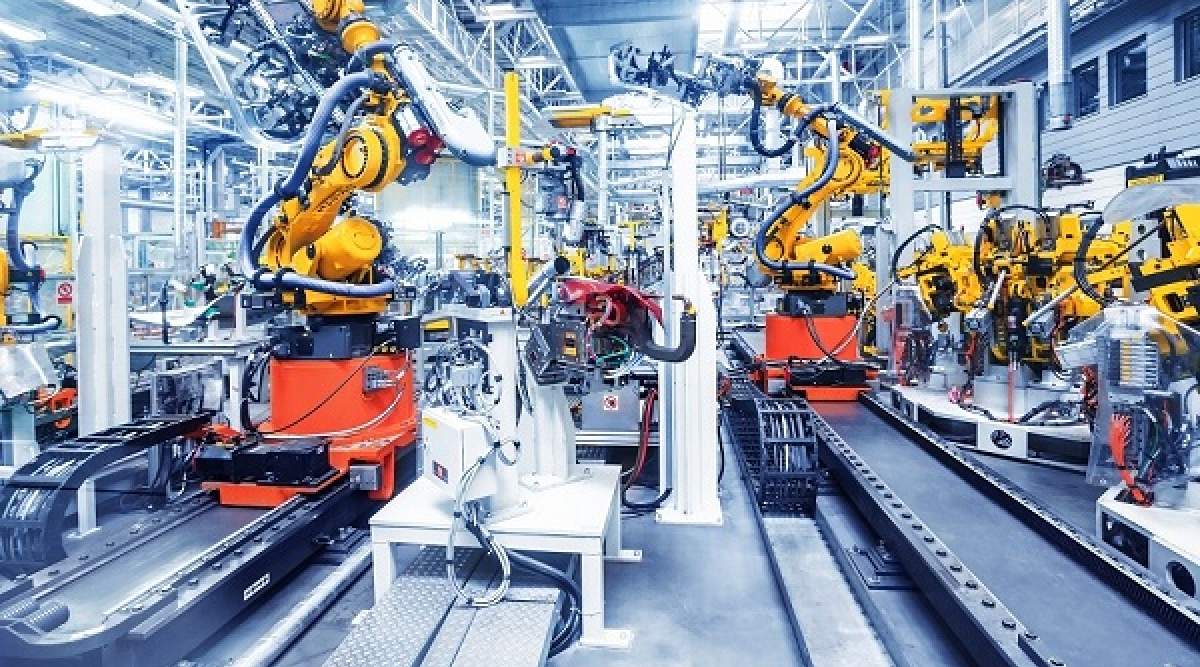
Understanding IO-Link Protocol and How It Works
Industrial automation is moving rapidly toward smarter, more connected systems. Sensors are no longer just “on/off” devices—they are expected to deliver rich data, diagnostics, and real-time insights. That shift is exactly where IO-Link fits in.
If you’ve worked with traditional digital or analog I/O, you already know the limitations: limited data, complex wiring, and little visibility into device health. IO-Link changes that completely by turning standard field devices into intelligent, communicative components.
This guide breaks down what IO-Link is, how it works, its architecture, advantages, and where it fits in modern automation systems—all from a practical, engineering-focused perspective.
What Is IO-Link?
IO-Link is a standardized, point-to-point communication protocol (IEC 61131-9) used to connect sensors and actuators to automation systems such as PLCs. Unlike traditional I/O systems that only transmit simple signals (like ON/OFF or 4–20 mA), IO-Link enables bidirectional communication, allowing devices to both send and receive data. That means a sensor can do more than just report a value—it can:
- Send diagnostics and health data
- Provide detailed process values
- Receive configuration parameters remotely
In practical terms, IO-Link transforms basic field devices into smart devices capable of communicating far beyond simple signals.
Why IO-Link Was Developed
Traditional automation systems had a clear limitation: sensors were “dumb.” They provided minimal data, required manual setup, and offered no insight into performance or failure conditions. As industries moved toward Industry 4.0, the need for smarter, more connected devices became obvious. IO-Link was developed to:
- Simplify sensor integration
- Enable richer data communication
- Reduce wiring complexity
- Improve diagnostics and maintenance
Today, IO-Link is widely adopted across industries looking to modernize their automation infrastructure.
How IO-Link Works
At its core, IO-Link is a simple, point-to-point communication system between a device and a master. Each IO-Link device connects directly to an IO-Link master using a standard cable. The master then communicates with a higher-level control system such as a PLC using industrial networks like PROFINET or EtherNet/IP.
Core Components of an IO-Link System
Understanding IO-Link becomes much easier once you break it into its main components.
IO-Link Devices (Sensors and Actuators)
These are the field devices that collect data or perform actions. Examples include:
- Proximity sensors
- Pressure sensors
- Flow sensors
- Valve actuators
Unlike traditional devices, IO-Link-enabled devices can transmit:
- Process values (e.g., exact temperature or pressure)
- Device status
- Diagnostic information
IO-Link Master
The IO-Link master acts as the bridge between field devices and the control system. It performs several critical functions:
- Communicates with multiple IO-Link devices
- Converts device data into fieldbus or Ethernet protocols
- Sends commands from the PLC to devices
A single master typically supports multiple ports, each connected to a device.
Control System (PLC or SCADA)
The master communicates upward to a PLC or SCADA system, where:
- Data is processed
- Control decisions are made
- Operators monitor system performance
This integration allows IO-Link devices to be part of a larger automation architecture.
Standard Cabling
One of IO-Link’s practical advantages is its simplicity—it uses standard 3-wire unshielded cables, typically up to 20 meters in length. This significantly reduces installation complexity compared to traditional fieldbus systems.
Communication Structure
IO-Link uses a point-to-point communication model, meaning each device connects directly to a dedicated port on the master. This eliminates network complexity and makes troubleshooting much easier.
Data Exchange in IO-Link
IO-Link supports multiple types of data communication, which is one of its biggest advantages.
Process Data
This is real-time operational data from the device, such as:
- Temperature
- Pressure
- Position
It is transmitted cyclically (continuously at regular intervals).
Device Data
This includes configuration parameters and device information, such as:
- Measurement ranges
- Calibration settings
- Device identification
Event Data
Event data includes alerts and diagnostic information, such as:
- Faults
- Warnings
- Maintenance indicators
Value Status
This indicates whether the transmitted data is valid or reliable. This multi-layer data structure enables IO-Link to provide far more insight than traditional I/O systems.
Key Features of IO-Link
IO-Link stands out because it bridges the gap between simple sensors and complex industrial networks.
Bidirectional Communication
Unlike traditional sensors, IO-Link devices can both send and receive data. This allows:
- Remote configuration
- Real-time parameter changes
- Adaptive control strategies
Standardized Protocol
IO-Link is globally standardized under IEC 61131-9, ensuring compatibility across manufacturers. This means you can use devices from different vendors within the same system.
Smart Device Integration
IO-Link enables sensors to deliver rich datasets instead of simple binary signals, allowing better process control and decision-making.
Automatic Device Replacement
When a device is replaced, the IO-Link master can automatically download stored parameters to the new device. This drastically reduces downtime during maintenance.
Simplified Wiring
IO-Link uses standard cables and connectors, eliminating the need for expensive shielded wiring or complex network configurations.
Advantages of IO-Link in Industrial Automation
From an engineering standpoint, IO-Link delivers both operational and strategic benefits.
Improved Data Visibility
Traditional sensors provide limited data. IO-Link devices deliver:
- Real-time measurements
- Device health information
- Diagnostic insights
This enables predictive maintenance and better process optimization.
Reduced Downtime
With features like automatic configuration and remote diagnostics, IO-Link minimizes downtime caused by:
- Device failures
- Manual setup errors
- Maintenance delays
Faster Installation and Commissioning
Using standard cables and simplified connections, IO-Link reduces:
- Installation time
- Wiring complexity
- Commissioning effort
Flexibility and Scalability
IO-Link systems are easy to expand. Adding new devices typically involves:
- Connecting the device
- Updating configuration
No complex network redesign is required.
Cost Efficiency
Although IO-Link adds intelligence to devices, it reduces overall system costs by:
- Lowering installation expenses
- Reducing maintenance costs
- Minimizing downtime
Applications of IO-Link
IO-Link is widely used across industries where precision, reliability, and data transparency are critical.
Manufacturing and Assembly
In production lines, IO-Link sensors monitor:
- Part positioning
- Machine status
- Process variables
This improves efficiency and reduces errors.
Packaging Industry
IO-Link is used to:
- Monitor conveyor systems
- Detect product positioning
- Optimize packaging operations
Automotive Industry
Applications include:
- Robotic assembly systems
- Welding process monitoring
- Quality control systems
Process Industries
In industries such as water treatment and chemical processing, IO-Link is used for:
- Pressure monitoring
- Flow measurement
- Temperature control
Material Handling and Logistics
IO-Link enables precise control in automated systems such as:
- Conveyor belts
- Automated storage systems
- Robotics
IO-Link vs Traditional I/O Systems
To understand IO-Link’s impact, it helps to compare it with conventional systems.
Traditional I/O
- Limited to binary or analog signals
- No diagnostics or device intelligence
- Manual configuration required
IO-Link
- Rich data communication
- Remote configuration and monitoring
- Built-in diagnostics
In short, IO-Link turns passive devices into active participants in the automation system.
Recommended Related Articles:
- Industrial Automation Fundamentals
- Industrial Communication Protocols
- Industrial Instrumentation Control
- Industrial Sensors & Measurement
- Motion and Process Control
- PLC Programming & Controllers
- SCADA and DCS Systems
- Servo Motors and Motor Drives
Frequently Asked Questions (FAQ)
What is IO-Link in simple terms?
IO-Link is a communication protocol that allows sensors and actuators to exchange detailed data with control systems, enabling smarter and more efficient automation.
How is IO-Link different from traditional sensors?
Traditional sensors only send basic signals, while IO-Link sensors provide detailed data, diagnostics, and allow remote configuration.
Does IO-Link require special cables?
No. IO-Link uses standard 3-wire unshielded cables, making installation simpler and more cost-effective.
What is an IO-Link master?
An IO-Link master is a device that connects IO-Link sensors and actuators to a PLC or control system, acting as a communication bridge.
Is IO-Link compatible with existing systems?
Yes. IO-Link integrates easily with existing automation systems through standard industrial networks such as Ethernet/IP and PROFINET.
What industries use IO-Link?
IO-Link is used in manufacturing, automotive, packaging, process industries, and logistics—essentially anywhere smart sensors and automation are required.
Your One-Stop Source for Reliable Automation & Process Control Equipment
Access trusted process control equipment, expert support, and fast sourcing—all in one place.
-
AC Drives 18,165 Products
-
Butterfly Valve236 Products
-
Circuit Breakers2,226 Products
-
Contactors567 Products
-
Counters78 Products
-
Encoder117 Products
-
Fanuc Main Board1,376 Products
-
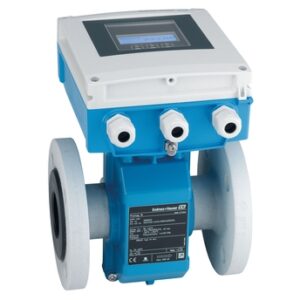
Flow Transmitter (Flow meter)552 Products
-
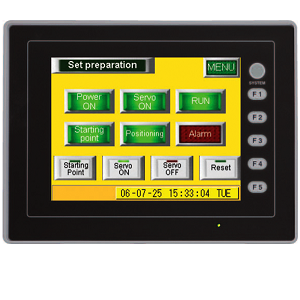
HMI/Touch Screen592 Products
-
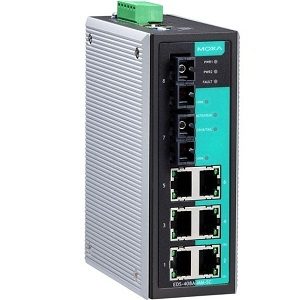
Industrial Device Servers125 Products
-
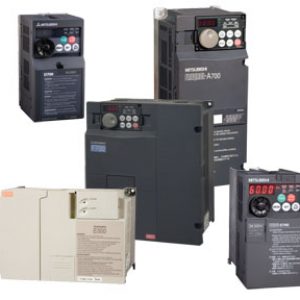
Inverter911 Products
-
Network/Signal2 Products
-
Others4,502 Products
-
Power Supply218 Products
-
Pressure Transmitter146 Products
-
Programmable Logic Controller (PLC)6,290 Products
-
Relay927 Products
-
Sensor2,221 Products
-
Servo Motors & Motor Drives4,675 Products
-
Switch897 Products
-
Timer93 Products
-
Uncategorized1,141 Products
-
Valve Controller & Manifolds17 Products
-
Variable Frequency Drives (VFD)257 Products
-
Yokogawa Remote Indicators16 Products