
Differences Between Linear vs Rotary Position Sensors
Understanding What Is The Main Difference Between Linear And Rotary Position Sensors in Factory Automation Control
Which is more accurate: a linear sensor or a rotary sensor? and Can a rotary encoder measure linear movement?
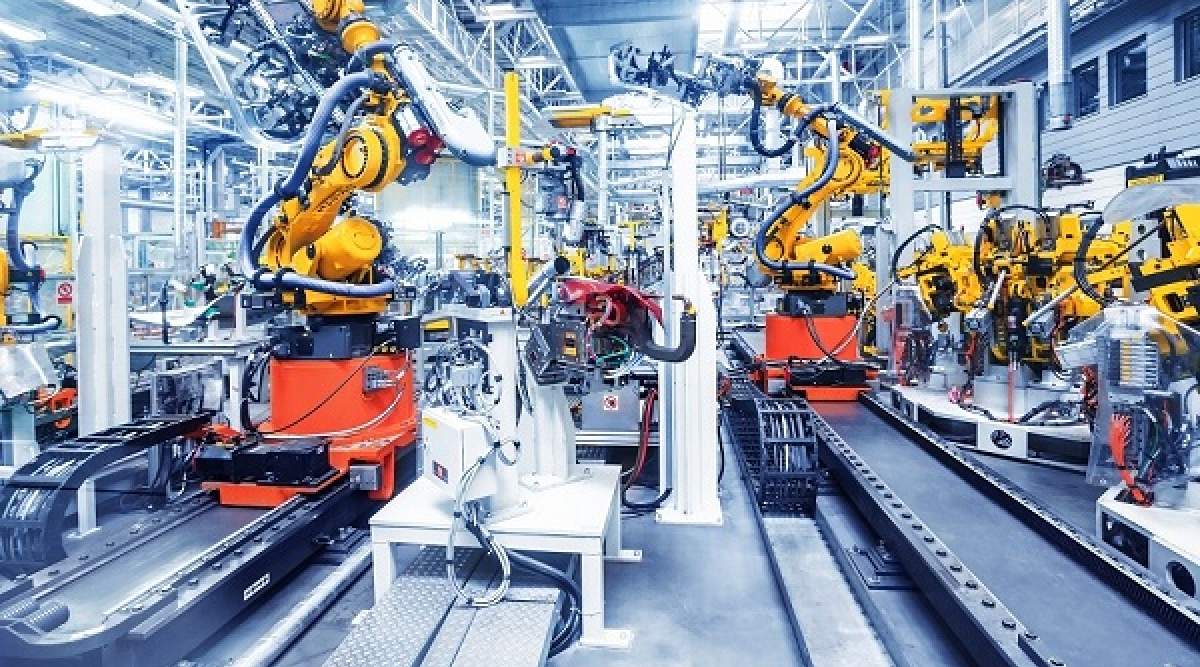
Linear vs Rotary Position Sensors: Key Differences Explained
Position sensing plays a critical role in modern industrial automation. Whether a robotic arm is placing components on a production line, a valve is regulating fluid flow, or a CNC machine is performing precision machining, accurate position feedback ensures reliable and efficient operation. Among the many position sensing technologies available today, linear position sensors and rotary position sensors are the two most widely used categories. While both devices perform the same fundamental task—measuring position and movement—they operate differently and are designed for distinct applications. Choosing the wrong sensor can lead to inaccurate measurements, reduced equipment performance, increased maintenance costs, and even process failures. Therefore, understanding the differences between linear and rotary position sensors is essential for engineers, system integrators, maintenance professionals, and automation specialists. In this comprehensive guide, we will explore how linear and rotary position sensors work, compare their advantages and limitations, examine their industrial applications, and help you determine which sensor technology is best suited for your automation project.
What Are Position Sensors?
Position sensors are devices used to determine the location, displacement, movement, or angular position of an object relative to a reference point. They provide critical feedback to control systems such as:
-
Programmable Logic Controllers (PLCs)
-
Distributed Control Systems (DCS)
-
Motion controllers
-
Industrial robots
-
CNC machines
-
SCADA systems
Without position feedback, automated equipment would operate blindly, making accurate control nearly impossible. Position sensors generally fall into two major categories:
-
Linear Position Sensors
-
Rotary Position Sensors
The key difference lies in the type of motion they measure.
-
Linear sensors measure movement along a straight path.
-
Rotary sensors measure angular or rotational movement around an axis.
Although this distinction seems straightforward, it significantly impacts sensor selection and system design.
Why Position Feedback Matters in Automation
Modern automation systems rely on precise position information to perform tasks consistently. Position feedback helps systems:
-
Improve accuracy
-
Maintain repeatability
-
Prevent mechanical damage
-
Increase product quality
-
Enable closed-loop control
-
Reduce downtime
As automation systems become increasingly sophisticated, demand for high-performance position sensing continues to grow.
Understanding Linear Position Sensors
Linear position sensors measure displacement along a straight line. They determine how far an object has moved from its starting position and provide continuous feedback throughout the motion range.
How Linear Position Sensors Work
A linear position sensor detects movement along a single axis. The sensor converts physical displacement into an electrical signal that a control system can interpret. Depending on the sensing technology, the output may be:
-
Analog voltage
-
Current signal (4-20 mA)
-
Digital output
-
Network communication signal
The controller uses this information to monitor or control equipment movement.
Common Types of Linear Position Sensors
Several technologies are commonly used for linear position measurement.
Potentiometric Linear Sensors
These sensors use a sliding contact that moves across a resistive element. Advantages include:
-
Low cost
-
Simple installation
-
Easy integration
However, mechanical wear can limit service life.
Magnetostrictive Position Sensors
Magnetostrictive sensors use magnetic fields to determine position. These sensors provide:
-
Extremely high accuracy
-
Long service life
-
Non-contact measurement
-
Excellent reliability
They are widely used in hydraulic cylinders and industrial machinery.
Linear Variable Differential Transformers (LVDTs)
LVDTs measure displacement through electromagnetic induction. They offer:
-
Exceptional accuracy
-
High repeatability
-
Long-term stability
These sensors are often used in aerospace and high-precision applications.
Optical Linear Encoders
Optical encoders use light-based measurement techniques. Benefits include:
-
High resolution
-
Fast response
-
Excellent precision
They are frequently found in CNC machinery and semiconductor manufacturing.
Understanding Rotary Position Sensors
Rotary position sensors measure angular displacement around a rotating shaft or axis. They determine how far an object has rotated relative to a reference position.
How Rotary Position Sensors Work
Rotary sensors track rotational movement by monitoring changes in shaft position. The sensor converts rotational motion into an electrical output that represents:
-
Angle
-
Speed
-
Direction
-
Rotational position
Control systems use this information to coordinate machine operations.
Common Types of Rotary Position Sensors
Rotary Potentiometers
Rotary potentiometers measure angular position using a rotating wiper contact. Advantages include:
-
Cost-effectiveness
-
Simplicity
-
Easy implementation
However, they experience wear over time.
Incremental Rotary Encoders
Incremental encoders generate pulses as the shaft rotates. These pulses allow control systems to calculate:
-
Position
-
Speed
-
Direction
They are widely used in motor control systems.
Absolute Rotary Encoders
Absolute encoders assign a unique value to every shaft position. As a result, position information remains available even after power loss. These devices are common in advanced automation applications.
Resolver Sensors
Resolvers use electromagnetic principles to determine shaft position. They provide:
-
Exceptional durability
-
Resistance to harsh environments
-
Reliable operation under vibration
They are often used in aerospace and military applications.
Linear vs Rotary Position Sensors: Key Differences
Although both sensor types measure position, they differ significantly in operation, installation, and applications.
Motion Type
The most obvious difference involves the type of movement measured.
Linear Position Sensors
Measure:
-
Straight-line movement
-
Translational displacement
-
Linear travel
Examples include:
-
Hydraulic cylinder stroke
-
Machine table movement
-
Actuator positioning
Rotary Position Sensors
Measure:
-
Angular movement
-
Shaft rotation
-
Rotational displacement
Examples include:
-
Motor shaft position
-
Valve rotation
-
Robot joint movement
Measurement Units
Linear sensors typically measure:
-
Millimeters
-
Centimeters
-
Inches
-
Meters
Rotary sensors typically measure:
-
Degrees
-
Revolutions
-
Radians
-
Angular displacement
This distinction affects how engineers interpret measurement data.
Installation Requirements
Linear sensors generally require mounting along the motion path. Rotary sensors are typically mounted directly on:
-
Shafts
-
Gearboxes
-
Motors
-
Rotating equipment
Therefore, installation complexity often depends on machine design.
Accuracy and Resolution
Both technologies can provide extremely high accuracy. However:
-
Linear encoders excel in precision linear measurement.
-
Absolute rotary encoders excel in angular positioning applications.
The required accuracy level usually determines sensor selection.
Environmental Considerations
Industrial environments often present challenges such as:
-
Dust
-
Moisture
-
Vibration
-
Temperature extremes
Magnetostrictive linear sensors and resolver-based rotary sensors are especially well-suited for harsh conditions.
Advantages of Linear Position Sensors
Linear sensors offer several advantages in industrial automation.
Direct Measurement
Linear sensors measure displacement directly. This eliminates the need for mechanical conversions that can introduce errors.
High Precision
Many linear technologies provide micron-level accuracy. This capability is particularly valuable in:
-
CNC machining
-
Semiconductor production
-
Precision assembly
Excellent Feedback for Hydraulic Systems
Hydraulic cylinders frequently use linear sensors for stroke monitoring. Direct feedback improves:
-
Motion control
-
Efficiency
-
Equipment safety
Simplified Control Logic
Because the sensor output directly corresponds to physical displacement, programming and control implementation are often simpler.
Advantages of Rotary Position Sensors
Rotary sensors also provide important benefits.
Compact Design
Rotary sensors are often smaller than equivalent linear sensors. Their compact size simplifies installation.
Ideal for Rotating Equipment
Many industrial systems naturally involve rotational movement. Examples include:
-
Electric motors
-
Gear drives
-
Robotic joints
-
Conveyor rollers
Rotary sensors measure these motions directly.
Cost Efficiency
For many applications, rotary encoders provide a cost-effective solution. In some cases, engineers can derive linear movement from rotational measurements using mechanical calculations.
High-Speed Operation
Rotary encoders can track very high rotational speeds accurately. This capability makes them valuable in motor control applications.
Industrial Applications of Linear Position Sensors
Linear position sensors are widely used across multiple industries.
Hydraulic and Pneumatic Systems
Applications include:
-
Cylinder positioning
-
Press control
-
Lift systems
-
Material handling equipment
CNC Machines
Machine tools require precise position feedback for:
-
Cutting operations
-
Tool positioning
-
Axis control
Industrial Robotics
Linear sensors support:
-
Gantry systems
-
Cartesian robots
-
Pick-and-place machinery
Process Industries
Position monitoring is essential for:
-
Valve actuators
-
Slide gates
-
Damper control
Industrial Applications of Rotary Position Sensors
Rotary position sensors are equally important in industrial automation.
Servo Motor Systems
Rotary encoders provide feedback for:
-
Position control
-
Speed regulation
-
Motion synchronization
Robotics
Industrial robots rely heavily on rotary sensors.
Each robotic joint typically uses angular position feedback.
Packaging Equipment
Packaging machinery often incorporates rotary sensors to coordinate:
-
Conveyor movement
-
Product indexing
-
Label application
Renewable Energy Systems
Wind turbines use rotary position sensing for:
-
Blade pitch control
-
Yaw positioning
-
Generator monitoring
How to Choose Between Linear and Rotary Position Sensors
Selecting the correct sensor begins with understanding the application.
Consider the Motion Type
Ask: Is the movement linear or rotational? This simple question often determines the answer immediately.
Evaluate Accuracy Requirements
Applications requiring extremely precise positioning may favor:
-
Magnetostrictive sensors
-
Optical encoders
-
Absolute encoders
Assess Environmental Conditions
Consider:
-
Temperature
-
Vibration
-
Dust exposure
-
Moisture
Harsh environments require rugged sensor technologies.
Review Installation Constraints
Available mounting space can significantly influence sensor selection.
Analyze Long-Term Maintenance Costs
Non-contact technologies generally offer:
-
Longer service life
-
Lower maintenance requirements
-
Better reliability
Emerging Trends in Position Sensor Technology
Position sensing continues to evolve rapidly. Several trends are shaping the future of industrial automation.
Industry 4.0 Integration
Modern sensors increasingly support:
-
Ethernet connectivity
-
Industrial IoT platforms
-
Predictive maintenance systems
Smart Sensors
Advanced sensors now provide:
-
Self-diagnostics
-
Health monitoring
-
Remote configuration
Higher Resolution Measurement
Manufacturers continue pushing the limits of measurement accuracy. This trend supports advanced manufacturing applications.
Wireless Position Sensing
Wireless technologies are reducing installation complexity and enabling new applications in mobile equipment.
Linear and rotary position sensors both play essential roles in industrial automation, yet they serve fundamentally different purposes. Linear sensors measure displacement along a straight path and excel in applications involving cylinders, machine tools, and precision positioning systems. Rotary sensors measure angular movement and dominate applications involving motors, shafts, robotics, and rotational machinery. Neither technology is inherently better than the other. The correct choice depends on the motion being measured, environmental conditions, required accuracy, installation constraints, and overall system objectives. By understanding the strengths and limitations of each sensor type, engineers can make informed decisions that improve machine performance, increase reliability, and support long-term operational success.
Recommended Related Articles
Frequently Asked Questions
What is the main difference between linear and rotary position sensors?
Linear position sensors measure movement along a straight line, while rotary position sensors measure angular movement around a shaft or axis.
Which is more accurate: a linear sensor or a rotary sensor?
Accuracy depends on the specific technology used. High-end linear encoders and absolute rotary encoders can both achieve extremely precise measurements.
Can a rotary encoder measure linear movement?
Yes. Rotary encoders can measure linear movement when connected to mechanisms such as lead screws, pulleys, or rack-and-pinion systems.
Where are linear position sensors commonly used?
Linear sensors are frequently used in hydraulic cylinders, CNC machines, industrial actuators, robotics, and precision manufacturing equipment.
What industries use rotary position sensors?
Rotary sensors are widely used in robotics, motor control, packaging machinery, renewable energy systems, aerospace applications, and automated manufacturing.
Are non-contact position sensors better than contact sensors?
In many industrial applications, non-contact sensors offer longer service life, improved reliability, and reduced maintenance because they eliminate mechanical wear.
How do I choose the right position sensor?
Start by identifying the type of motion being measured, then evaluate accuracy requirements, environmental conditions, installation constraints, communication requirements, and maintenance expectations.
Your One-Stop Source for Reliable Automation & Process Control Equipment
Access trusted process control equipment, expert support, and fast sourcing—all in one place.
-
AC Drives 18,165 Products
-
Butterfly Valve236 Products
-
Circuit Breakers2,226 Products
-
Contactors567 Products
-
Counters78 Products
-
Encoder117 Products
-
Fanuc Main Board1,376 Products
-
Flow Transmitter (Flow meter)552 Products
-
HMI/Touch Screen592 Products
-
Industrial Device Servers125 Products
-
Inverter911 Products
-
Network/Signal2 Products
-
Others4,502 Products
-
Power Supply218 Products
-
Pressure Transmitter146 Products
-
Programmable Logic Controller (PLC)6,290 Products
-
Relay927 Products
-
Sensor2,221 Products
-
Servo Motors & Motor Drives4,818 Products
-
Switch897 Products
-
Timer93 Products
-
Uncategorized1,141 Products
-
Valve Controller & Manifolds17 Products
-
Variable Frequency Drives (VFD)257 Products
-
Yokogawa Remote Indicators16 Products