Industrial Instrumentation
What Is Industrial Instrumentation? A Complete Guide for Modern Industry
Industrial processes don’t run on guesswork—they run on data. Whether you’re operating a refinery, a manufacturing plant, or a water treatment facility, the ability to measure, monitor, and control physical variables is what keeps everything running safely and efficiently. That’s where industrial instrumentation comes in.
At its core, industrial instrumentation is the system of devices and technologies used to measure process variables such as temperature, pressure, flow, and level—and then use that information to control industrial operations.
If automation is the brain of an industrial system, instrumentation is the sensory system—it tells the process what’s happening in real time.
Understanding Industrial Instrumentation
Industrial instrumentation refers to the use of measurement devices and control systems to monitor and regulate industrial processes. These instruments collect data from the physical world and convert it into signals that control systems can interpret and act upon.
In practical terms, instrumentation ensures that industrial processes operate within predefined limits. It maintains consistency, improves efficiency, and—most importantly—keeps operations safe.
Without instrumentation, it would be nearly impossible to maintain stable production conditions or detect faults before they become serious problems.
Definition of Industrial Instrumentation
Industrial instrumentation can be defined as the science and application of measuring and controlling process variables using specialized devices and systems.
It involves:
-
Measuring physical parameters (temperature, pressure, flow, level)
-
Converting measurements into usable signals
-
Monitoring those signals in real time
-
Controlling processes based on the measured data
A key principle in instrumentation is simple: you cannot control what you cannot measure.
Evolution of Industrial Instrumentation
Industrial instrumentation has evolved alongside manufacturing and automation technologies.
Early Measurement Systems
Early industries relied on mechanical gauges and manual readings. Operators physically monitored instruments and adjusted processes manually.
Electrical and Analog Instrumentation
With the introduction of electrical systems, signals could be transmitted over distances. Analog signals—especially the widely used 4–20 mA current loop—became standard for industrial measurements.
Digital and Smart Instrumentation
Modern systems use digital sensors, smart transmitters, and integrated control platforms. These devices not only measure but also communicate, analyze, and sometimes even make decisions.
Today, instrumentation is deeply integrated into industrial automation and Industry 4.0 ecosystems.
How Industrial Instrumentation Works
Industrial instrumentation operates as a structured system where measurement, signal processing, and control are tightly integrated.
A typical instrumentation loop works as follows:
-
A sensor measures a physical variable
-
The signal is converted and transmitted
-
A controller processes the data
-
An actuator adjusts the process
This continuous loop ensures that industrial processes remain stable and within safe operating limits.
Sensors and Transducers
Sensors are the starting point of any instrumentation system. They detect physical changes and convert them into measurable signals.
Common parameters measured include: Temperature, Pressure, Flow, Level, Position, and vibration.
A transducer works alongside the sensor by converting physical energy into electrical signals.
For example, a thermocouple measures temperature and converts it into a voltage signal that can be interpreted by control systems.
Sensors provide the raw data that drives the entire automation process.
Signal Conditioning and Transmitters
Raw signals from sensors are often weak or noisy. Before they can be used effectively, they must be processed.
Signal conditioning includes: Amplification, Filtering, and Linearization.
Transmitters then convert these signals into standardized outputs—most commonly the 4–20 mA signal—which can be transmitted over long distances without interference.
Transmitters play a critical role in ensuring that data remains accurate and reliable throughout the system.
Controllers and Control Systems
Once signals reach the control system, they are analyzed and used to make decisions.
Common control systems include:
-
Programmable Logic Controllers (PLCs)
-
Distributed Control Systems (DCS)
-
PID controllers
These systems compare real-time measurements with desired setpoints and make adjustments as needed.
For example, if a temperature rises above a set limit, the controller may activate a cooling system automatically.
Actuators and Final Control Elements
Actuators are the devices that carry out control actions.
Examples include:
-
Control valves
-
Electric motors
-
Hydraulic systems
-
Pneumatic actuators
These components physically adjust the process based on instructions from the control system.
For instance, a control valve may open or close to regulate fluid flow in a pipeline.
Key Components of Industrial Instrumentation
Industrial instrumentation systems are made up of several interconnected components, each playing a critical role.
Measuring Instruments
These devices directly measure physical variables.
Examples include:
-
Pressure transmitters
-
Flow meters
-
Level sensors
-
Temperature sensors
These instruments form the foundation of any instrumentation system by providing real-time process data.
Control Instruments
Control instruments ensure that processes remain within desired operating limits.
They include:
-
Controllers (PLC, DCS)
-
Indicators and recorders
-
Alarm systems
These devices interpret data and initiate corrective actions when necessary.
Field Instruments
Field instruments are installed directly in the process environment.
They include:
-
Sensors
-
Transmitters
-
Control valves
These devices interact directly with the physical process and provide real-time feedback.
Communication Systems
Modern instrumentation systems rely on communication networks to connect devices.
These networks allow:
-
Data exchange between instruments
-
Integration with control systems
-
Remote monitoring and diagnostics
Examples include industrial protocols like Modbus, Profibus, and Industrial Ethernet.
Types of Industrial Instrumentation
Industrial instrumentation can be categorized based on the variables being measured.
Pressure Instrumentation
Pressure instruments measure the force exerted by fluids within a system.
Common devices:
-
Pressure transmitters
-
Differential pressure sensors
-
Manometers
Pressure measurement is critical in industries such as oil and gas, chemical processing, and power generation.
Temperature Instrumentation
Temperature instruments monitor heat levels in industrial processes.
Examples:
-
Thermocouples
-
Resistance Temperature Detectors (RTDs)
-
Infrared sensors
Temperature control is essential for maintaining product quality and process safety.
Flow Instrumentation
Flow instruments measure the rate at which fluids move through pipes.
Examples:
-
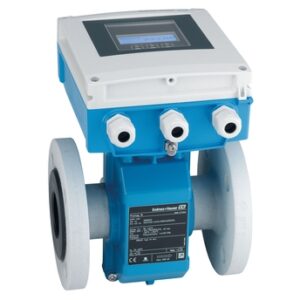
Electromagnetic flow meters
-
Ultrasonic flow meters
-
Turbine flow meters
Flow measurement ensures accurate material handling and process efficiency.
Level Instrumentation
Level instruments measure the amount of material in tanks or vessels.
Examples:
-
Ultrasonic level sensors
-
Radar level transmitters
-
Float switches
Level measurement helps prevent overflows and ensures proper inventory control.
Benefits of Industrial Instrumentation
Industrial instrumentation offers several critical advantages.
Improved Process Control
Instrumentation allows precise control of industrial processes by providing accurate real-time data.
Enhanced Safety
Instrumentation systems detect abnormal conditions and trigger alarms or shutdown procedures to prevent accidents.
Increased Efficiency
By optimizing process conditions, instrumentation reduces waste and improves production efficiency.
Better Data and Monitoring
Modern instrumentation systems provide valuable data for analysis, enabling predictive maintenance and performance optimization.
Applications of Industrial Instrumentation
Industrial instrumentation is used across a wide range of industries.
Oil and Gas Industry
Instrumentation is used to monitor pressure, temperature, and flow in pipelines and refineries.
Chemical Processing
Precise measurement and control are essential for maintaining chemical reactions and ensuring product quality.
Power Generation
Instrumentation controls boilers, turbines, and generators to ensure stable energy production.
Manufacturing
Instrumentation helps automate production lines and maintain consistent product quality.
Water and Wastewater Treatment
Instrumentation ensures proper treatment processes and environmental compliance.
Recommended Related Articles:
https://www.automationpioneer.com/news/pressure-transmitters-guide
Pressure Transmitters Explained
https://www.automationpioneer.com/news/flow-measurement-technologies
Flow Measurement Technologies
https://www.automationpioneer.com/news/types-of-industrial-sensors
Types of Industrial Sensors
https://www.automationpioneer.com/news/plc-programming-basics
PLC Programming Basics
https://www.automationpioneer.com/news/industrial-communication-protocols
Industrial Communication Protocols
https://www.automationpioneer.com/news/what-is-scada-system
What Is SCADA System
https://www.automationpioneer.com/news/industrial-iot-guide
Industrial IoT Guide
https://www.automationpioneer.com/news/level-measurement-methods
Level Measurement Methods
Frequently Asked Questions (FAQ)
What is industrial instrumentation in simple terms?
Industrial instrumentation is the use of devices and systems to measure and control physical variables such as temperature, pressure, flow, and level in industrial processes.
What are the main components of industrial instrumentation?
The main components include sensors, transmitters, controllers, actuators, and communication systems.
Why is industrial instrumentation important?
It ensures safe, efficient, and consistent operation of industrial processes by providing accurate measurements and enabling automatic control.
What industries use industrial instrumentation?
Industries such as oil and gas, chemical processing, manufacturing, power generation, and water treatment rely heavily on instrumentation systems.
What is the difference between instrumentation and automation?
Instrumentation focuses on measuring and monitoring process variables, while automation uses that data to control processes automatically.
Industrial instrumentation is the backbone of modern industry. Without it, automation systems would lack the data needed to function effectively. As industries continue to adopt digital technologies, instrumentation will remain a critical element in building smarter, safer, and more efficient operations.
-
AC Drives 18,160 Products
-
Butterfly Valve236 Products
-
Circuit Breakers2,226 Products
-
Contactors567 Products
-
Counters78 Products
-
Encoder117 Products
-
Fanuc Main Board1,376 Products
-
Flow Transmitter (Flow meter)286 Products
-
HMI/Touch Screen592 Products
-
Inverter911 Products
-
Network/Signal4 Products
-
Others4,668 Products
-
Power Supply218 Products
-
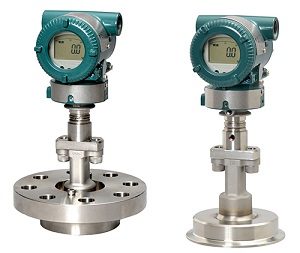
Pressure Transmitter143 Products
-
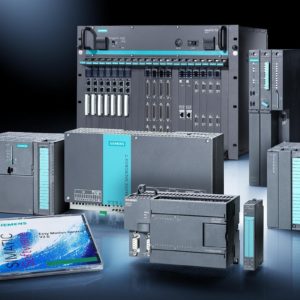
Programmable Logic Controller (PLC)6,288 Products
-
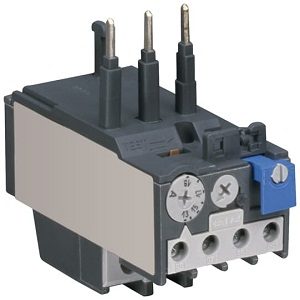
Relay927 Products
-
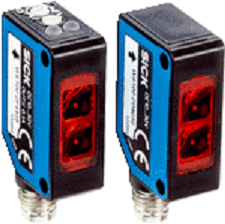
Sensor2,221 Products
-
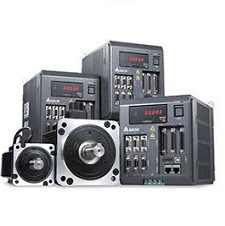
Servo Motors & Motor Drives4,363 Products
-
Switch897 Products
-
Timer93 Products
-
Uncategorized1,148 Products
-
Valve Controller & Manifolds15 Products
-
Variable Frequency Drives (VFD)258 Products
-
Yokogawa Remote Indicators16 Products