
PLC Programming Languages
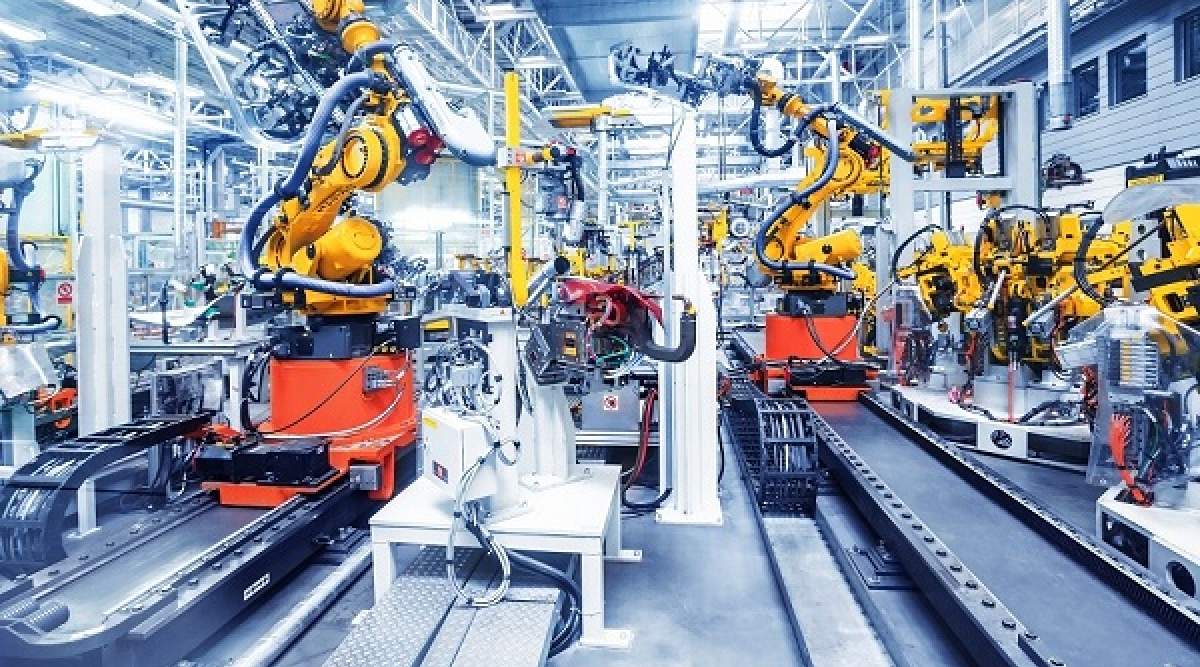
PLC Programming Languages: A Complete Guide for Industrial Automation Engineers
Programmable Logic Controllers (PLCs) are the backbone of modern industrial automation. Whether you’re working in manufacturing, oil and gas, or process control, PLCs are responsible for executing control logic that keeps systems running efficiently and safely.
But a PLC is only as effective as the program running inside it—and that’s where PLC programming languages come into play.
Unlike general-purpose programming languages, PLC languages are specifically designed for industrial environments. They are standardized under the IEC 61131-3 framework, which defines the most widely used programming languages in automation systems.
Understanding PLC Programming Languages
PLC programming languages are used to create instructions that control machines, processes, and systems in industrial environments. These languages are designed to handle real-time operations, reliability requirements, and deterministic control.
The international standard IEC 61131-3 defines the core PLC programming languages used globally. These include:
Ladder Diagram (LD)
Function Block Diagram (FBD)
Structured Text (ST)
Sequential Function Chart (SFC)
Instruction List (IL) (now deprecated)
These languages fall into two main categories:
Graphical languages (LD, FBD, SFC)
Textual languages (ST, IL)
Each language has its strengths, and experienced automation engineers often use a combination depending on the task.
Ladder Diagram (LD)
What Is Ladder Logic?
Ladder Diagram (LD), commonly called ladder logic, is the most widely used PLC programming language. It was originally developed to mimic electrical relay logic diagrams, making it intuitive for electricians and maintenance technicians.
The program is structured like a ladder:
Vertical rails represent power supply
Horizontal rungs represent control logic
Symbols represent inputs, outputs, and logic operations
This visual approach made ladder logic the industry standard for decades.
How Ladder Logic Works
Ladder logic operates based on Boolean logic. Each rung is evaluated from left to right, and if the conditions are met, the output is activated.
Typical components include:
Contacts (inputs)
Coils (outputs)
Timers and counters
Logical operations (AND, OR, NOT)
For example, a motor may start only when two switches are activated simultaneously—this can be easily represented in ladder logic.
Where Ladder Logic Is Used
Ladder logic is ideal for:
Discrete control systems
Machine control
Conveyor systems
Packaging lines
Motor control applications
It is especially useful in environments where technicians need to troubleshoot systems quickly.
Strengths and Limitations
Strengths:
Easy to learn and understand
Excellent for troubleshooting
Widely supported across PLC brands
Limitations:
Not ideal for complex algorithms
Can become difficult to manage in large systems
Function Block Diagram (FBD)
What Is Function Block Diagram?
Function Block Diagram (FBD) is a graphical programming language that represents control logic using interconnected blocks.
Each block performs a specific function, and connections between blocks define the flow of data.
This approach is particularly useful for modeling processes where multiple inputs and outputs interact simultaneously.
How FBD Works
In FBD, programs are constructed using:
Function blocks (logic, math, control functions)
Input and output connections
Data flow links
Instead of sequential execution like ladder logic, FBD focuses on data relationships between variables.
Applications of FBD
FBD is commonly used in:
Process control systems
Analog signal processing
PID control loops
Continuous manufacturing processes
For example, controlling temperature in a chemical reactor often involves multiple inputs and calculations—FBD handles this efficiently.
Strengths and Limitations
Strengths:
Excellent for complex calculations
Visual representation of system behavior
Ideal for continuous processes
Limitations:
Can become cluttered in large programs
Less intuitive for discrete logic
Structured Text (ST)
What Is Structured Text?
Structured Text (ST) is a high-level, text-based programming language similar to languages like Pascal or C.
It is designed for writing complex algorithms and handling large amounts of data efficiently.
Unlike graphical languages, ST uses structured programming constructs such as:
IF statements
loops
variables
functions
How Structured Text Works
Structured Text executes code sequentially, much like traditional programming languages.
Example operations include:
Mathematical calculations
Data processing
Conditional logic
String manipulation
Because of its flexibility, ST is often used for advanced control strategies.
Applications of Structured Text
Structured Text is best suited for:
Complex algorithms
Data-heavy applications
Advanced automation systems
Industrial IoT integration
For example, predictive maintenance algorithms or data filtering systems are typically written in ST.
Strengths and Limitations
Strengths:
Highly flexible and powerful
Ideal for complex logic
Easier to manage large programs
Limitations:
Requires programming knowledge
Less visual than graphical languages
Sequential Function Chart (SFC)
What Is Sequential Function Chart?
Sequential Function Chart (SFC) is a graphical language used to represent sequential processes.
It organizes control logic into:
Steps (states)
Transitions (conditions)
Actions (operations)
SFC is particularly useful for systems that follow a clear sequence of operations.
How SFC Works
SFC programs start from an initial step and progress through a series of transitions based on conditions.
Each step represents a stage in the process, and actions are executed when the system is in that step.
Applications of SFC
SFC is commonly used in:
Batch processing systems
Automated assembly sequences
Industrial workflows
Complex machine operations
For example, a filling and packaging system that follows a strict sequence is ideal for SFC.
Strengths and Limitations
Strengths:
Excellent for sequential processes
Easy to visualize workflows
Simplifies complex control sequences
Limitations:
Less commonly used than ladder logic
Can become complex in highly branched systems
Instruction List (IL) (Deprecated)
What Is Instruction List?
Instruction List (IL) is a low-level textual programming language similar to assembly language.
It uses simple instructions executed sequentially, making it compact and efficient.
Why IL Is No Longer Used
IL has been deprecated and removed from the latest IEC 61131-3 standard due to its complexity and lack of readability.
While it may still be found in legacy systems, modern automation projects rarely use it.
Where IL Still Exists
Legacy PLC systems
Older industrial installations
Retrofit projects
Comparing PLC Programming Languages
Each PLC programming language serves a specific purpose.
Ladder Logic (LD): Best for discrete control and troubleshooting
Function Block Diagram (FBD): Ideal for analog and process control
Structured Text (ST): Best for complex logic and data processing
Sequential Function Chart (SFC): Ideal for step-based processes
There is no single “best” language. In practice, engineers often combine multiple languages within the same system to take advantage of their strengths.
How to Choose the Right PLC Programming Language
Choosing the right language depends on several factors.
Type of Application
Discrete systems → Ladder Logic
Continuous processes → FBD
Complex calculations → Structured Text
Sequential operations → SFC
Team Skillset
If maintenance technicians are involved, ladder logic is often preferred due to its simplicity.
System Complexity
More complex systems typically require a mix of languages.
PLC Platform
Not all PLCs support every language. Some systems are limited to ladder logic, while others support all IEC languages.
Recommended Related Articles:
https://www.automationpioneer.com/news/plc-programming-basics
PLC Programming Basics
https://www.automationpioneer.com/news/what-is-scada-system
What Is SCADA System
https://www.automationpioneer.com/news/plc-vs-dcs
PLC vs DCS Explained
https://www.automationpioneer.com/news/types-of-industrial-sensors
Types of Industrial Sensors
https://www.automationpioneer.com/news/industrial-communication-protocols
PLC Communication Protocols
https://www.automationpioneer.com/news/industrial-iot-guide
Industrial IoT Guide
https://www.automationpioneer.com/news/flow-measurement-technologies
Flow Measurement Technologies
https://www.automationpioneer.com/news/pressure-transmitters-guide
Pressure Transmitters Explained
Frequently Asked Questions (FAQ)
What are the main PLC programming languages?
The main PLC programming languages defined by IEC 61131-3 are Ladder Diagram, Function Block Diagram, Structured Text, Sequential Function Chart, and Instruction List (now deprecated).
Which PLC programming language is best for beginners?
Ladder Logic is generally the best starting point because it is visual, intuitive, and widely used in industrial environments.
What is the most powerful PLC programming language?
Structured Text is often considered the most powerful because it can handle complex algorithms, data processing, and advanced automation logic.
Can multiple PLC languages be used in one project?
Yes. Most modern PLC platforms allow engineers to combine multiple programming languages within the same project to optimize performance and flexibility.
Is the Instruction List still used today?
Instruction List has been deprecated and removed from the latest standards, but it may still exist in older systems.
What is the difference between Ladder Logic and Function Block Diagram?
Ladder Logic is best for discrete control systems and resembles electrical circuits, while Function Block Diagram is better suited for process control and data flow modeling
-
AC Drives 18,160 Products
-
Butterfly Valve236 Products
-
Circuit Breakers2,226 Products
-
Contactors567 Products
-
Counters78 Products
-
Encoder117 Products
-
Fanuc Main Board1,376 Products
-
Flow Transmitter (Flow meter)286 Products
-
HMI/Touch Screen592 Products
-
Inverter911 Products
-
Network/Signal4 Products
-
Others4,668 Products
-
Power Supply218 Products
-
Pressure Transmitter143 Products
-
Programmable Logic Controller (PLC)6,288 Products
-
Relay927 Products
-
Sensor2,221 Products
-
Servo Motors & Motor Drives4,363 Products
-
Switch897 Products
-
Timer93 Products
-
Uncategorized1,148 Products
-
Valve Controller & Manifolds15 Products
-
Variable Frequency Drives (VFD)258 Products
-
Yokogawa Remote Indicators16 Products