
Types of Temperature Sensors
Understanding Types of Temperature Sensors Used in Industrial Automation and Factory Automation Control
What are the most common temperature sensors used in industry? and Which temperature sensor is the most accurate?
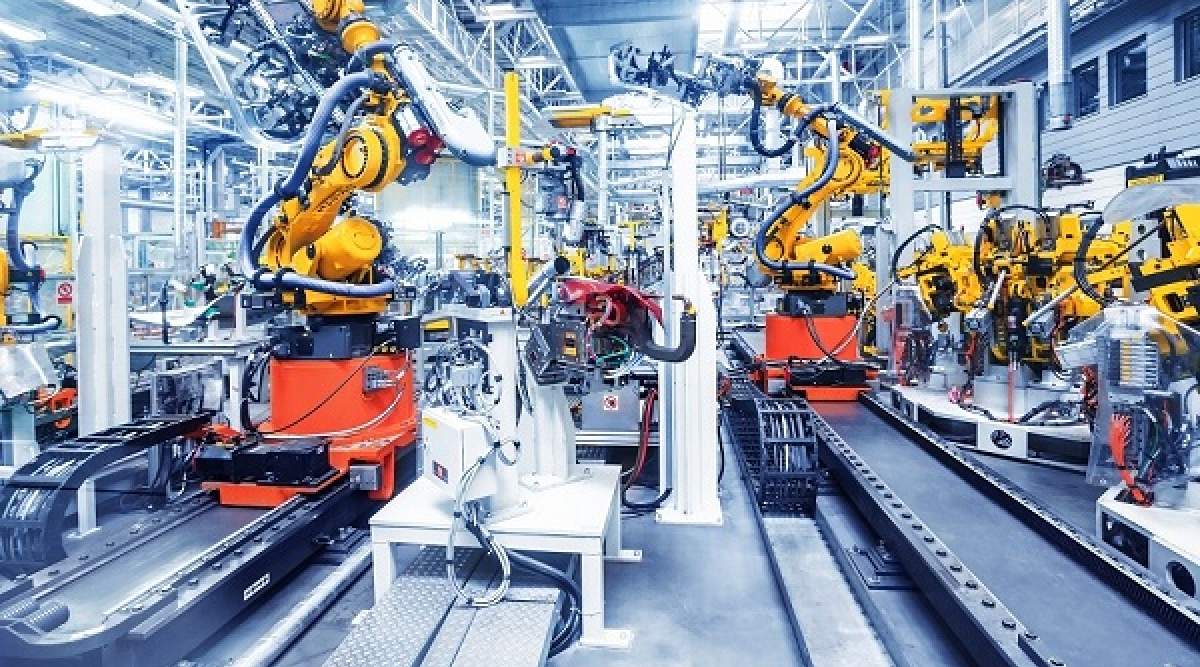
Types of Temperature Sensors Used in Industrial Automation Solution
Temperature measurement plays a critical role in almost every industrial process. Whether it’s monitoring the heat inside a chemical reactor, controlling furnace temperatures in steel manufacturing, or protecting sensitive pharmaceutical products, accurate temperature measurement directly affects product quality, safety, and operational efficiency. Modern industrial facilities rely on a wide range of temperature sensors to maintain process stability and ensure equipment operates within safe limits. However, no single sensor works perfectly for every application. Different industries require different sensing technologies depending on factors such as temperature range, accuracy, response time, environmental conditions, and installation requirements.
This guide explores the most common types of temperature sensors used in industry, how they work, where they are applied, and how to choose the right sensor for industrial automation systems.
Understanding Industrial Temperature Sensors
Temperature sensors are devices designed to detect and measure thermal energy within a process or environment. These sensors convert temperature changes into electrical signals that can be monitored, displayed, or used by industrial control systems. In industrial automation, temperature sensors often connect to:
Programmable Logic Controllers (PLCs)
Distributed Control Systems (DCS)
SCADA systems
Data acquisition systems
Industrial IoT platforms
Because temperature directly affects chemical reactions, equipment performance, and product consistency, reliable temperature monitoring is essential in industries such as:
Oil and gas
Food and beverage
Pharmaceutical manufacturing
Power generation
Chemical processing
HVAC systems
Semiconductor manufacturing
Moreover, temperature sensors help prevent overheating, reduce equipment damage, improve energy efficiency, and maintain regulatory compliance.
Resistance Temperature Detectors (RTDs)
What Is an RTD Sensor?
Resistance Temperature Detectors, commonly called RTDs, are among the most accurate temperature sensors used in industrial applications. An RTD works by measuring changes in electrical resistance as temperature changes. Most RTDs use platinum because platinum provides excellent stability, repeatability, and corrosion resistance. As temperature increases, the resistance of the RTD element increases in a predictable manner. Consequently, industrial control systems can calculate temperature with very high accuracy.
How RTD Sensors Work
RTDs rely on the principle that electrical resistance changes proportionally with temperature. The sensing element typically consists of:
Platinum wire
Thin-film platinum elements
Protective sheath materials
The most common RTD type is the Pt100 sensor, which has a resistance of 100 ohms at 0°C. Because RTDs provide highly stable measurements, industries commonly use them in precision temperature monitoring applications.
Advantages of RTDs
RTDs offer several benefits in industrial environments.
High Accuracy
RTDs provide extremely accurate temperature readings over a wide operating range.
Excellent Stability
Unlike some sensor technologies, RTDs maintain calibration stability for long periods.
Wide Temperature Range
Most RTDs operate effectively between -200°C and 600°C.
Good Repeatability
RTDs consistently produce reliable measurements under stable conditions.
Limitations of RTDs
Despite their advantages, RTDs also have limitations.
Higher cost compared to thermocouples
Slower response time in some applications
More sensitive to vibration and mechanical shock
Nevertheless, RTDs remain one of the preferred choices for critical industrial processes requiring precision temperature control.
Industrial Applications of RTDs
RTDs are widely used in:
pharmaceutical manufacturing
food processing systems
HVAC equipment
chemical processing plants
power generation facilities
In pharmaceutical production, for example, RTDs help maintain precise temperatures during sterile manufacturing processes where even small temperature deviations can affect product quality.
Thermocouple Temperature Sensors
What Is a Thermocouple?
Thermocouples are among the most widely used industrial temperature sensors because they are durable, affordable, and capable of measuring extremely high temperatures. A thermocouple consists of two dissimilar metal wires joined together at one end. When the junction experiences a temperature change, it generates a small electrical voltage proportional to the temperature. Industrial systems measure this voltage and convert it into a temperature reading.
Types of Thermocouples
Several thermocouple types are commonly used in industry.
Type K Thermocouple
Type K thermocouples are the most common and versatile thermocouple sensors. They provide:
Wide temperature range
Good durability
Affordable cost
Industries often use Type K thermocouples in furnaces, boilers, and heat treatment systems.
Type J Thermocouple
Type J thermocouples perform well in moderate temperature applications but have a lower maximum temperature range than Type K. They are commonly used in:
plastics manufacturing
industrial ovens
process heating systems
Type T Thermocouple
Type T thermocouples offer excellent accuracy at low temperatures. Consequently, industries use them in:
refrigeration systems
cryogenic applications
laboratory environments
Type R, S, and B Thermocouples
These thermocouples use precious metals such as platinum and rhodium. They are designed for extremely high-temperature applications including:
glass manufacturing
steel processing
aerospace testing
Advantages of Thermocouples
Thermocouples remain popular for several reasons.
Extremely Wide Temperature Range
Some thermocouples can measure temperatures exceeding 1700°C.
Fast Response Time
Thermocouples respond quickly to rapid temperature changes.
Rugged Construction
They perform well in harsh industrial environments.
Cost-Effective
Thermocouples are generally less expensive than RTDs.
Limitations of Thermocouples
However, thermocouples also have drawbacks.
Lower accuracy than RTDs
Susceptible to electrical noise
Require cold junction compensation
Despite these limitations, thermocouples remain essential in high-temperature industrial applications.
Thermistors
What Is a Thermistor?
Thermistors are temperature-sensitive resistors designed to measure temperature changes with high sensitivity. Unlike RTDs, thermistors use semiconductor materials whose resistance changes rapidly with temperature. Because of their high sensitivity, thermistors provide very accurate measurements over relatively narrow temperature ranges.
Types of Thermistors
Negative Temperature Coefficient (NTC) Thermistors
NTC thermistors decrease in resistance as temperature increases. These sensors are commonly used in:
HVAC systems
medical equipment
battery monitoring systems
Positive Temperature Coefficient (PTC) Thermistors
PTC thermistors increase in resistance as temperature rises. Industries often use them for:
motor protection
overcurrent protection
electronic safety circuits
Advantages of Thermistors
Thermistors provide several advantages.
High sensitivity
Fast response time
Compact size
Low cost
Limitations of Thermistors
However, thermistors are less suitable for extreme industrial conditions.
Limited temperature range
Less stable at high temperatures
Nonlinear response characteristics
As a result, thermistors are more common in electronic and low-temperature industrial applications.
Infrared Temperature Sensors
What Are Infrared Temperature Sensors?
Infrared temperature sensors measure temperature without direct physical contact. Instead of touching the object being measured, these sensors detect infrared radiation emitted from the surface. Because they operate without contact, infrared sensors are ideal for moving objects, hazardous materials, or extremely hot surfaces.
How Infrared Sensors Work
Every object emits infrared energy based on its temperature. Infrared sensors detect this radiation and convert it into temperature readings. The system typically includes:
infrared optics
detectors
signal processing electronics
These sensors provide rapid measurements and allow temperature monitoring from a safe distance.
Advantages of Infrared Sensors
Non-Contact Measurement
Infrared sensors safely measure moving or dangerous equipment.
Extremely Fast Response
They provide nearly instantaneous readings.
Ideal for High Temperatures
Industries use them for furnaces, molten metals, and rotating machinery.
Limitations of Infrared Sensors
Despite their advantages, infrared sensors require careful installation.
Surface emissivity affects accuracy
Dust, steam, or smoke may interfere with readings
Limited effectiveness through certain materials
Industrial Applications
Infrared sensors are widely used in:
steel manufacturing
glass production
predictive maintenance programs
electrical inspections
conveyor systems
Maintenance teams often use infrared temperature sensors to detect overheating motors, bearings, and electrical connections before failures occur.
Semiconductor Temperature Sensors
What Are Semiconductor Temperature Sensors?
Semiconductor temperature sensors use integrated circuits to measure temperature electronically. These sensors are commonly used in electronic equipment and digital monitoring systems. Although they are less common in heavy industrial environments, semiconductor sensors play an important role in modern automation and IoT applications.
Advantages of Semiconductor Sensors
Compact design
Low power consumption
Easy digital integration
Cost-effective manufacturing
Limitations
However, semiconductor sensors have limitations in industrial settings.
Limited temperature range
Lower durability in harsh environments
Reduced performance at extreme temperatures
Consequently, industries primarily use them in electronics, automation panels, and embedded monitoring systems.
Choosing the Right Temperature Sensor for Industrial Applications
Selecting the correct temperature sensor depends on several operational factors.
Temperature Range
Different sensors support different temperature ranges. For example:
RTDs excel at moderate temperatures
Thermocouples handle extremely high temperatures
Thermistors work best in limited temperature ranges
Accuracy Requirements
Applications such as pharmaceutical production require highly accurate measurements, making RTDs a preferred choice. Meanwhile, steel manufacturing often prioritizes durability and high-temperature capability over extreme accuracy.
Environmental Conditions
Industrial environments may expose sensors to:
vibration
moisture
corrosive chemicals
pressure
electromagnetic interference
Therefore, engineers must select sensors designed for those conditions.
Response Time
Fast-moving processes require sensors with rapid response capabilities. Infrared sensors and thermocouples often perform well in applications requiring immediate temperature feedback.
Installation and Maintenance
Some sensors require regular calibration or maintenance. Consequently, maintenance accessibility and long-term reliability should influence sensor selection.
The Role of Temperature Sensors in Industrial Automation
Temperature sensors are critical components in modern industrial automation systems. These devices help industries:
optimize production processes
improve product quality
reduce energy consumption
prevent equipment failures
enhance operational safety
As Industry 4.0 technologies continue to evolve, temperature sensors are becoming increasingly connected through Industrial IoT platforms and smart monitoring systems. Modern facilities now use predictive maintenance systems that continuously analyze temperature trends to identify potential equipment failures before downtime occurs. This shift toward intelligent monitoring continues to drive innovation in industrial sensing technologies.
- Industrial Automation Fundamentals
- Industrial Communication Protocols
- Industrial Instrumentation Control
- Industrial Sensors & Measurement
- Motion and Process Control
- PLC Programming & Controllers
- SCADA and DCS Systems
- Servo Motors and Motor Drives
Frequently Asked Questions (FAQ)
What are the most common temperature sensors used in industry?
The most common industrial temperature sensors include:
RTDs
thermocouples
thermistors
infrared temperature sensors
semiconductor temperature sensors
Each sensor type offers different advantages depending on the application.
Which temperature sensor is the most accurate?
RTDs are generally considered the most accurate and stable industrial temperature sensors, especially for precision process control applications.
Why are thermocouples widely used in industry?
Thermocouples are widely used because they are durable, cost-effective, fast responding, and capable of measuring extremely high temperatures.
What industries use infrared temperature sensors?
Industries such as steel manufacturing, glass production, electrical maintenance, and predictive maintenance programs commonly use infrared temperature sensors.
How do engineers choose the right temperature sensor?
Engineers select temperature sensors based on factors such as temperature range, accuracy, response time, environmental conditions, installation requirements, and maintenance needs.
What is the difference between RTDs and thermocouples?
RTDs provide higher accuracy and stability, while thermocouples offer wider temperature ranges and better durability in extreme environments.
Temperature sensors remain one of the most important technologies in industrial automation. As manufacturing systems become more intelligent and connected, accurate temperature measurement will continue to play a vital role in ensuring safe, efficient, and reliable industrial operations.
Your One-Stop Source for Reliable Automation & Process Control Equipment
Access trusted process control equipment, expert support, and fast sourcing—all in one place.
-
AC Drives 18,165 Products
-
Butterfly Valve236 Products
-
Circuit Breakers2,226 Products
-
Contactors567 Products
-
Counters78 Products
-
Encoder117 Products
-
Fanuc Main Board1,376 Products
-
Flow Transmitter (Flow meter)552 Products
-
HMI/Touch Screen592 Products
-
Inverter911 Products
-
Network/Signal4 Products
-
Others4,613 Products
-
Power Supply218 Products
-
Pressure Transmitter146 Products
-
Programmable Logic Controller (PLC)6,290 Products
-
Relay927 Products
-
Sensor2,221 Products
-
Servo Motors & Motor Drives4,499 Products
-
Switch897 Products
-
Timer93 Products
-
Uncategorized1,143 Products
-
Valve Controller & Manifolds15 Products
-
Variable Frequency Drives (VFD)257 Products
-
Yokogawa Remote Indicators16 Products