
What Are Types of Motion and Position Sensors
Understanding the Types of Motion and Position Sensors in Industrial Automation & Process Control
What is the difference between a motion sensor and a position sensor? and How do motion sensors contribute to Industry 4.0?
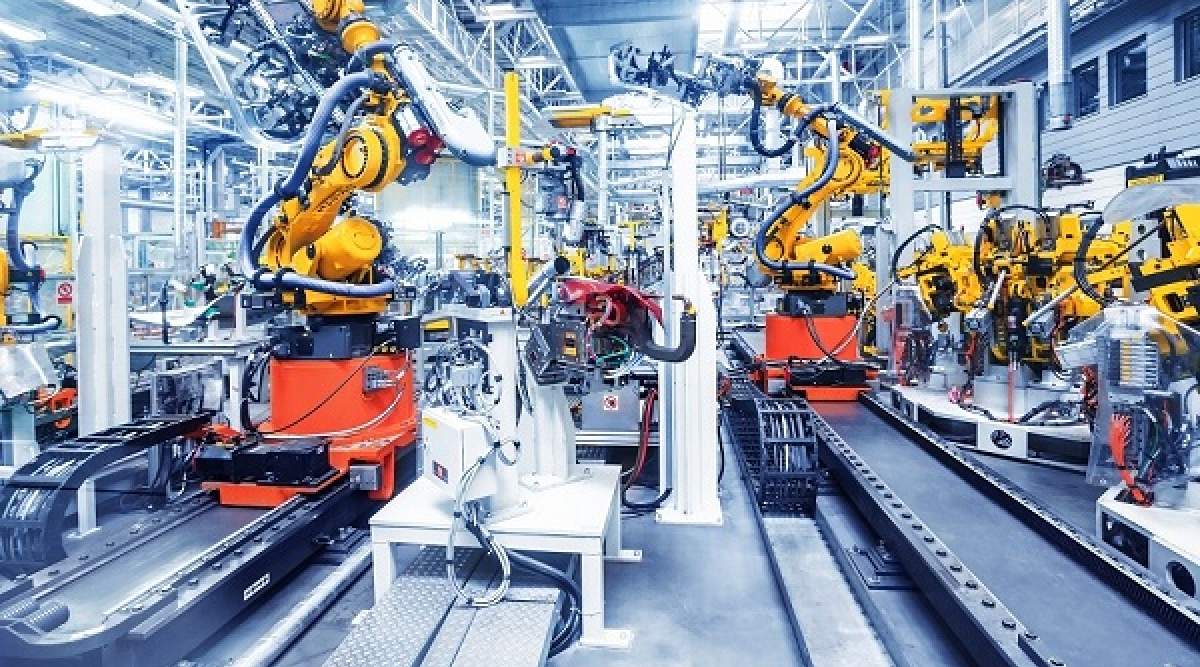
What Are Types of Motion and Position Sensors in Industrial Automation?
Motion and position sensors are among the most important components in modern industrial automation systems. Whether a manufacturing facility operates robotic assembly lines, automated packaging equipment, conveyor systems, CNC machines, or process control systems, sensors play a critical role in ensuring accuracy, efficiency, safety, and reliability. Without motion and position sensors, automated equipment would have no way to determine where an object is located, how fast it is moving, whether a machine component has reached its intended position, or if a robotic arm has completed its programmed movement. In other words, sensors provide the real-time feedback that allows automation systems to make intelligent decisions. As Industry 4.0, smart manufacturing, and Industrial Internet of Things (IIoT) technologies continue to evolve, motion and position sensing technologies have become increasingly sophisticated. Today’s industrial sensors offer higher precision, greater reliability, and advanced communication capabilities that integrate seamlessly with programmable logic controllers (PLCs), supervisory control and data acquisition (SCADA) systems, and industrial networks.
Understanding Motion and Position Sensors
Motion and position sensors are devices designed to detect movement, location, displacement, rotation, speed, or orientation of objects and machine components. Although the terms are often used together, motion sensors and position sensors serve different functions. Position sensors determine the location of an object relative to a reference point. Motion sensors, on the other hand, detect movement or changes in position over time.
For example:
A position sensor may determine the exact location of a robotic arm.
A motion sensor may detect that the robotic arm is moving.
A speed sensor may determine how fast the arm is moving.
An encoder may provide both position and movement information.
These sensors provide critical feedback to industrial control systems, enabling machines to operate with high levels of precision and repeatability.
Why Motion and Position Sensors Matter in Automation
Modern automation systems rely heavily on feedback loops. In a typical automated process:
Sensors collect real-time data.
Controllers analyze the information.
Control systems make decisions.
Actuators execute commands.
Sensors verify the results.
This continuous cycle allows industrial systems to maintain accuracy, prevent equipment damage, and optimize performance. Without accurate sensor feedback, automation systems would effectively operate blindly.
Types of Position Sensors Used in Industrial Automation
Position sensors measure the location of an object, machine component, or moving mechanism. Several technologies are commonly used depending on the application requirements.
Linear Position Sensors
Linear position sensors measure movement along a straight line. These sensors determine the precise location of an object as it moves from one point to another.
Common applications include:
Hydraulic cylinders
Pneumatic actuators
CNC machinery
Automated assembly equipment
Material handling systems
How Linear Position Sensors Work
Most linear position sensors use electrical, magnetic, optical, or resistive principles to detect displacement. As the target moves, the sensor generates a signal proportional to its position.
Advantages of Linear Position Sensors
High measurement accuracy
Excellent repeatability
Real-time position feedback
Suitable for harsh industrial environments
Industrial Applications
Manufacturers frequently use linear position sensors in automated presses, robotic systems, and process control applications where precise positioning is essential.
Rotary Position Sensors
Rotary position sensors measure angular movement around a shaft or axis. These sensors determine the rotational position of motors, valves, gears, and robotic joints.
Common Applications
Servo motors
Industrial robots
Rotary tables
Valve position monitoring
Packaging machinery
Benefits
Precise angular measurements
High reliability
Long operating life
Fast response times
Rotary position sensing plays a vital role in modern motion control systems.
Potentiometric Position Sensors
Potentiometers remain one of the oldest and most widely used position sensing technologies. These sensors use a movable contact along a resistive element to generate a voltage proportional to position.
Advantages
Simple design
Low cost
Easy integration
Reliable operation
Limitations
Because they rely on physical contact, potentiometers experience mechanical wear over time. For this reason, many manufacturers now prefer non-contact sensing technologies in demanding applications.
Magnetostrictive Position Sensors
Magnetostrictive sensors are among the most accurate position-sensing technologies available today. They use magnetic fields and wave propagation principles to determine position without physical contact.
Key Benefits
Extremely high precision
Non-contact operation
Long service life
Excellent resistance to contamination
Typical Applications
Hydraulic systems
Injection molding machines
Steel mills
Heavy industrial equipment
These sensors are particularly popular in environments where reliability and accuracy are critical.
Types of Motion Sensors Used in Industrial Automation
Motion sensors detect movement or changes in position. Industrial facilities use these sensors to monitor machinery, track products, and improve safety.
Proximity Sensors
Proximity sensors detect the presence or absence of an object without physical contact. They are among the most common sensors in industrial automation.
Inductive Proximity Sensors
Inductive sensors detect metallic objects using electromagnetic fields.
Applications
Conveyor systems
Machine tools
Automated assembly lines
Metal processing equipment
Advantages
Durable design
High reliability
Resistant to dirt and moisture
Capacitive Proximity Sensors
Capacitive sensors detect both metallic and non-metallic materials. These sensors can identify:
Plastics
Liquids
Glass
Powders
Paper products
Because of their versatility, they are commonly used in packaging and food processing industries.
Photoelectric Sensors
Photoelectric sensors use light beams to detect objects. Three common types include:
Through-beam sensors
Retro-reflective sensors
Diffuse sensors
Benefits
Long sensing range
High speed detection
Excellent object recognition
Photoelectric sensors are widely used in automated packaging systems and material handling applications.
Optical Position Sensors
Optical sensing technologies provide extremely precise position measurements.
Laser Sensors
Laser sensors use focused light beams to measure distance and position.
Applications
Precision manufacturing
Semiconductor production
Quality inspection systems
Robotic guidance
Advantages
High accuracy
Non-contact measurement
Fast response times
Laser technology has become increasingly important in advanced manufacturing environments.
Vision-Based Position Sensors
Machine vision systems combine cameras and software algorithms to determine object position and movement. These systems provide information beyond simple detection. For example, vision systems can identify:
Object orientation
Shape variations
Product defects
Assembly accuracy
Applications
Robotics
Quality control
Packaging
Automotive manufacturing
Machine vision represents one of the fastest-growing segments of industrial automation.
Encoders: The Backbone of Motion Control
Encoders are specialized sensors that convert movement into electrical signals. They are essential in motion control applications.
Incremental Encoders
Incremental encoders generate pulses as movement occurs. Controllers count these pulses to determine:
Position
Speed
Direction
Advantages
Cost-effective
Simple implementation
High-speed operation
Limitations
Incremental encoders lose position information if power is interrupted.
Absolute Encoders
Absolute encoders provide a unique position value for every shaft location. Unlike incremental encoders, they retain position information even after power loss.
Benefits
Precise positioning
Improved reliability
No homing procedures required
Applications
Robotics
CNC machinery
Aerospace systems
Automated manufacturing lines
Absolute encoders have become increasingly popular in advanced automation systems.
Velocity and Speed Sensors
Motion control often requires speed monitoring in addition to position sensing.
Tachometers
Tachometers measure rotational speed. Common applications include:
Motors
Pumps
Compressors
Turbines
Accurate speed monitoring helps optimize performance and prevent equipment damage.
Hall Effect Sensors
Hall effect sensors detect magnetic field changes. These sensors are widely used for:
Motor speed measurement
Rotational position detection
Conveyor monitoring
Vehicle automation systems
Advantages
Non-contact operation
High reliability
Long lifespan
Their durability makes them ideal for industrial environments.
Motion Sensors in Robotics and Automated Manufacturing
Modern robotic systems depend heavily on motion and position sensors. A typical industrial robot may incorporate:
Rotary encoders
Vision sensors
Laser sensors
Proximity sensors
Hall effect sensors
Together, these devices allow robots to:
Navigate accurately
Position tools precisely
Avoid collisions
Maintain consistent product quality
As robotic applications become more sophisticated, sensor technology continues to evolve alongside them.
Selecting the Right Motion or Position Sensor
Choosing the right sensor depends on several factors.
Accuracy Requirements
Applications such as semiconductor manufacturing require extremely precise measurements. Other applications may only need basic object detection.
Environmental Conditions
Industrial environments can expose sensors to:
Dust
Moisture
Chemicals
Vibration
Extreme temperatures
The sensor must be capable of operating reliably under these conditions.
Sensing Distance
Different sensor technologies offer varying sensing ranges. For example:
Inductive sensors typically have short ranges.
Laser sensors can measure over much greater distances.
Communication Requirements
Modern sensors often support industrial communication protocols such as:
IO-Link
EtherNet/IP
Profinet
Modbus TCP
Choosing compatible communication technologies simplifies system integration.
The Future of Motion and Position Sensors
Sensor technology continues to advance rapidly. Several emerging trends are shaping the future of industrial automation:
Smart Sensors
Smart sensors incorporate onboard processing capabilities. They can:
Analyze data locally
Diagnose faults
Communicate directly with control systems
Industrial IoT Integration
Motion and position sensors increasingly connect to IIoT platforms. This enables:
Remote monitoring
Predictive maintenance
Advanced analytics
Real-time performance optimization
Artificial Intelligence and Machine Vision
AI-powered vision systems can identify patterns and make decisions that were previously impossible using traditional sensors. As computing power increases, these technologies will become even more important in smart manufacturing environments.
Recommended Related Articles
Frequently Asked Questions
What is the difference between a motion sensor and a position sensor?
A motion sensor detects movement or changes in movement, while a position sensor determines the exact location of an object or machine component relative to a reference point.
What are the most common position sensors used in industrial automation?
The most common position sensors include linear position sensors, rotary position sensors, potentiometers, magnetostrictive sensors, and encoders.
Why are encoders important in automation?
Encoders provide accurate position, speed, and direction feedback. As a result, they are essential for servo systems, robotics, CNC machinery, and automated production equipment.
Which sensor is best for detecting metal objects?
Inductive proximity sensors are typically the best choice for detecting metallic objects because they provide reliable, non-contact detection and perform well in harsh industrial environments.
What industries use motion and position sensors?
Motion and position sensors are widely used in manufacturing, automotive production, robotics, aerospace, food processing, packaging, pharmaceuticals, logistics, and process industries.
How do motion sensors contribute to Industry 4.0?
Motion sensors provide real-time operational data that supports predictive maintenance, remote monitoring, machine learning applications, and intelligent decision-making within Industry 4.0 environments.
Are smart sensors replacing traditional sensors?
Smart sensors are becoming increasingly popular because they provide diagnostic capabilities, onboard processing, and advanced communication features. However, traditional sensors remain widely used due to their simplicity, reliability, and lower cost.
What should engineers consider when selecting a motion or position sensor?
Engineers should evaluate accuracy requirements, sensing range, environmental conditions, communication protocols, installation constraints, and long-term maintenance requirements before selecting a sensor.
Your One-Stop Source for Reliable Automation & Process Control Equipment
Access trusted process control equipment, expert support, and fast sourcing—all in one place.
-
AC Drives 18,165 Products
-
Butterfly Valve236 Products
-
Circuit Breakers2,226 Products
-
Contactors567 Products
-
Counters78 Products
-
Encoder117 Products
-
Fanuc Main Board1,376 Products
-
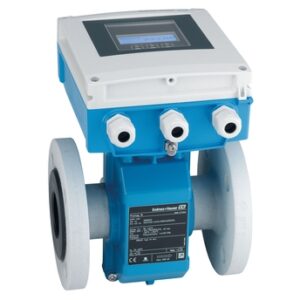
Flow Transmitter (Flow meter)552 Products
-
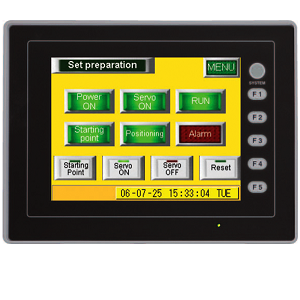
HMI/Touch Screen592 Products
-
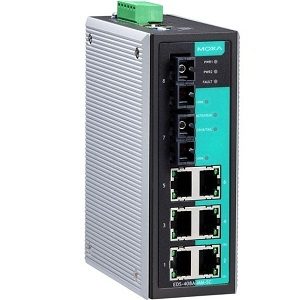
Industrial Device Servers125 Products
-
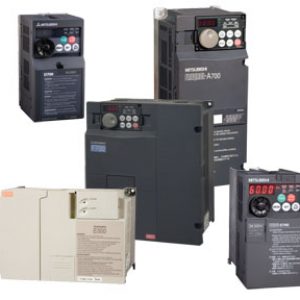
Inverter911 Products
-
Network/Signal2 Products
-
Others4,502 Products
-
Power Supply218 Products
-
Pressure Transmitter146 Products
-
Programmable Logic Controller (PLC)6,290 Products
-
Relay927 Products
-
Sensor2,221 Products
-
Servo Motors & Motor Drives4,675 Products
-
Switch897 Products
-
Timer93 Products
-
Uncategorized1,141 Products
-
Valve Controller & Manifolds17 Products
-
Variable Frequency Drives (VFD)257 Products
-
Yokogawa Remote Indicators16 Products