
What Is an Infrared Temperature Sensor
Understanding What an Infrared Temperature Sensor Is and How It Works in Factory Automation Control
What is an infrared temperature sensor? And how does an infrared temperature sensor work?
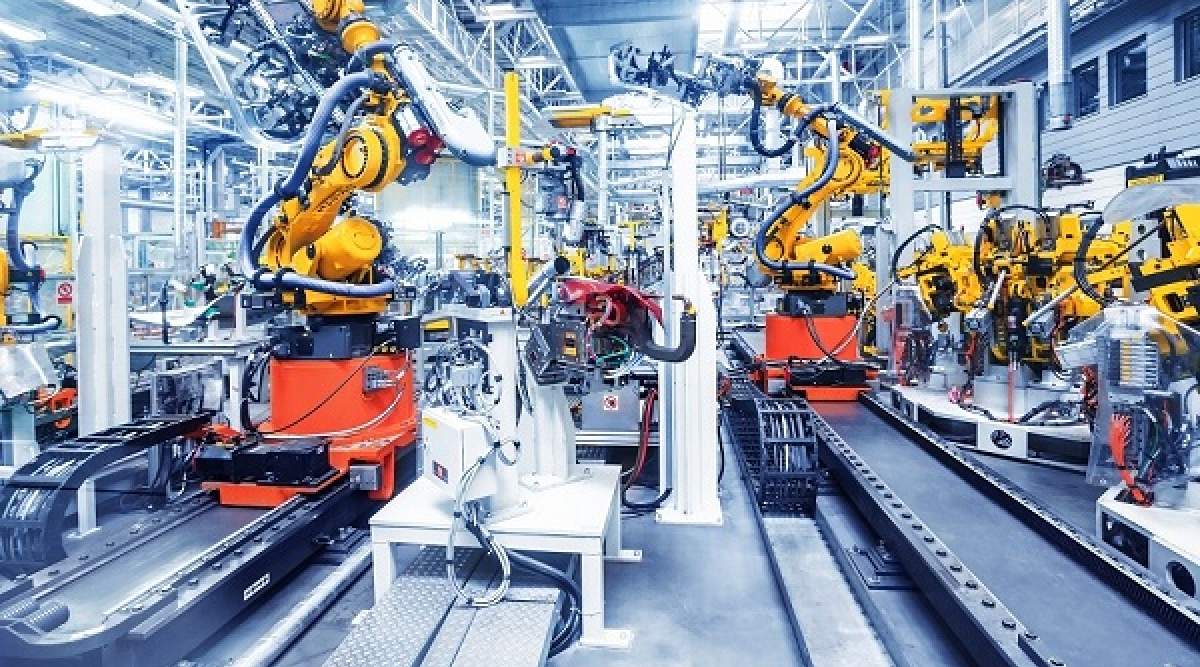
What Is an Infrared Temperature Sensor and How Does It Work? - A Practical Guide for Industrial Applications and Process Control
Infrared temperature sensors have become a standard tool across modern industry—from manufacturing lines and power plants to food processing and electronics production. If you’ve ever seen a handheld temperature gun or a fixed sensor monitoring a hot surface without touching it, you’ve already encountered this technology in action. At its core, an infrared (IR) temperature sensor provides non-contact temperature measurement, making it ideal for situations where traditional sensors like thermocouples or RTDs simply cannot perform safely or accurately. This guide explains what an infrared temperature sensor is, how it works, its key components, types, advantages, limitations, and real-world industrial applications—without overcomplicating the physics.
Understanding Infrared Temperature Sensors
An infrared temperature sensor is a device that measures the temperature of an object by detecting the infrared radiation (heat energy) it emits. Unlike contact sensors, it does not need to touch the object being measured. Every object with a temperature above absolute zero emits infrared radiation. The hotter the object, the more radiation it emits. Infrared sensors capture this radiation and convert it into an electrical signal, which is then translated into a temperature reading.
What Makes Infrared Sensors Different?
Traditional temperature sensors—like thermocouples—require physical contact to measure temperature. That’s fine for many applications, but it becomes a problem when dealing with:
-
Moving objects
-
Extremely hot surfaces
-
Hazardous environments
-
Sterile or contamination-sensitive materials
Infrared sensors solve this by measuring temperature remotely and instantly, often within milliseconds.
Infrared Radiation Explained
Infrared radiation is part of the electromagnetic spectrum, just beyond visible light. It typically falls within wavelengths ranging from about 0.7 microns to 1000 microns. Although invisible to the human eye, infrared radiation is experienced as heat. This is the same energy you feel from sunlight or a hot machine surface.
How Infrared Temperature Sensors Work
At a practical level, infrared temperature sensors follow a straightforward principle: Measure emitted infrared energy → Convert it into an electrical signal → Calculate temperature.
Step-by-Step Working Principle
Detection of Infrared Radiation
All objects emit infrared radiation depending on their temperature. The sensor detects this radiation through its optical system. Infrared energy travels in straight lines and can be reflected, absorbed, or transmitted depending on the surface and environment.
Optical System (Lens and Filters)
The sensor uses lenses to collect and focus infrared radiation onto a detector. Optical filters ensure that only specific wavelengths (commonly 8–14 μm) are measured, improving accuracy.
Infrared Detector
The detector—often a thermopile or similar device—absorbs the infrared radiation and converts it into heat, which is then converted into an electrical signal.
Signal Processing
The electrical signal is processed using onboard electronics or microprocessors. The system compensates for environmental factors and converts the signal into a temperature value.
Temperature Output
The final result is displayed digitally or transmitted to control systems such as PLCs or SCADA platforms.
Key Components of an Infrared Temperature Sensor
Understanding the internal structure helps clarify how these sensors achieve accuracy and reliability.
Optical Components
These include lenses, mirrors, and filters that collect and focus infrared radiation. They also determine:
-
Field of view
-
Distance-to-spot ratio
-
Measurement accuracy
Infrared Detector (Thermopile)
The detector converts incoming infrared radiation into an electrical signal. Thermopiles are commonly used because they provide stable and accurate measurements across a wide temperature range.
Signal Processing Electronics
Modern sensors include integrated circuits that:
-
Amplify signals
-
Compensate for ambient temperature
-
Convert analog signals into digital output
Output Interface
Sensors may output data through:
-
Analog signals (4–20 mA)
-
Digital protocols
-
Industrial communication networks
Types of Infrared Temperature Sensors
Infrared sensors are not all the same. Different designs serve different industrial requirements.
Spot Infrared Sensors
These measure temperature at a specific point or area. Common uses:
-
Machine surface monitoring
-
Conveyor systems
-
Motor temperature checks
Infrared Line Scanners
These measure temperature across a line or surface. Applications include:
-
Steel production
-
Paper manufacturing
-
Continuous process monitoring
Infrared Thermal Imaging Cameras
These provide a full temperature map of a surface. Used in:
-
Predictive maintenance
-
Electrical inspections
-
Building diagnostics
Fiber Optic Infrared Sensors
Designed for extreme environments, these sensors use fiber optics to transmit infrared signals. Used in:
-
High electromagnetic interference environments
-
High-temperature furnaces
Advantages of Infrared Temperature Sensors
Infrared temperature sensors offer several compelling advantages in industrial environments.
Non-Contact Measurement
The biggest advantage is the ability to measure temperature without touching the object. This is critical for:
-
Moving machinery
-
Hazardous environments
-
Fragile materials
Fast Response Time
Infrared sensors provide near-instant readings, making them ideal for real-time monitoring and control.
Safe Operation
Operators can measure temperature from a safe distance, reducing exposure to heat, chemicals, or moving equipment.
Wide Temperature Range
Infrared sensors can measure extremely high temperatures that would damage contact sensors.
Minimal Maintenance
Because there is no physical contact, wear and tear are significantly reduced.
Limitations of Infrared Temperature Sensors
Despite their advantages, infrared sensors are not perfect.
Emissivity Dependency
Accuracy depends heavily on the emissivity of the object being measured. Highly reflective surfaces (like polished metals) can produce inaccurate readings.
Environmental Interference
Dust, smoke, steam, and glass can interfere with infrared radiation and affect measurement accuracy.
Line-of-Sight Requirement
Infrared sensors require a clear line of sight to the target. Obstructions can distort readings.
Surface Measurement Only
Infrared sensors measure surface temperature—not internal temperature.
Applications of Infrared Temperature Sensors
Infrared sensors are widely used across industrial sectors.
Manufacturing and Automation – Used for:
-
Monitoring machine temperature
-
Quality control
-
Process optimization
Electrical Systems – Infrared sensors detect overheating in:
-
Switchgear
-
Transformers
-
Electrical panels
Food and Beverage Industry – Used for:
-
Cooking temperature control
-
Packaging inspection
-
Sterilization processes
Oil and Gas Industry – Used in:
-
Pipeline monitoring
-
Refinery operations
-
Equipment safety
Predictive Maintenance
Infrared sensors play a key role in identifying potential equipment failures before they occur.
- Industrial Automation Fundamentals
- Industrial Communication Protocols
- Industrial Instrumentation Control
- Industrial Sensors & Measurement
- Motion and Process Control
- PLC Programming & Controllers
- SCADA and DCS Systems
- Servo Motors and Motor Drives
Frequently Asked Questions (FAQ)
What is an infrared temperature sensor?
An infrared temperature sensor is a device that measures temperature by detecting the infrared radiation emitted by an object without making physical contact.
How does an infrared temperature sensor work?
It detects infrared radiation, converts it into an electrical signal, and processes that signal to calculate the temperature of the object.
What is the advantage of non-contact temperature measurement?
Non-contact measurement allows temperature readings of moving, hazardous, or inaccessible objects safely and quickly.
What is emissivity in infrared sensors?
Emissivity is a measure of how effectively a surface emits infrared radiation. It plays a critical role in determining measurement accuracy.
Where are infrared temperature sensors used?
They are used in manufacturing, electrical maintenance, food processing, oil and gas, and predictive maintenance applications.
Are infrared temperature sensors accurate?
Yes, when properly calibrated and used correctly. However, accuracy depends on factors such as emissivity, environmental conditions, and sensor quality.
Your One-Stop Source for Reliable Automation & Process Control Equipment
Access trusted process control equipment, expert support, and fast sourcing—all in one place.
-
AC Drives 18,165 Products
-
Butterfly Valve236 Products
-
Circuit Breakers2,226 Products
-
Contactors567 Products
-
Counters78 Products
-
Encoder117 Products
-
Fanuc Main Board1,376 Products
-
Flow Transmitter (Flow meter)552 Products
-
HMI/Touch Screen592 Products
-
Inverter911 Products
-
Network/Signal4 Products
-
Others4,613 Products
-
Power Supply218 Products
-
Pressure Transmitter146 Products
-
Programmable Logic Controller (PLC)6,290 Products
-
Relay927 Products
-
Sensor2,221 Products
-
Servo Motors & Motor Drives4,499 Products
-
Switch897 Products
-
Timer93 Products
-
Uncategorized1,143 Products
-
Valve Controller & Manifolds15 Products
-
Variable Frequency Drives (VFD)257 Products
-
Yokogawa Remote Indicators16 Products