
ABB ACS380 General Purpose Drives
Understanding ABB ACS380 General Purpose Drives in Industrial Automation System
What makes the ACS380 different from other ABB drives?
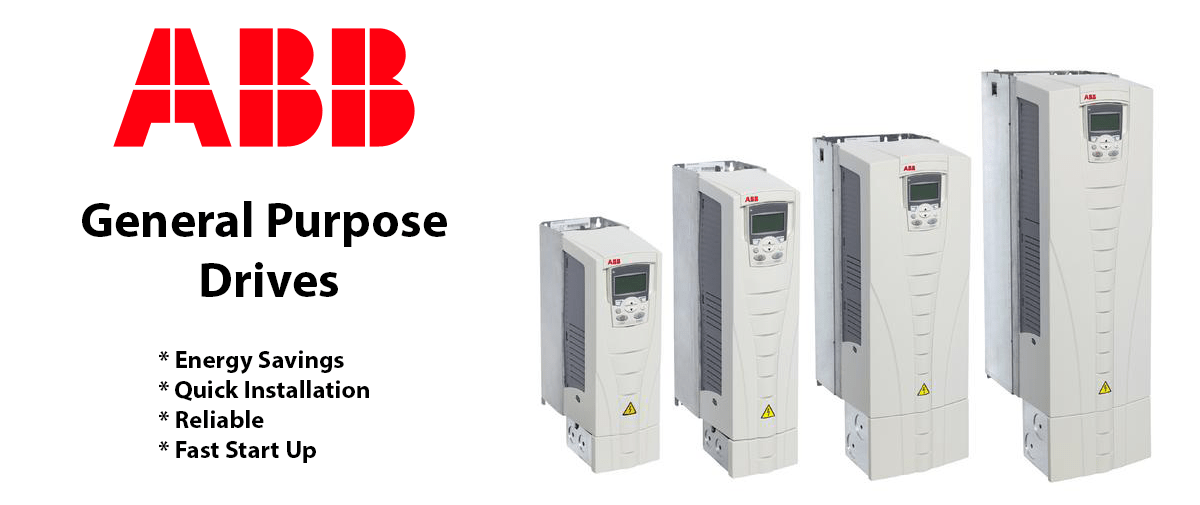
ABB ACS380 General Purpose Drives: A Complete Guide for Industrial Applications
When you’ve spent enough time around machinery, you start to recognize which drives are built for real-world conditions—and which ones just look good on paper. The ABB ACS380 General Purpose Drives fall firmly into the first category.
Designed specifically for machine builders and OEM applications, the ACS380 series is part of ABB’s well-established low-voltage drive portfolio. It’s engineered to deliver reliable motor control, fast commissioning, and flexible integration across a wide range of industrial applications—from conveyors and mixers to packaging lines and cranes.
In this guide, we’ll break down how the ACS380 works, what makes it stand out, where it fits best, and how to deploy it effectively in modern automation systems.
What Are ABB ACS380 General Purpose Drives?
At its core, the ACS380 is a low-voltage AC variable frequency drive (VFD) designed to control the speed and torque of electric motors. It’s built for machinery applications where precision, reliability, and ease of integration are critical.
Unlike traditional motor starters that run motors at fixed speeds, the ACS380 allows operators to adjust motor performance dynamically—matching output to actual process demand.
The drive supports a wide power range—from 0.25 kW up to 22 kW, with voltage options up to 480 V—making it suitable for a broad spectrum of industrial machines.
Key Features That Define the ACS380
Compact and Machine-Ready Design
One of the first things you notice about the ACS380 is how compact and standardized it is. ABB designed it with machine builders in mind—so installation inside control panels is straightforward.
- Unified enclosure sizes simplify panel layout
- Side-by-side mounting saves cabinet space
- Preconfigured variants reduce engineering time
Broad Motor Compatibility
The ACS380 isn’t limited to a single motor type. It can control:
- Induction motors
- Permanent magnet motors
- Synchronous reluctance motors
This flexibility allows engineers to standardize on one drive platform across multiple machine types.
Built-In Safety (STO)
Safety isn’t an add-on here—it’s built in. The ACS380 includes Safe Torque Off (STO) as a standard feature, which safely removes power from the motor without requiring external safety components. This is especially important in applications like conveyors or rotating machinery where emergency stop conditions must be handled instantly.
Adaptive Programming
One of the more practical features—especially for engineers—is adaptive programming.
Instead of writing complex PLC logic for simple control tasks, the ACS380 allows you to implement basic control logic directly within the drive.
This reduces: PLC load, Wiring complexity, and Commissioning time.
How ABB ACS380 Drives Work in Industrial Systems
At a system level, the ACS380 acts as the control interface between power supply and motor operation.
Motor Control Fundamentals
The drive converts incoming AC power into DC, then back into a controlled AC output with adjustable frequency and voltage. This allows precise control of:
- Motor speed
- Torque output
- Acceleration and deceleration
The ACS380 uses advanced motor control algorithms to maintain stable performance even under varying load conditions.
Integration with Automation Systems
Modern drives are not standalone devices—they’re part of a larger automation architecture. The ACS380 supports integration with:
- PLC systems
- SCADA platforms
- Industrial communication networks
It includes preconfigured fieldbus protocols, making it easier to connect to existing automation systems without extensive configuration.
Data Monitoring and Diagnostics
Another area where the ACS380 stands out is data visibility. It provides:
- Load profiling
- Fault diagnostics
- Real-time performance monitoring
This helps maintenance teams identify issues early and optimize machine performance.
Technical Specifications of ABB ACS380 Drives
Understanding the technical envelope of the ACS380 is critical for proper application.
Power and Voltage Range
- Power: 0.25 kW to 22 kW
- Voltage: 200–240 V (single phase) and 380–480 V (three phase)
This range makes the drive suitable for both small machinery and mid-sized industrial systems.
Enclosure and Environmental Ratings
- IP20 enclosure standard
- UL Type 1 options available
- Operating temperatures up to 50°C without derating
These specs make the ACS380 reliable in typical industrial environments.
Motor Control Performance
The ACS380 delivers:
- High starting torque
- Stable speed regulation
- Fast dynamic response
It can operate with or without encoder feedback, depending on application requirements.
Communication and Connectivity
The drive supports multiple communication options:
- Modbus RTU (standard)
- Fieldbus adapters for industrial networks
- Ethernet connectivity (on newer variants)
This ensures compatibility with modern automation ecosystems.
Applications of ABB ACS380 Drives
The ACS380 is designed for machinery applications across multiple industries.
Material Handling Systems
Conveyors, cranes, and lifting systems rely on precise motor control. The ACS380 provides:
- Smooth acceleration and deceleration
- Load stability
- Energy-efficient operation
Packaging and Processing Equipment
In packaging lines, speed and synchronization are critical. The ACS380 ensures:
- Consistent production rates
- Accurate motor coordination
- Reduced downtime
Food and Beverage Industry
Food processing environments require reliable and hygienic operation.
The ACS380 supports: Mixers, Bottling systems, and Filling machines.
Textile and Manufacturing Machinery
In textile and manufacturing industries, motor speed control directly impacts product quality.
The ACS380 delivers consistent performance for: Spinning machines, Extruders, and Machine tools.
Advantages of ABB ACS380 Drives
Ease of Integration
The ACS380 is designed to reduce engineering effort.
- Preconfigured drive variants
- Built-in features reduce external components
- Fast commissioning tools
Reliable Performance
The drive is built for long-term use, with a design life exceeding 10 years under normal operating conditions.
Reduced System Complexity
By integrating safety, control logic, and communication features, the ACS380 minimizes the need for additional hardware.
Flexibility Across Applications
From simple conveyors to complex machinery, the ACS380 adapts easily to different use cases.
ABB ACS380 vs Other General Purpose Drives
Within ABB’s drive portfolio, the ACS380 sits between basic general-purpose drives and high-end industrial drives. Compared to other models:
- More machine-focused than entry-level drives
- Simpler than heavy-duty industrial drives
- Optimized for OEM and machine builders
This positioning makes it ideal for applications where performance and simplicity need to be balanced.
- Industrial Automation Fundamentals
- Industrial Communication Protocols
- Industrial Instrumentation Control
- Industrial Sensors & Measurement
- Motion and Process Control
- PLC Programming & Controllers
- SCADA and DCS Systems
- Servo Motors and Motor Drives
Frequently Asked Questions (FAQ)
What is the ABB ACS380 used for?
The ABB ACS380 is used to control electric motors in industrial machinery. It is commonly applied in conveyors, packaging systems, mixers, and manufacturing equipment.
What makes the ACS380 different from other ABB drives?
The ACS380 is specifically designed for machine builders. It offers preconfigured options, compact design, and built-in safety features, making it easier to integrate into machinery.
What motor types can the ACS380 control?
The ACS380 can control induction motors, permanent magnet motors, and synchronous reluctance motors, providing flexibility across different applications.
Does the ACS380 support industrial communication protocols?
Yes. The ACS380 supports Modbus RTU and can be expanded with fieldbus adapters to integrate with industrial communication networks.
Is the ACS380 suitable for harsh environments?
Yes. With its robust design, coated components, and high operating temperature tolerance, the ACS380 is suitable for demanding industrial environments.
What is the power range of the ABB ACS380?
The ACS380 supports a power range from 0.25 kW to 22 kW, making it suitable for small to medium industrial machinery.
How long does an ACS380 drive last?
The ACS380 is designed for a service life of over 10 years under normal operating conditions, depending on environmental and load conditions.
Your One-Stop Source for Reliable Automation & Process Control Equipment
Access trusted process control equipment, expert support, and fast sourcing—all in one place.
-
AC Drives 18,165 Products
-
Butterfly Valve236 Products
-
Circuit Breakers2,226 Products
-
Contactors567 Products
-
Counters78 Products
-
Encoder117 Products
-
Fanuc Main Board1,376 Products
-
Flow Transmitter (Flow meter)552 Products
-
HMI/Touch Screen592 Products
-
Industrial Device Servers125 Products
-
Inverter911 Products
-
Network/Signal2 Products
-
Others4,502 Products
-
Power Supply218 Products
-
Pressure Transmitter146 Products
-
Programmable Logic Controller (PLC)6,290 Products
-
Relay927 Products
-
Sensor2,221 Products
-
Servo Motors & Motor Drives4,768 Products
-
Switch897 Products
-
Timer93 Products
-
Uncategorized1,141 Products
-
Valve Controller & Manifolds17 Products
-
Variable Frequency Drives (VFD)257 Products
-
Yokogawa Remote Indicators16 Products