Allen-Bradley PLC Programming
Allen-Bradley PLC Programming: A Complete Guide for Engineers and Automation Professionals
Programmable Logic Controllers (PLCs) sit at the heart of modern industrial automation, and few platforms are as widely used in North America as the Allen-Bradley family of controllers developed by Rockwell Automation. From automotive assembly plants to food processing facilities, Allen-Bradley PLCs are trusted to control machinery, coordinate production processes, and maintain reliable industrial operations.
For automation engineers and technicians, learning Allen-Bradley PLC programming is often considered a foundational skill. These controllers allow engineers to build control logic that can start motors, monitor sensors, regulate production lines, and integrate entire manufacturing systems.
Understanding Allen-Bradley PLC Programming
Allen-Bradley PLC programming refers to the process of creating software instructions that allow PLC controllers to monitor inputs, process logic, and control outputs in an automated system. PLCs are industrial computers designed to run automation programs that control machinery and manufacturing processes. (Rockwell Automation)
Unlike traditional computers, PLCs are built to operate in harsh industrial environments where temperature fluctuations, electrical noise, and vibration are common. These controllers are used in industries such as manufacturing, energy, food processing, water treatment, and material handling.
Allen-Bradley PLC programming typically involves writing logic that determines how machines respond to sensor signals, operator inputs, and process conditions.
Typical tasks controlled by PLC programs include:
-
Starting and stopping motors
-
Operating conveyor systems
-
Controlling pumps and valves
-
Managing safety interlocks
-
Coordinating robotic equipment
The goal of PLC programming is to ensure that machines operate safely, efficiently, and consistently.
Allen-Bradley PLC Platforms and Controllers
Allen-Bradley offers several PLC families designed for different levels of industrial automation. Each platform is programmed using specialized software and supports various programming languages.
MicroLogix and Micro800 Controllers
These controllers are typically used in smaller automation systems and standalone machines.
They are common in applications such as:
-
packaging machines
-
pump stations
-
small production equipment
Micro PLCs provide cost-effective automation while maintaining the reliability expected from industrial controllers.
CompactLogix Controllers
CompactLogix PLCs are widely used in medium-scale automation systems where more processing power and communication capabilities are required.
These controllers support advanced automation features including motion control, integrated safety, and industrial networking.
Typical applications include:
-
machine automation
-
manufacturing cells
-
process control systems
ControlLogix Controllers
ControlLogix controllers are designed for large-scale industrial automation environments.
They are commonly used in:
-
large manufacturing plants
-
oil and gas facilities
-
power generation plants
-
complex process control systems
ControlLogix systems support distributed control architectures and can coordinate multiple production lines within a single facility.
Allen-Bradley PLC Programming Software
Programming Allen-Bradley PLCs requires specialized engineering software used to develop, test, and deploy control programs.
Studio 5000 Logix Designer
Studio 5000 (formerly RSLogix 5000) is the primary programming environment used for modern Allen-Bradley PLC systems.
This software provides tools for:
-
writing control logic
-
configuring hardware modules
-
debugging programs
-
monitoring real-time machine operation
Studio 5000 includes graphical programming tools, simulation features, and diagnostic tools that allow engineers to troubleshoot automation systems efficiently.
The software also supports version control and project management features, which are important when managing large automation projects.
RSLogix 500
RSLogix 500 is used for older PLC platforms such as SLC-500 and MicroLogix controllers.
Although many industries are transitioning to Studio 5000, RSLogix remains widely used in legacy automation systems.
Many factories still operate machines programmed decades ago using RSLogix-based platforms.
Programming Languages Used in Allen-Bradley PLCs
Allen-Bradley PLCs support multiple programming languages defined by the IEC-61131-3 industrial programming standard.
Each language serves a specific purpose depending on the application.
Ladder Logic
Ladder Logic is the most widely used programming language in industrial automation. It uses graphical symbols arranged like electrical ladder diagrams to represent logical relationships between inputs and outputs.
Programs consist of horizontal “rungs” that connect two vertical rails, resembling a ladder structure. Each rung evaluates logical conditions and activates outputs when the conditions are satisfied.
This approach evolved from relay control systems used in early industrial automation.
Ladder logic is particularly popular because it is easy for technicians and electricians to read and troubleshoot.
Structured Text
Structured Text is a high-level programming language similar to Pascal.
It is commonly used when PLC programs involve:
-
complex mathematical calculations
-
data manipulation
-
algorithmic logic
Structured Text allows engineers to write compact code for complex operations that would be difficult to represent graphically.
Function Block Diagram
Function Block Diagram (FBD) is a graphical programming language that represents logic as interconnected blocks.
Each block performs a specific function such as:
-
mathematical calculations
-
signal processing
-
control loops
Function Block programming is commonly used in process industries where analog signals and control loops are prevalent.
Sequential Function Chart
Sequential Function Chart (SFC) is used to program step-by-step processes.
It is particularly useful for machines that follow a sequence of operations such as:
-
Load material
-
Start conveyor
-
Activate robot
-
Perform quality inspection
SFC allows engineers to represent complex operational sequences clearly.
How Allen-Bradley PLC Programs Work
Understanding how PLC programs execute is essential for developing reliable automation systems.
Most PLCs operate using a scan cycle, which repeats continuously while the controller is running.
The scan cycle typically follows three main steps.
Step 1: Input Scan
The PLC reads the status of all connected input devices such as sensors, switches, and pushbuttons.
These input signals are stored in the PLC’s memory.
Step 2: Program Execution
The PLC evaluates the control program logic based on the input data.
Each rung or instruction is executed in sequence.
When conditions in the program are satisfied, corresponding outputs are activated.
Step 3: Output Scan
Finally, the PLC updates all output devices such as motors, valves, and relays.
The outputs reflect the results of the program logic.
This entire cycle repeats thousands of times per second, allowing automation systems to respond quickly to changes in the production environment.
Key Programming Instructions in Allen-Bradley PLCs
Allen-Bradley PLC programs rely on a variety of instructions that allow engineers to control industrial processes.
Some of the most common instructions include:
Bit Instructions
These instructions control digital logic operations.
Examples include:
-
Examine If Closed (XIC)
-
Examine If Open (XIO)
-
Output Energize (OTE)
These instructions are used to create basic control logic.
Timer Instructions
Timers allow PLC programs to perform actions after specific time delays.
Common timer functions include:
-
on-delay timers
-
off-delay timers
-
retentive timers
Timers are frequently used in machine sequencing and process control.
Counter Instructions
Counters track the number of occurrences of a particular event.
Examples include:
-
product counting
-
cycle tracking
-
batch control
Counters are essential in manufacturing environments where production quantities must be monitored.
Best Practices for Allen-Bradley PLC Programming
Experienced automation engineers follow several best practices when developing PLC programs.
Use Clear Naming Conventions
Meaningful variable names make programs easier to understand and troubleshoot.
For example:
Motor_Start_Button
Conveyor_Run_Command
Clear naming reduces confusion when maintaining large programs.
Organize Logic into Routines
Breaking large programs into smaller routines improves readability and maintainability.
Each routine can handle a specific function such as:
-
motor control
-
alarm management
-
safety logic
Document the Program
Proper documentation helps technicians understand how machines operate.
Good PLC documentation includes:
-
program comments
-
electrical references
-
system descriptions
Test Programs Before Deployment
Simulation and testing are critical before deploying automation programs to live equipment.
Testing helps identify errors that could cause machine faults or production downtime.
Applications of Allen-Bradley PLC Programming
Allen-Bradley PLC programming is used in nearly every industrial sector.
Common applications include:
Manufacturing Automation
PLC programs control assembly lines, robotic systems, and material handling equipment.
Process Industries
Chemical plants and oil refineries rely on PLC programs to control pumps, valves, and temperature systems.
Food and Beverage Production
Automation systems manage packaging lines, bottling systems, and quality inspection equipment.
Energy and Utilities
PLCs are used in power plants, water treatment facilities, and renewable energy systems.
Recommended Related Articles:
https://www.automationpioneer.com/news/what-is-industrial-automation
What Is Industrial Automation
https://www.automationpioneer.com/news/types-of-industrial-automation-systems
Types of Industrial Automation Systems
https://www.automationpioneer.com/news/plc-vs-dcs
PLC vs DCS Explained
https://www.automationpioneer.com/news/industrial-communication-protocols
Industrial Communication Protocols
https://www.automationpioneer.com/news/types-of-industrial-sensors
Types of Industrial Sensors
https://www.automationpioneer.com/news/industrial-iot-guide
Industrial IoT Guide
https://www.automationpioneer.com/news/flow-measurement-technologies
Flow Measurement Technologies
https://www.automationpioneer.com/news/pressure-transmitters-guide
Pressure Transmitters Explained
Frequently Asked Questions (FAQ)
What is Allen-Bradley PLC programming?
Allen-Bradley PLC programming is the process of creating automation control programs for Allen-Bradley controllers using specialized software such as Studio 5000 or RSLogix.
These programs allow machines and industrial processes to operate automatically.
What programming language is used in Allen-Bradley PLCs?
Allen-Bradley PLCs support several programming languages including ladder logic, structured text, function block diagram, and sequential function charts.
Why is ladder logic widely used in PLC programming?
Ladder logic is popular because it resembles electrical relay circuits, making it easier for technicians and engineers to understand and troubleshoot automation programs.
Is Allen-Bradley PLC programming difficult to learn?
The basic concepts of PLC programming can be learned relatively quickly, especially for individuals with electrical or programming backgrounds. However, mastering industrial automation systems requires practical experience with real machinery and processes.
What industries use Allen-Bradley PLCs?
Allen-Bradley PLCs are widely used in manufacturing, automotive production, energy systems, water treatment plants, food processing facilities, and many other industrial sectors.
-
AC Drives 18,160 Products
-
Butterfly Valve236 Products
-
Circuit Breakers2,226 Products
-
Contactors567 Products
-
Counters78 Products
-
Encoder117 Products
-
Fanuc Main Board1,376 Products
-
Flow Transmitter (Flow meter)286 Products
-
HMI/Touch Screen592 Products
-
Inverter911 Products
-
Network/Signal4 Products
-
Others4,668 Products
-
Power Supply218 Products
-
Pressure Transmitter143 Products
-
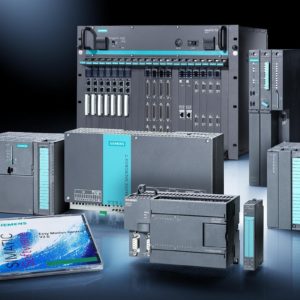
Programmable Logic Controller (PLC)6,288 Products
-
Relay927 Products
-
Sensor2,221 Products
-
Servo Motors & Motor Drives4,363 Products
-
Switch897 Products
-
Timer93 Products
-
Uncategorized1,148 Products
-
Valve Controller & Manifolds15 Products
-
Variable Frequency Drives (VFD)258 Products
-
Yokogawa Remote Indicators16 Products