
Difference Between Absolute and Incremental Sensors
Understanding What Is The Main Difference Between Absolute and Incremental Sensors in Industrial Automation & Process Control Solution
Which sensor is more accurate? Do incremental sensors require homing? And which sensor is better for servo motors?
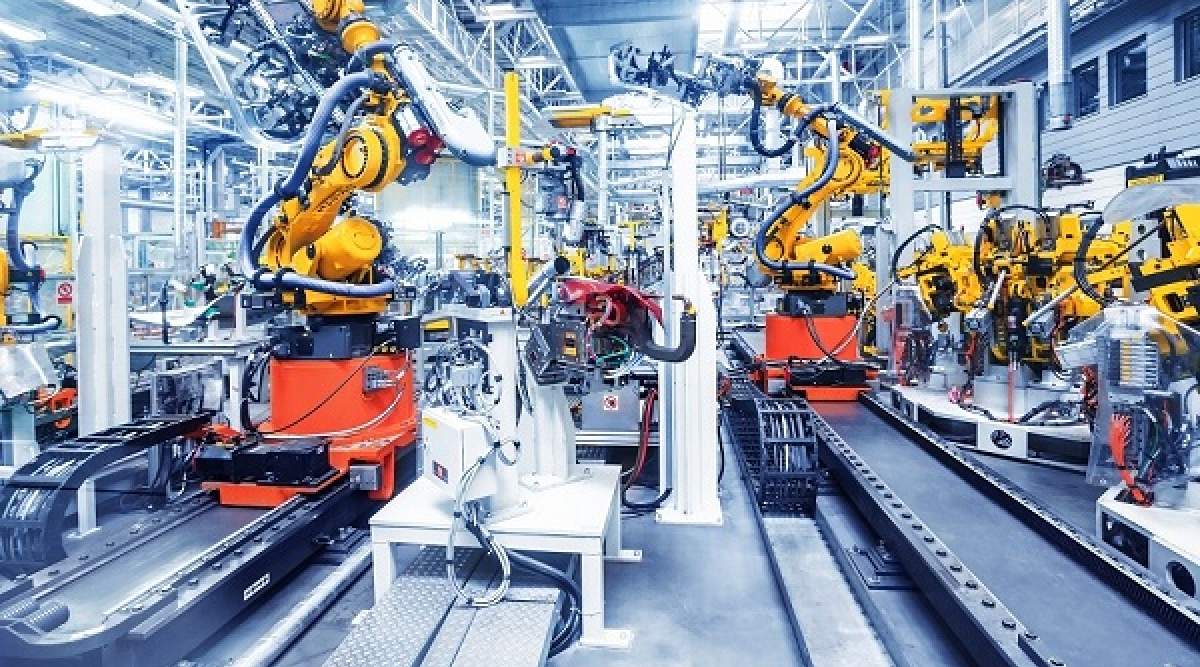
What Is The Main Difference Between Absolute and Incremental Sensors
Industrial automation professionals often encounter two encoder technologies when designing motion control systems: absolute sensors and incremental sensors. While both devices measure position, speed, and movement, they operate in fundamentally different ways and serve different applications. Choosing the wrong sensor can lead to positioning errors, unexpected downtime, and costly production losses. On the other hand, selecting the right technology can significantly improve machine reliability, accuracy, and operational efficiency. In this comprehensive guide, we’ll explore the difference between absolute and incremental sensors, how each technology works, their advantages and limitations, common applications, and practical selection criteria for industrial automation projects.
Difference Between Absolute and Incremental Sensors
Sensors play a critical role in industrial automation by providing feedback about machine position, speed, rotation, and movement. Among the most widely used position sensing technologies are absolute encoders and incremental encoders. Although both devices measure motion, they generate and interpret position information differently. An absolute sensor provides a unique position value for every shaft location. Even after power loss, the sensor remembers its exact position and immediately reports it when power returns. An incremental sensor, however, generates pulses as movement occurs. The control system counts these pulses to determine position. If power is lost, the position count is lost unless an external backup system preserves it.
Understanding these differences is essential when designing systems involving:
Servo motors
Robotics
Conveyor systems
Packaging machines
CNC equipment
Automated assembly lines
Material handling systems
Understanding Position Sensors in Industrial Automation
Position sensors provide critical feedback that allows controllers to determine where a machine component is located at any given moment. Without accurate position feedback, modern automation systems would struggle to perform tasks requiring precision, synchronization, or repeatability.
Position sensing technologies support:
Motion control
Robotic positioning
Machine tool operations
Conveyor tracking
Automated inspection systems
Pick-and-place applications
Modern industrial control systems use sensor feedback to continuously compare actual position with commanded position. When deviations occur, controllers automatically make corrections. As manufacturing tolerances become tighter, the importance of accurate position feedback continues to grow.
Why Position Feedback Matters
Consider a robotic arm placing electronic components onto a circuit board. If the positioning system is off by even a fraction of a millimeter, the robot may misplace components, resulting in defective products and costly rework. Similarly, in CNC machining operations, position feedback ensures tools follow programmed paths accurately. Position sensors provide the data necessary for:
Precision control
Repeatability
Quality assurance
Equipment protection
Process optimization
What Is an Absolute Sensor?
An absolute sensor, commonly called an absolute encoder, provides a unique digital value corresponding to a specific shaft position. Unlike incremental devices, an absolute sensor knows exactly where it is located at all times. Even if power is removed, the sensor retains position information and immediately reports its actual position once power returns.
How Absolute Sensors Work
Absolute sensors use coded tracks arranged around a rotating disk. Each position on the disk corresponds to a unique binary code. As the shaft rotates, optical, magnetic, or capacitive sensing elements read the code pattern and convert it into a digital position value. Because every position has its own unique code, the controller always knows the exact shaft location. For example:
| Shaft Position | Binary Output |
|---|---|
| 0° | 000000 |
| 90° | 010101 |
| 180° | 101010 |
| 270° | 111111 |
This direct position reporting eliminates the need for pulse counting.
Types of Absolute Sensors
Single-Turn Absolute Sensors
Single-turn encoders measure one complete revolution. After completing a full rotation, the position count resets. These sensors are commonly used in:
Servo motors
Packaging equipment
Rotary indexing tables
Multi-Turn Absolute Sensors
Multi-turn encoders track both rotational position and the number of completed revolutions. They maintain accurate position information across multiple rotations. Applications include:
Elevators
Crane systems
Wind turbines
Industrial hoists
Advantages of Absolute Sensors
Absolute sensors offer several significant benefits.
Immediate Position Recognition
The controller instantly knows the actual shaft position after startup. No homing sequence is required.
Power Loss Protection
Position data remains available after power interruptions.
Improved Machine Availability
Machines restart faster because operators do not need to re-establish reference positions.
Enhanced Safety
Accurate startup positioning reduces the risk of unexpected machine movement.
Better Reliability
Position accuracy does not depend on pulse counting accuracy.
Limitations of Absolute Sensors
Despite their advantages, absolute sensors have some drawbacks.
Higher Initial Cost
Absolute encoders typically cost more than incremental alternatives.
More Complex Electronics
Advanced electronics increase design complexity.
Greater Integration Requirements
Communication protocols often require additional configuration.
What Is an Incremental Sensor?
An incremental sensor, often called an incremental encoder, generates a series of pulses as the shaft rotates. Rather than reporting a specific position value, the sensor reports movement increments. Controllers determine position by counting these pulses.
How Incremental Sensors Work
Incremental encoders contain a disk with evenly spaced markings. As the disk rotates, sensing elements generate electrical pulses. The control system counts these pulses to determine:
Distance traveled
Rotational position
Speed
Direction
For example:
1 pulse = one increment of movement
1000 pulses = specific rotational distance
The controller continuously updates position based on accumulated pulse counts.
Incremental Encoder Channels
Most incremental encoders provide three output channels.
Channel A
Primary pulse train.
Channel B
Secondary pulse train offset by 90 degrees.
The controller uses Channels A and B to determine direction.
Index Channel (Z)
Provides one pulse per revolution.
This pulse serves as a reference point.
Advantages of Incremental Sensors
Incremental sensors remain popular because they offer numerous practical advantages.
Lower Cost
They are generally less expensive than absolute sensors.
Simpler Design
Installation and configuration are often straightforward.
High-Speed Performance
Incremental encoders excel in speed measurement applications.
Wide Availability
They are commonly available across many industrial sectors.
Excellent Resolution
Modern incremental encoders can generate very high pulse counts.
Limitations of Incremental Sensors
Several limitations must be considered.
Position Loss During Power Failure
Position information disappears when power is removed.
Homing Requirement
Machines typically require a homing sequence during startup.
Susceptibility to Missed Pulses
Electrical noise or controller issues can affect pulse counting accuracy.
Increased Downtime
Restart procedures may take longer after interruptions.
Absolute vs Incremental Sensors: Key Differences
The primary distinction lies in how each sensor determines and reports position.
| Feature | Absolute Sensor | Incremental Sensor |
|---|---|---|
| Position Retention | Maintains position after power loss | Loses position after power loss |
| Startup Behavior | Immediate position availability | Requires homing |
| Cost | Higher | Lower |
| Complexity | More advanced | Simpler |
| Motion Feedback | Direct position reporting | Pulse counting |
| Safety | Higher | Moderate |
| Downtime Recovery | Fast | Slower |
| Installation Cost | Higher | Lower |
Accuracy and Resolution Comparison
Many engineers mistakenly assume absolute sensors are always more accurate. In reality, accuracy depends on several factors.
Absolute Sensor Accuracy
Absolute encoders provide precise position identification. Their accuracy depends on:
Number of bits
Manufacturing quality
Signal processing technology
High-end models can achieve extremely precise positioning.
Incremental Sensor Accuracy
Incremental encoders often provide exceptionally high resolution. In motion control applications, they can achieve remarkable positioning precision when properly configured. However, missed pulses can reduce long-term accuracy.
Industrial Applications of Absolute Sensors
Absolute sensors are commonly selected when maintaining position information is critical.
Robotics
Robotic systems require precise startup positioning. Absolute encoders eliminate lengthy referencing procedures.
CNC Machines
Machine tools depend on accurate positioning to maintain dimensional tolerances.
Automated Warehouses
Storage and retrieval systems require continuous position awareness.
Wind Turbines
Blade pitch control systems rely heavily on absolute position feedback.
Elevators and Hoists
Safety-critical lifting applications often use absolute encoders.
Industrial Applications of Incremental Sensors
Incremental sensors remain the preferred choice in many applications.
Conveyor Systems
Speed and movement tracking often require only relative position data.
Packaging Equipment
High-speed production machinery frequently uses incremental feedback.
Printing Machines
Precise speed synchronization makes incremental encoders attractive.
Motor Speed Control
Many motor control applications prioritize speed measurement over absolute positioning.
Material Handling Systems
Incremental encoders provide cost-effective motion feedback.
How to Choose Between Absolute and Incremental Sensors
Choosing the correct technology requires evaluating several factors.
Consider Power Loss Consequences
Ask yourself: What happens if the machine loses position during a power outage? If position recovery is critical, absolute sensors are usually the better option.
Evaluate Downtime Costs
Facilities with expensive downtime often justify the higher investment in absolute encoders.
Assess Safety Requirements
Safety-critical applications frequently benefit from absolute position feedback.
Review Budget Constraints
For less demanding applications, incremental encoders often provide excellent performance at lower cost.
Analyze Control System Capabilities
Ensure your PLC, motion controller, or servo drive supports the selected sensor technology.
Emerging Trends in Position Sensor Technology
Position sensing continues to evolve alongside Industry 4.0 initiatives. Modern sensor technologies increasingly support:
Industrial Ethernet communication
Predictive maintenance
Real-time diagnostics
IIoT connectivity
Digital twin integration
Absolute encoders are becoming increasingly popular because smart factories demand continuous position awareness and reduced downtime. At the same time, incremental encoders continue to improve through higher resolutions and enhanced signal processing capabilities.
Recommended Related Articles
Frequently Asked Questions
What is the main difference between absolute and incremental sensors?
Absolute sensors provide a unique position value for every shaft location and retain that position after power loss. Incremental sensors generate pulses that controllers count to determine position and typically lose position information during power interruptions.
Which sensor is more accurate?
Both technologies can be highly accurate. Absolute sensors provide direct position information, while incremental sensors often offer extremely high resolution for motion control applications.
Why are absolute encoders more expensive?
Absolute encoders contain more sophisticated electronics and coding systems that allow them to maintain position information even after power loss.
Do incremental sensors require homing?
Yes. Most incremental encoder systems require a homing or referencing sequence after startup because the controller must establish a known position.
Which sensor is better for servo motors?
The answer depends on the application. High-performance servo systems increasingly use absolute encoders because they reduce startup time and eliminate homing requirements. However, many servo systems still operate effectively with incremental feedback.
Can an incremental encoder replace an absolute encoder?
In some applications, yes. However, if maintaining position information after power loss is critical, replacing an absolute encoder with an incremental encoder may create operational and safety challenges.
Are absolute sensors used in Industry 4.0 systems?
Yes. Absolute sensors align well with Industry 4.0 objectives because they provide continuous position awareness, support advanced diagnostics, and improve machine availability.
What industries commonly use absolute encoders?
Industries such as robotics, aerospace, automotive manufacturing, CNC machining, material handling, renewable energy, and automated warehousing frequently use absolute encoders due to their reliability and positioning accuracy.
By understanding the strengths and limitations of both technologies, engineers can select the right sensor for their application, improve system performance, reduce downtime, and support long-term operational reliability. In modern automation environments, that decision can have a significant impact on productivity, safety, and profitability.
Your One-Stop Source for Reliable Automation & Process Control Equipment
Access trusted process control equipment, expert support, and fast sourcing—all in one place.
-
AC Drives 18,165 Products
-
Butterfly Valve236 Products
-
Circuit Breakers2,226 Products
-
Contactors567 Products
-
Counters78 Products
-
Encoder117 Products
-
Fanuc Main Board1,376 Products
-
Flow Transmitter (Flow meter)552 Products
-
HMI/Touch Screen592 Products
-
Industrial Device Servers125 Products
-
Inverter911 Products
-
Network/Signal2 Products
-
Others4,502 Products
-
Power Supply218 Products
-
Pressure Transmitter146 Products
-
Programmable Logic Controller (PLC)6,290 Products
-
Relay927 Products
-
Sensor2,221 Products
-
Servo Motors & Motor Drives4,741 Products
-
Switch897 Products
-
Timer93 Products
-
Uncategorized1,141 Products
-
Valve Controller & Manifolds17 Products
-
Variable Frequency Drives (VFD)257 Products
-
Yokogawa Remote Indicators16 Products