
What Are Linear Position Sensors and How They Work
Understanding What Linear Position Sensors Are and How They Work in Factory Industrial Automation Control
What is the difference between a linear and rotary position sensor?, Which linear position sensor is most accurate?
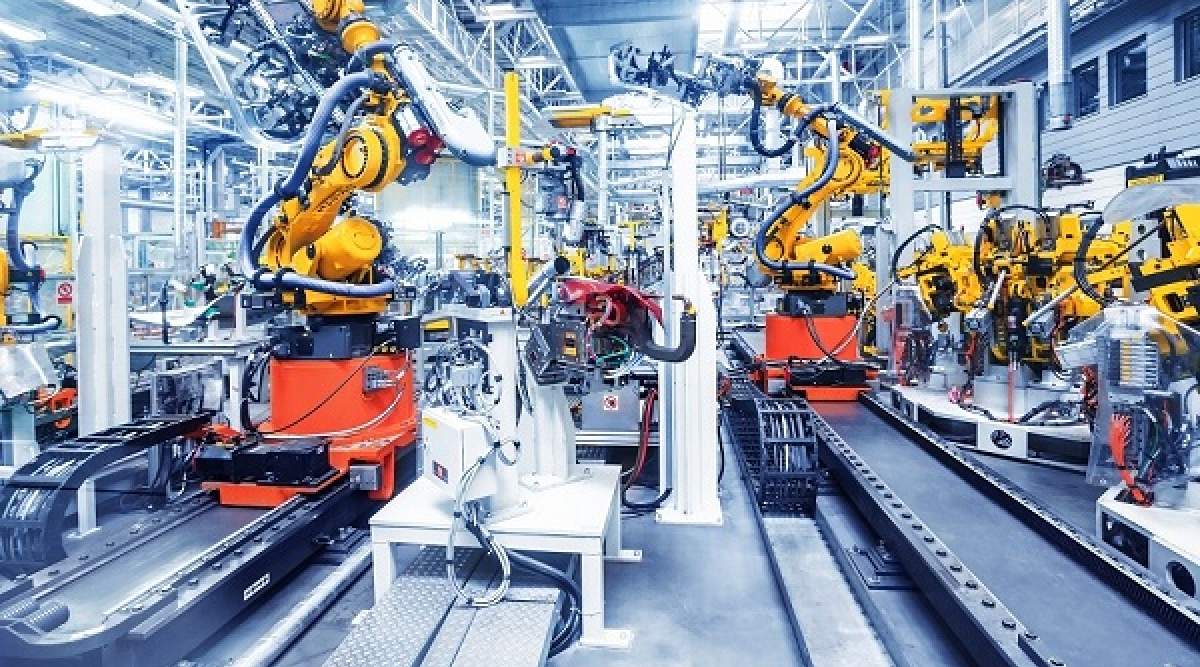
What Are Linear Position Sensors and How They Work: A Complete Industrial Guide
Linear position sensors play a critical role in modern industrial automation, robotics, manufacturing, process control, and motion systems. Whether you’re monitoring the travel of a hydraulic cylinder, controlling a robotic arm, or measuring the movement of a machine slide, accurate position feedback is essential for achieving precision, efficiency, and reliability. As industries continue adopting smart manufacturing and Industry 4.0 technologies, the demand for highly accurate position measurement solutions continues to grow. Linear position sensors provide real-time feedback that allows control systems to determine the exact location of moving components, helping engineers optimize machine performance, reduce errors, and improve overall productivity. In this comprehensive guide, you’ll learn what linear position sensors are, how they work, the different types available, their industrial applications, advantages, limitations, selection criteria, and future trends shaping the industry.
What Are Linear Position Sensors?
A linear position sensor is an electronic device used to measure the displacement or movement of an object along a straight path. Unlike rotary sensors, which measure angular movement, linear position sensors detect and report linear motion in units such as:
-
Millimeters (mm)
-
Centimeters (cm)
-
Inches
-
Meters
These sensors convert physical movement into electrical signals that can be interpreted by programmable logic controllers (PLCs), motion controllers, SCADA systems, or industrial computers. In simple terms, a linear position sensor answers a fundamental question:
“Where is the moving object right now?”
This information allows control systems to make precise adjustments and maintain accurate positioning throughout industrial processes.
Why Position Measurement Matters in Automation
Virtually every automated machine depends on position information. For example:
-
A robotic arm must know its exact location before picking up a component.
-
A hydraulic cylinder must stop at a specific point during operation.
-
A CNC machine must position its cutting tool with extreme accuracy.
-
An automated packaging machine must synchronize multiple moving parts.
Without accurate position feedback, machines cannot achieve repeatable performance. As a result, position sensors have become one of the most important technologies in industrial automation.
How Linear Position Sensors Work
Although various technologies exist, most linear position sensors operate using the same fundamental principle. The sensor continuously detects the position of a moving target and converts that movement into an electrical output signal. The output may be:
-
Analog voltage (0–10 V)
-
Analog current (4–20 mA)
-
Pulse signals
-
Digital communication protocols
-
Fieldbus outputs
The control system receives this information and determines the exact position of the monitored object.
The Basic Components of a Linear Position Sensor
Most systems consist of three primary elements:
Sensing Element
The sensing element detects movement and generates a measurable response. Depending on the sensor technology, this may involve:
-
Magnetic fields
-
Electrical resistance
-
Inductive coupling
-
Light beams
-
Capacitive fields
Moving Target
The moving target is attached to the machine component being monitored. Examples include:
-
Hydraulic pistons
-
Machine slides
-
Conveyor mechanisms
-
Robotic actuators
As the target moves, the sensor continuously tracks its position.
Signal Processing Electronics
The sensor electronics convert raw measurements into usable output signals. The controller then uses this data to:
-
Control motion
-
Verify positioning
-
Detect faults
-
Improve process accuracy
Types of Linear Position Sensors
Several technologies are used for linear position measurement. Each offers unique advantages depending on the application requirements.
Potentiometric Linear Position Sensors
Potentiometric sensors are among the oldest and most widely used position sensing technologies. They operate using a resistive element and a sliding contact called a wiper. As the wiper moves along the resistive track, resistance changes proportionally to position. The sensor then converts this change into a voltage signal.
Advantages
-
Simple design
-
Low cost
-
Easy installation
-
Reliable performance
Limitations
-
Mechanical wear
-
Limited lifespan
-
Susceptible to contamination
Common Applications
-
Hydraulic cylinders
-
Industrial machinery
-
Packaging equipment
-
Mobile equipment
Magnetostrictive Linear Position Sensors
Magnetostrictive sensors have become one of the most popular solutions in industrial automation. These sensors operate using the interaction between magnetic fields and mechanical strain waves. A permanent magnet attached to the moving component interacts with a waveguide inside the sensor. The sensor measures the time required for a strain pulse to travel through the waveguide. The result is extremely accurate position measurement.
Advantages
-
Non-contact operation
-
High accuracy
-
Long lifespan
-
Excellent repeatability
Common Applications
-
Hydraulic systems
-
Injection molding machines
-
Steel mills
-
Heavy industrial equipment
Inductive Linear Position Sensors
Inductive sensors use electromagnetic fields to detect movement. Changes in the position of a conductive target alter the sensor’s magnetic field characteristics. The electronics then calculate position based on these changes.
Advantages
-
No mechanical contact
-
High durability
-
Resistant to dirt and moisture
-
Suitable for harsh environments
Applications
-
Factory automation
-
Automotive manufacturing
-
Robotics
-
Material handling systems
Optical Linear Position Sensors
Optical sensors use light to determine position. A light source and photodetector work together to track movement using optical scales or encoded patterns. These sensors provide extremely high resolution and accuracy.
Advantages
-
Exceptional precision
-
High-speed measurement
-
Excellent repeatability
Limitations
-
Sensitive to dust
-
Requires clean operating conditions
Applications
-
Semiconductor manufacturing
-
CNC machines
-
Coordinate measuring machines
-
Precision robotics
Capacitive Linear Position Sensors
Capacitive sensors detect changes in capacitance caused by target movement. As the distance between conductive surfaces changes, capacitance varies. The sensor measures these changes and calculates position.
Applications
-
Precision measurement systems
-
Laboratory equipment
-
Semiconductor production
Contact vs Non-Contact Linear Position Sensors
When selecting a sensor, engineers often choose between contact and non-contact technologies.
Contact Sensors
Contact sensors physically touch the moving component. Examples include:
-
Potentiometers
-
Mechanical displacement sensors
Benefits
-
Lower cost
-
Simple implementation
Drawbacks
-
Mechanical wear
-
Reduced lifespan
Non-Contact Sensors
Non-contact sensors measure movement without physical contact. Examples include:
-
Magnetostrictive sensors
-
Optical sensors
-
Inductive sensors
Benefits
-
Longer life
-
Greater reliability
-
Higher accuracy
For most modern automation applications, non-contact technologies have become the preferred solution.
Key Performance Characteristics
Selecting the right sensor requires understanding several important performance parameters.
Measurement Range
The measurement range defines the maximum distance the sensor can measure. Ranges vary from a few millimeters to several meters.
Accuracy
Accuracy indicates how closely the reported position matches the actual position. High-precision applications often require accuracy measured in microns.
Resolution
Resolution describes the smallest movement the sensor can detect. Higher resolution allows finer control of machine motion.
Repeatability
Repeatability measures the sensor’s ability to return the same reading when the target returns to the same position. In industrial automation, repeatability is often more important than absolute accuracy.
Response Time
Response time determines how quickly the sensor updates position information. Fast-moving machinery requires sensors with rapid response capabilities.
Industrial Applications of Linear Position Sensors
Linear position sensors are found throughout modern industry.
Hydraulic Cylinder Position Monitoring
Hydraulic systems frequently require accurate feedback regarding piston position. Linear sensors allow operators to:
-
Monitor cylinder travel
-
Improve motion control
-
Prevent overextension
-
Increase machine safety
Robotics and Automation
Industrial robots depend heavily on position feedback. Sensors help robots:
-
Perform accurate movements
-
Improve repeatability
-
Maintain synchronization
-
Increase production quality
CNC Machinery
Computer Numerical Control (CNC) equipment requires highly precise position information. Linear sensors ensure:
-
Accurate tool placement
-
Consistent machining quality
-
Reduced scrap rates
Material Handling Systems
Conveyor systems, lifts, and automated storage systems use position sensors to coordinate movement and maintain efficiency.
Packaging Equipment
Packaging machines require synchronized movement between multiple components. Linear sensors provide the feedback necessary to maintain precise timing and positioning.
Advantages of Linear Position Sensors
Linear position sensors provide numerous benefits across industrial environments.
Improved Process Accuracy
Precise position feedback improves overall machine performance.
Enhanced Product Quality
Better positioning leads to more consistent manufacturing results.
Reduced Downtime
Continuous monitoring helps identify mechanical problems before they cause failures.
Increased Safety
Position feedback prevents dangerous machine movements and improves operational safety.
Better Automation Performance
Accurate position information allows controllers to optimize machine operation.
Challenges and Limitations
Although highly effective, linear position sensors are not without challenges.
Environmental Conditions
Extreme temperatures, vibration, moisture, and contamination can affect sensor performance.
Installation Requirements
Improper alignment can reduce accuracy. Careful installation is essential.
Cost Considerations
High-precision technologies often require larger investments. However, improved productivity frequently offsets the initial cost.
How to Select the Right Linear Position Sensor
Choosing the best sensor requires evaluating several factors.
Consider the Application Environment
Ask questions such as:
-
Will the sensor operate outdoors?
-
Is moisture present?
-
Are there chemicals or contaminants?
Determine Required Accuracy
Not every application requires micron-level precision. Choose a sensor that matches actual process requirements.
Evaluate Measurement Range
Select a sensor capable of measuring the full travel distance.
Consider Output Signals
Ensure compatibility with:
-
PLC systems
-
SCADA systems
-
Industrial networks
-
Motion controllers
Assess Long-Term Reliability
For critical applications, reliability often outweighs initial purchase cost.
Future Trends in Linear Position Sensing
Position sensing technology continues evolving rapidly. Several emerging trends are shaping the future.
Industrial Internet of Things (IIoT)
Smart sensors now provide diagnostics, health monitoring, and predictive maintenance capabilities.
Industry 4.0 Integration
Modern sensors increasingly connect directly to industrial networks and cloud platforms.
Higher Precision Measurement
Advances in electronics and signal processing continue improving accuracy and resolution.
Wireless Position Monitoring
Wireless technologies are reducing installation complexity and enabling remote monitoring.
Recommended Related Articles
Frequently Asked Questions
What is a linear position sensor?
A linear position sensor is a device that measures movement or displacement along a straight line and converts that movement into an electrical signal for monitoring and control purposes.
What is the difference between a linear and rotary position sensor?
A linear position sensor measures straight-line movement, while a rotary position sensor measures angular or rotational movement.
Which linear position sensor is most accurate?
Optical and magnetostrictive linear position sensors generally provide the highest accuracy and repeatability for industrial applications.
Where are linear position sensors used?
They are commonly used in hydraulic cylinders, robotics, CNC machines, packaging equipment, material handling systems, and automated manufacturing processes.
Are linear position sensors suitable for harsh industrial environments?
Yes. Technologies such as magnetostrictive and inductive sensors are specifically designed to withstand vibration, dust, moisture, temperature extremes, and other challenging industrial conditions.
How do PLCs use linear position sensor data?
PLCs receive position signals from sensors and use the information to control machine movement, improve accuracy, automate positioning tasks, and ensure safe operation.
What output signals do linear position sensors provide?
Common outputs include:
-
0–10 V
-
4–20 mA
-
SSI
-
CANopen
-
IO-Link
-
EtherNet/IP
-
PROFINET
The choice depends on the control system and application requirements.
Linear position sensors may not be the most visible component in an automation system, but they are often among the most important. Without accurate position feedback, modern manufacturing, robotics, motion control, and process automation would struggle to achieve the precision, efficiency, and reliability that today’s industries demand. As factories become smarter and more connected, these sensors will continue to play a central role in driving industrial innovation.
Your One-Stop Source for Reliable Automation & Process Control Equipment
Access trusted process control equipment, expert support, and fast sourcing—all in one place.
-
AC Drives 18,165 Products
-
Butterfly Valve236 Products
-
Circuit Breakers2,226 Products
-
Contactors567 Products
-
Counters78 Products
-
Encoder117 Products
-
Fanuc Main Board1,376 Products
-
Flow Transmitter (Flow meter)552 Products
-
HMI/Touch Screen592 Products
-
Industrial Device Servers125 Products
-
Inverter911 Products
-
Network/Signal2 Products
-
Others4,502 Products
-
Power Supply218 Products
-
Pressure Transmitter146 Products
-
Programmable Logic Controller (PLC)6,290 Products
-
Relay927 Products
-
Sensor2,221 Products
-
Servo Motors & Motor Drives4,741 Products
-
Switch897 Products
-
Timer93 Products
-
Uncategorized1,141 Products
-
Valve Controller & Manifolds17 Products
-
Variable Frequency Drives (VFD)257 Products
-
Yokogawa Remote Indicators16 Products