
Gauge Pressure Sensors and How It Works
Understanding What Is Gauge Pressure Sensors and How It Works in Factory Automation Control
What is a gauge pressure sensor? and How does a gauge pressure sensor work?
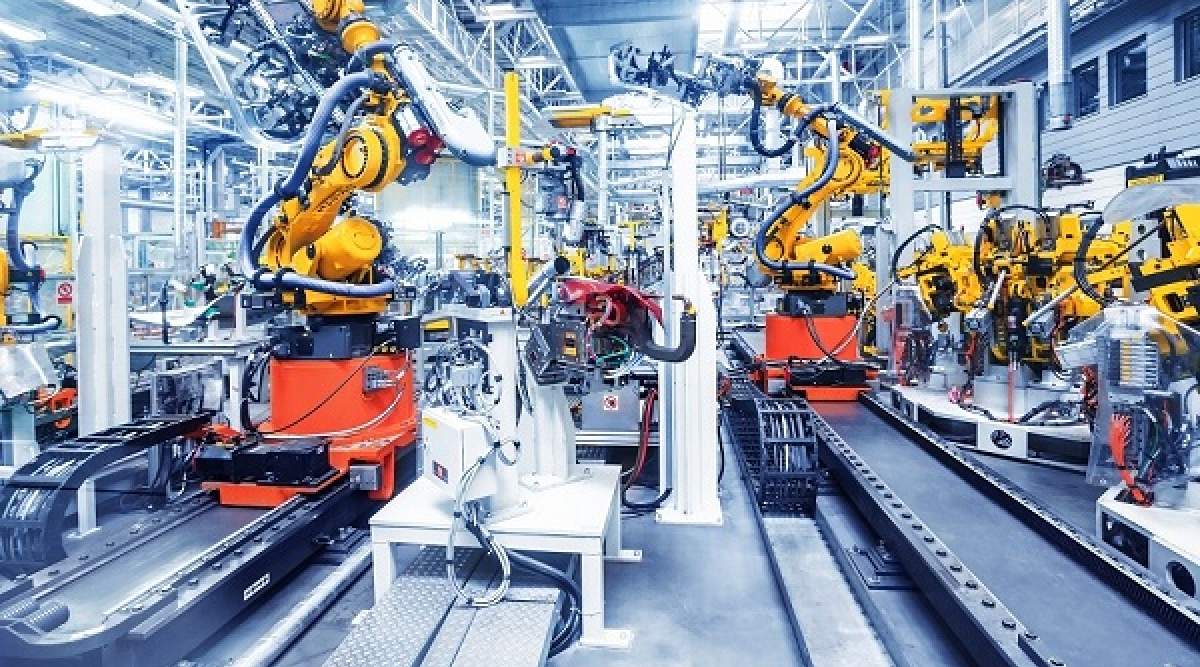
What Is Gauge Pressure Sensors and How It Works: A Complete Industrial Guide
In industrial automation, pressure measurement is one of the most fundamental variables for monitoring and controlling processes. Whether you are dealing with pipelines, tanks, compressors, or hydraulic systems, understanding gauge pressure sensors is essential. If you’ve ever checked tire pressure or monitored a pipeline, you’ve already interacted with gauge pressure. But in industrial environments, the concept goes much deeper—combining physics, instrumentation, and control engineering.
This guide breaks down what gauge pressure sensors are, how they work, their types, applications, and why they are widely used in automation systems, all explained in a practical, engineering-focused way.
Understanding Gauge Pressure Sensors
Gauge pressure sensors are a category of pressure measurement devices designed to measure pressure relative to atmospheric pressure rather than absolute pressure. In simple terms, they tell you how much pressure exists above or below the surrounding air pressure. Gauge pressure is defined as:
-
Pressure inside a system minus atmospheric pressure
This means:
-
If the reading is zero, the system pressure equals atmospheric pressure
-
If the reading is positive, the system pressure is above atmospheric pressure
-
If the reading is negative, the system is under vacuum
Gauge pressure is widely used because it reflects the actual working pressure experienced by equipment in real-world conditions
What Is a Gauge Pressure Sensor?
A gauge pressure sensor is a device that measures the pressure of a gas or liquid relative to ambient atmospheric pressure and converts it into an electrical signal for monitoring or control. Unlike absolute pressure sensors, which reference a vacuum, gauge pressure sensors use the surrounding atmosphere as a reference point. This makes them ideal for most industrial applications where the difference between internal pressure and external air pressure is what matters.
Key Characteristics of Gauge Pressure Sensors
-
Measures pressure relative to atmospheric conditions
-
Can detect both positive and negative pressure
-
Typically vented to atmosphere
-
Provides real-world operating pressure values
-
Commonly used in industrial automation systems
How Gauge Pressure Sensors Work
Understanding how gauge pressure sensors work requires looking at both mechanical and electrical principles. At the core, every pressure sensor functions as a transducer—a device that converts physical pressure into an electrical signal.
Basic Working Principle
Gauge pressure sensors operate using a sensing element, usually a diaphragm, that deforms when pressure is applied. Here’s how the process works:
-
Pressure from a fluid or gas enters the sensor
-
The pressure acts on a flexible diaphragm
-
The diaphragm deforms proportionally to the pressure
-
This deformation changes an electrical property (resistance, capacitance, or voltage)
-
The sensor converts this change into an electrical signal
-
The signal is transmitted to a controller or display system
This process allows industrial systems to monitor pressure continuously and accurately.
Role of the Atmospheric Reference
What makes a gauge pressure sensor unique is its reference to atmospheric pressure. Most sensors include a small vent or opening that exposes one side of the sensing element to the surrounding air. This means the sensor is constantly comparing:
-
Process pressure (inside the system)
-
Atmospheric pressure (outside environment)
The result is the pressure difference, which is what the sensor reports.
Types of Sensing Technologies
Different gauge pressure sensors use different technologies to detect pressure changes.
Piezoresistive Sensors
These are the most common type. They use strain gauges that change resistance when the diaphragm flexes.
Capacitive Sensors
These measure changes in capacitance caused by diaphragm movement.
Piezoelectric Sensors
These generate an electrical charge when subjected to pressure.
MEMS-Based Sensors
Modern sensors use microelectromechanical systems (MEMS), offering high accuracy and compact design. Each technology has its own advantages depending on accuracy, cost, and application requirements.
Types of Gauge Pressure Sensors
Gauge pressure sensors are available in different configurations depending on application needs.
Vented Gauge Pressure Sensors
These sensors have a vent that allows atmospheric air to reach the reference side of the diaphragm.
-
Most common type
-
Used in general industrial applications
-
Provides accurate real-time gauge pressure
Sealed Gauge Pressure Sensors
These sensors use a sealed reference pressure instead of direct atmospheric exposure.
-
Less affected by humidity or contamination
-
Used in harsh environments
-
Slightly less accurate for atmospheric variations
Vacuum Gauge Sensors
These are designed to measure pressures below atmospheric pressure.
-
Used in vacuum systems
-
Important in medical, semiconductor, and chemical processes
Applications of Gauge Pressure Sensors
Gauge pressure sensors are widely used across industries because they provide practical, real-world pressure measurements.
Industrial Process Control
In manufacturing plants, gauge pressure sensors are used to monitor:
-
Steam pressure
-
Air pressure
-
Hydraulic systems
-
Chemical processing systems
They provide input signals to control systems such as PLCs and SCADA.
Water and Wastewater Systems
Gauge pressure sensors measure:
-
Pump pressure
-
Pipeline pressure
-
Tank levels
They help ensure efficient water distribution and system safety.
Oil and Gas Industry
These sensors are critical for:
-
Pipeline monitoring
-
Wellhead pressure measurement
-
Gas compression systems
They help prevent overpressure conditions and ensure operational safety.
HVAC Systems
In heating and cooling systems, gauge pressure sensors monitor:
-
Refrigerant pressure
-
Air duct pressure
-
Compressor performance
Automotive Industry
Common uses include:
-
Tire pressure monitoring
-
Engine pressure systems
-
Fuel system diagnostics
Advantages of Gauge Pressure Sensors
Gauge pressure sensors are widely used because they offer several practical benefits.
Real-World Pressure Measurement
They measure pressure relative to the environment, which is what most systems actually experience.
Simplicity and Cost Efficiency
Compared to absolute sensors, gauge sensors are:
-
Easier to install
-
More affordable
-
Widely available
Versatility
They can be used across a wide range of applications, from simple systems to complex industrial processes.
Reliable Performance
Modern gauge pressure sensors offer:
-
High accuracy
-
Long-term stability
-
Robust industrial design
Limitations of Gauge Pressure Sensors
Despite their advantages, gauge pressure sensors are not suitable for every application.
Dependence on Atmospheric Pressure
Since they rely on atmospheric reference, changes in altitude or weather can affect readings slightly.
Not Suitable for Absolute Measurements
Applications requiring true pressure values (e.g., scientific measurements or vacuum systems) require absolute pressure sensors.
Environmental Sensitivity
Vented sensors can be affected by moisture, dust, or contamination if not properly protected.
Gauge Pressure vs Absolute vs Differential Pressure
Understanding the difference between pressure types is critical in instrumentation.
Gauge Pressure
-
Measured relative to atmospheric pressure
-
Most common in industrial systems
Absolute Pressure
-
Measured relative to a vacuum
-
Used in scientific and aerospace applications
Differential Pressure
-
Measures the difference between two pressures
-
Used in flow measurement and filtration systems
Gauge pressure sensors are preferred when system pressure relative to ambient conditions is the key concern.
Recommended Related Articles:
- Industrial Automation Fundamentals
- Industrial Communication Protocols
- Industrial Instrumentation Control
- Industrial Sensors & Measurement
- Motion and Process Control
- PLC Programming & Controllers
- SCADA and DCS Systems
- Servo Motors and Motor Drives
Frequently Asked Questions (FAQ)
What is a gauge pressure sensor in simple terms?
A gauge pressure sensor measures pressure relative to atmospheric pressure and shows how much pressure is above or below the surrounding air.
How does a gauge pressure sensor work?
It uses a diaphragm that deforms under pressure. This deformation is converted into an electrical signal that represents the pressure difference between the system and the atmosphere.
Where are gauge pressure sensors used?
They are used in industries such as manufacturing, oil and gas, water treatment, HVAC, and automotive systems.
What is the difference between gauge and absolute pressure?
Gauge pressure excludes atmospheric pressure, while absolute pressure includes it and is measured relative to a vacuum.
Why is gauge pressure commonly used?
Because most industrial systems operate in open environments where atmospheric pressure is constant, making gauge pressure more practical for real-world applications.
Can gauge pressure be negative?
Yes. Negative gauge pressure indicates a vacuum condition, meaning the system pressure is below atmospheric pressure.
Your One-Stop Source for Reliable Automation & Process Control Equipment
Access trusted process control equipment, expert support, and fast sourcing—all in one place.
-
AC Drives 18,165 Products
-
Butterfly Valve236 Products
-
Circuit Breakers2,226 Products
-
Contactors567 Products
-
Counters78 Products
-
Encoder117 Products
-
Fanuc Main Board1,376 Products
-
Flow Transmitter (Flow meter)552 Products
-
HMI/Touch Screen592 Products
-
Inverter911 Products
-
Network/Signal4 Products
-
Others4,613 Products
-
Power Supply218 Products
-
Pressure Transmitter146 Products
-
Programmable Logic Controller (PLC)6,290 Products
-
Relay927 Products
-
Sensor2,221 Products
-
Servo Motors & Motor Drives4,499 Products
-
Switch897 Products
-
Timer93 Products
-
Uncategorized1,143 Products
-
Valve Controller & Manifolds15 Products
-
Variable Frequency Drives (VFD)257 Products
-
Yokogawa Remote Indicators16 Products