
Thermistors Temperature Sensor and How It Works
Understanding What Is Thermistors Temperature Sensor and How It Works in Factory Automation Control
What is a thermistor temperature sensor? and How does a thermistor work?
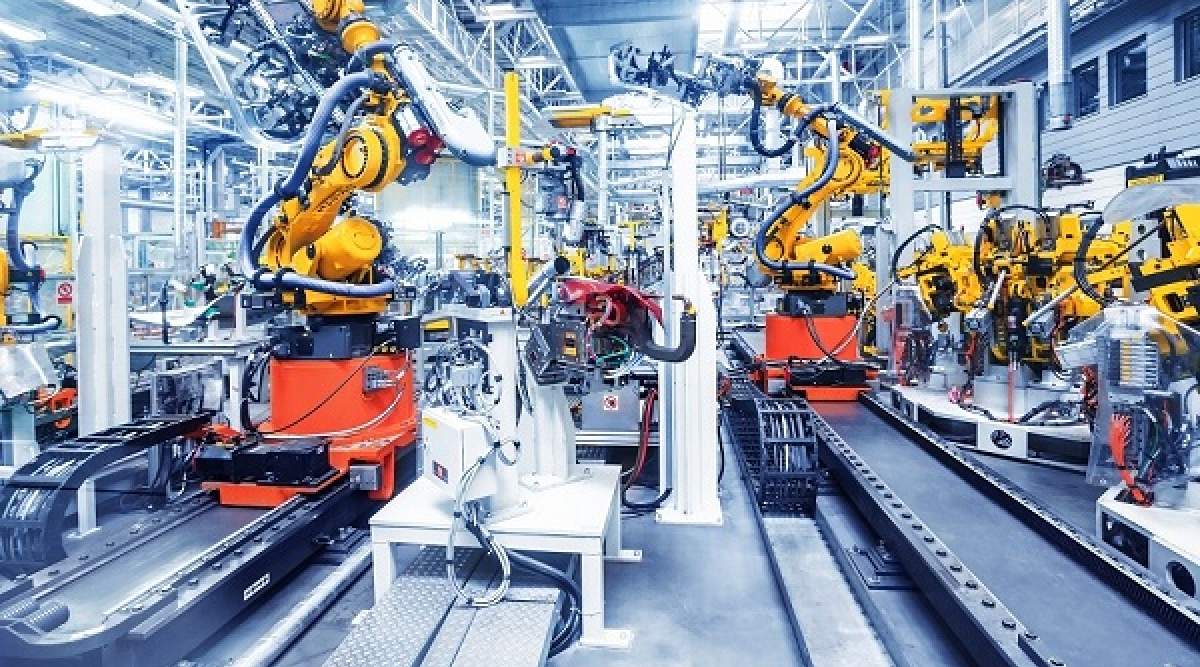
What Is Thermistors Temperature Sensor and How It Works
Temperature measurement sits at the heart of industrial automation, process control, and electronics. Whether you’re stabilizing a chemical reactor, protecting a motor, or monitoring HVAC systems, accurate temperature sensing is non-negotiable. Among the most widely used and cost-effective temperature sensors is the thermistor. A thermistor may look like a small, simple component, but it delivers exceptional sensitivity and precision in temperature measurement. If you’ve worked in instrumentation or control systems, chances are you’ve already relied on one—perhaps without even realizing it.
This guide breaks down what a thermistor temperature sensor is, how it works, its types, characteristics, and real-world applications, in a way that connects theory with practical industrial use.
Understanding Thermistors Temperature Sensors
A thermistor is a temperature-sensitive resistor whose electrical resistance changes significantly with temperature. The term itself is derived from two words: thermal and resistor. Unlike standard resistors, which maintain relatively stable resistance, thermistors are designed to respond sharply to temperature variations. This makes them ideal for applications requiring precise temperature detection and control.
Thermistors are typically made from semiconductor materials such as metal oxides, which exhibit strong resistance changes with temperature.
What Makes Thermistors Unique
What sets thermistors apart from other temperature sensors is their high sensitivity. Even a small change in temperature can cause a noticeable change in resistance. This characteristic makes thermistors:
Highly accurate within a limited temperature range
Fast in response time
Cost-effective compared to other sensors
Easy to integrate into electronic circuits
Because of these advantages, thermistors are widely used in both industrial systems and consumer electronics.
Thermistor vs Other Temperature Sensors
In industrial environments, thermistors are often compared with:
RTDs (Resistance Temperature Detectors)
Thermocouples
While RTDs provide excellent accuracy over a wide range and thermocouples handle extreme temperatures, thermistors excel in precision and responsiveness within moderate temperature ranges.
How Thermistors Work
At the core of a thermistor’s operation is a simple but powerful principle: Electrical resistance changes predictably with temperature.
When temperature changes, the internal structure of the thermistor’s semiconductor material alters the movement of charge carriers (electrons), which directly affects resistance.
Basic Working Principle
Here’s how a thermistor operates in a typical system:
The thermistor is exposed to a temperature source (air, liquid, or surface)
Temperature changes alter the resistance of the thermistor
A small electrical current passes through the thermistor
The resulting voltage change is measured
The system converts resistance into temperature using calibration data
This process allows thermistors to deliver real-time temperature readings with high accuracy.
Why Resistance Changes with Temperature
Thermistors are made from semiconductor materials, which behave differently from metals.
As temperature increases, charge carriers become more active
This changes how easily current flows through the material
The result is a predictable increase or decrease in resistance
This predictable behavior is what allows thermistors to function as reliable temperature sensors.
Measurement Circuit Integration
In practical applications, thermistors are rarely used alone. They are typically part of a circuit such as:
Voltage divider circuits
Wheatstone bridge configurations
Analog-to-digital converter systems
These circuits translate resistance changes into readable electrical signals for controllers such as PLCs or microcontrollers.
Types of Thermistors
Thermistors are broadly classified into two main types based on how their resistance changes with temperature.
NTC Thermistors (Negative Temperature Coefficient)
NTC thermistors are the most commonly used type.
Key Behavior
Resistance decreases as temperature increases
This happens because higher temperatures increase the number of charge carriers, making it easier for current to flow.
Common Applications
NTC thermistors are widely used in:
Temperature measurement systems
HVAC equipment
Battery temperature monitoring
Medical devices
Industrial process control
Because of their sensitivity, NTC thermistors are ideal for precision temperature measurement.
PTC Thermistors (Positive Temperature Coefficient)
PTC thermistors behave in the opposite way.
Key Behavior
Resistance increases as temperature increases
Common Applications
PTC thermistors are commonly used for:
Overcurrent protection
Motor protection circuits
Self-regulating heating elements
Safety shutdown systems
Rather than measuring temperature precisely, PTC thermistors are often used as protective devices.
Key Characteristics of Thermistors
Understanding thermistor performance requires looking at several important characteristics.
High Sensitivity
Thermistors exhibit a large resistance change for small temperature variations, making them extremely responsive.
Non-Linear Response
Unlike RTDs, thermistors have a non-linear resistance vs temperature curve. This means:
Accuracy is very high within a specific range
Calibration is required for precise measurement
Fast Response Time
Because of their small size and low thermal mass, thermistors respond quickly to temperature changes.
Limited Temperature Range
Thermistors typically operate within a narrower temperature range compared to thermocouples or RTDs. However, within that range, they provide excellent accuracy and repeatability.
Applications of Thermistors in Industry
Thermistors are used across a wide range of industries due to their versatility and reliability.
Industrial Automation
In automation systems, thermistors are used for:
Process temperature monitoring
Equipment protection
HVAC control systems
Thermal compensation in sensors
They are often integrated into systems discussed in:
https://www.automationpioneer.com/news/types-of-industrial-sensors
Electronics and Electrical Systems
Thermistors play a critical role in electronics:
Power supply protection
Inrush current limiting
Temperature compensation circuits
Battery management systems
Automotive Industry
Modern vehicles rely heavily on thermistors for:
Engine temperature monitoring
Cabin climate control
Battery temperature management in EVs
Medical Equipment
Thermistors are widely used in healthcare devices due to their accuracy:
Digital thermometers
Patient monitoring systems
Wearable health devices
Consumer Appliances
Thermistors are found in everyday devices such as:
Refrigerators
Air conditioners
Washing machines
Coffee makers
Advantages and Limitations of Thermistors
No sensor is perfect. Thermistors have clear strengths—but also limitations that engineers must consider.
Advantages
High accuracy within a defined range
Fast response time
Low cost
Compact size
High sensitivity
Limitations
Limited temperature range
Non-linear response requires calibration
Less suitable for extreme industrial environments
Potential self-heating effects in some circuits
Despite these limitations, thermistors remain one of the most widely used temperature sensors in modern systems.
Recommended Related Articles:
- Industrial Automation Fundamentals
- Industrial Communication Protocols
- Industrial Instrumentation Control
- Industrial Sensors & Measurement
- Motion and Process Control
- PLC Programming & Controllers
- SCADA and DCS Systems
- Servo Motors and Motor Drives
Frequently Asked Questions (FAQ)
What is a thermistor temperature sensor?
A thermistor is a temperature-sensitive resistor that changes its resistance based on temperature, allowing it to measure and control temperature accurately.
How does a thermistor work?
A thermistor works by changing its electrical resistance as temperature changes. This resistance change is measured and converted into a temperature reading using calibration data.
What are the two types of thermistors?
The two main types are:
NTC thermistors (resistance decreases with temperature)
PTC thermistors (resistance increases with temperature)
Where are thermistors used?
Thermistors are used in industrial automation, electronics, automotive systems, medical devices, HVAC systems, and household appliances.
What is the advantage of thermistors over other sensors?
Thermistors offer high sensitivity, fast response time, and excellent accuracy within a specific temperature range, making them ideal for precision applications.
What is the limitation of thermistors?
Their main limitations include a limited temperature range and non-linear response, which requires calibration for accurate measurements.
Are thermistors used in industrial automation?
Yes. Thermistors are widely used in industrial automation for process monitoring, equipment protection, and temperature control systems.
Your One-Stop Source for Reliable Automation & Process Control Equipment
Access trusted process control equipment, expert support, and fast sourcing—all in one place.
-
AC Drives 18,165 Products
-
Butterfly Valve236 Products
-
Circuit Breakers2,226 Products
-
Contactors567 Products
-
Counters78 Products
-
Encoder117 Products
-
Fanuc Main Board1,376 Products
-
Flow Transmitter (Flow meter)552 Products
-
HMI/Touch Screen592 Products
-
Inverter911 Products
-
Network/Signal4 Products
-
Others4,613 Products
-
Power Supply218 Products
-
Pressure Transmitter146 Products
-

Programmable Logic Controller (PLC)6,290 Products
-
Relay927 Products
-
Sensor2,221 Products
-
Servo Motors & Motor Drives4,499 Products
-
Switch897 Products
-
Timer93 Products
-
Uncategorized1,143 Products
-
Valve Controller & Manifolds15 Products
-
Variable Frequency Drives (VFD)257 Products
-
Yokogawa Remote Indicators16 Products