
Ladder Logic Programming Guide

Ladder Logic Programming Guide: A Practical Introduction for PLC Engineers
Ladder logic remains one of the most widely used programming methods in industrial automation. For decades, it has been the backbone of programmable logic controller (PLC) programming, powering everything from manufacturing lines to water treatment plants.
What makes ladder logic unique is its visual structure. Instead of writing traditional code, engineers create diagrams that resemble electrical circuits. This graphical approach makes the logic easy to understand, especially for technicians and electricians who already work with relay control circuits.
In this guide, we’ll explore how ladder logic works, its key components, common programming techniques, and real-world applications. Whether you are an automation engineer, technician, or student entering the industrial automation field, understanding ladder logic is an essential skill.
What Is Ladder Logic Programming?
Ladder logic is a graphical programming language used to develop software for programmable logic controllers (PLCs). It represents control logic using diagrams that resemble electrical relay circuits.
The name “ladder logic” comes from the diagram structure: two vertical lines represent power rails, while horizontal lines—called rungs—contain the logic instructions that control outputs.
Originally, ladder diagrams were used to document relay-based control systems. As PLCs replaced relay panels in industrial plants, engineers adopted ladder logic to program digital control systems in a format that was already familiar to electricians and control technicians.
Today, ladder logic remains one of the programming languages defined by the international PLC programming standard IEC 61131-3, alongside other languages such as structured text and function block diagrams.
Why Ladder Logic Is Widely Used in Automation
Despite the emergence of modern programming languages, ladder logic remains extremely popular in industrial automation for several reasons.
First, it closely resembles traditional electrical schematics. Engineers who understand relay circuits can usually read ladder diagrams with little additional training.
Second, ladder logic programs are visually intuitive. Each rung represents a simple logic condition, making troubleshooting and maintenance easier on the factory floor.
Finally, ladder logic integrates seamlessly with PLC hardware. Inputs from sensors and switches appear as contacts, while outputs such as motors and valves are represented as coils.
This simplicity and reliability explain why ladder logic is still used in industries ranging from manufacturing and oil and gas to water treatment and power generation.
How Ladder Logic Works in PLC Systems
To understand ladder logic, it is helpful to understand how PLCs process control programs.
A PLC continuously executes a control cycle called the scan cycle, which includes three main steps:
Read input signals from sensors and devices
Execute the ladder logic program
Update output devices such as motors or valves
During each scan cycle, the PLC evaluates ladder logic rungs from left to right and from top to bottom. If the logic conditions on a rung are satisfied, the output instruction on that rung becomes active.
This process repeats continuously, allowing the PLC to monitor industrial processes and respond to changes in real time.
Understanding the Ladder Diagram Structure
A ladder logic diagram contains several core elements that define how the program operates.
Power Rails
The two vertical lines on the left and right sides of the ladder diagram represent the power rails. These rails symbolize the electrical supply that flows through the control circuit.
The logic flow always begins at the left rail and moves toward the right rail.
Rungs
Each horizontal line connecting the two rails is called a rung. A rung represents a specific control instruction or logical operation.
For example, one rung might control a conveyor motor, while another might activate a warning light.
Rungs are executed sequentially during the PLC scan cycle.
Contacts
Contacts represent input conditions within a ladder logic program.
The two most common contact types are:
Normally Open (NO) contacts
Normally Closed (NC) contacts
These contacts correspond to sensor signals, push buttons, switches, or internal PLC memory bits.
When the logic condition of a contact is satisfied, the contact allows the flow of logical power across the rung.
Coils
Coils represent outputs in ladder logic.
When the conditions on a rung are satisfied, the output coil becomes energized. This energizes a device such as: a motor, a valve, an indicator light and a relay
Coils are typically placed at the far right side of a rung.
Common Ladder Logic Instructions
A ladder logic program is built from a combination of instructions that define how the PLC processes signals.
Basic Logic Instructions
The simplest ladder logic instructions perform basic Boolean logic operations.
These include:
Normally Open Contacts
Normally open contacts close when the input signal is true. This allows logic to flow through the rung.
Example applications include: start push buttons, sensor triggers, and limit switches
Normally Closed Contacts
Normally closed contacts allow logic flow when the input condition is false.
They are often used for safety functions, such as emergency stop circuits.
Output Coils
Output coils activate devices when the conditions on a rung are satisfied.
Common outputs include: motor starters, solenoid valves, alarms, and indicator lights.
These instructions form the foundation of most PLC control programs.
Advanced Ladder Logic Instructions
Modern PLC systems support more advanced instructions that extend ladder logic capabilities.
Timers
Timers allow PLC programs to delay actions or control timing sequences.
Examples include:
turning on a motor after a delay
controlling traffic lights
sequencing machine operations
Timers are typically categorized as:
On-delay timers
Off-delay timers
Retentive timers
Counters
Counters track the number of events occurring within a system.
For example, a counter might:
Track the number of products on a conveyor
Count machine cycles
Monitor production quantities
Counters increment or decrement based on input signals.
Comparison Instructions
These instructions compare numeric values within a PLC program.
Examples include:
checking whether a temperature exceeds a limit
comparing production counts
validating process parameters
Comparison instructions are commonly used in process automation systems.
Practical Ladder Logic Programming Examples
To better understand ladder logic, it helps to examine real-world applications.
Motor Start/Stop Control Circuit
One of the most common ladder logic programs controls a motor using start and stop buttons.
The logic typically works as follows:
A normally open push button starts the motor
A normally closed stop button stops the motor
A latching circuit keeps the motor running after the start button is released
This type of control circuit is widely used in industrial machinery.
Conveyor System Control
In manufacturing plants, ladder logic often controls conveyor systems.
Sensors detect the presence of products on the conveyor. The PLC uses this information to start or stop motors, coordinate sorting mechanisms, or control packaging equipment.
Timers and counters are often integrated to synchronize the system.
Automatic Tank Filling System
In process industries, ladder logic can automate fluid filling systems.
A level sensor detects when the tank is empty. The PLC opens a valve to allow fluid to enter the tank. When the tank reaches a predefined level, the PLC closes the valve automatically.
This type of control system is common in water treatment facilities and chemical processing plants.
Best Practices for Ladder Logic Programming
Writing effective ladder logic programs requires careful planning and clear design principles.
Keep Logic Simple and Organized
One of the most common mistakes beginners make is creating overly complicated ladder diagrams.
Instead, programs should be structured into small, logical sections that are easy to understand and troubleshoot.
Use Clear Naming Conventions
Inputs, outputs, and internal variables should have descriptive names.
For example:
Motor_Start_Button
Conveyor_Run_Output
Tank_Level_High
Clear naming improves program readability and simplifies maintenance.
Document the Program
Adding comments to ladder logic programs helps other engineers understand the system.
Documentation should explain: the purpose of each rung, safety interlocks, and operational sequences.
Test and Simulate Programs
Before deploying ladder logic programs to a real machine, engineers should test the logic using simulation tools.
Simulation allows programmers to verify control sequences without risking equipment damage.
Ladder Logic vs Other PLC Programming Languages
While ladder logic is extremely popular, it is not the only PLC programming language.
The IEC 61131-3 standard defines several PLC programming languages used in industrial control systems.
These include:
Structured Text (ST)
Function Block Diagram (FBD)
Sequential Function Chart (SFC)
Each language has its strengths. Ladder logic excels at discrete control systems and machine logic. However, more complex mathematical operations or data processing tasks may be easier to implement using structured text.
In many modern automation projects, engineers combine multiple PLC languages within the same control system.
Recommended Related Articles:
https://www.automationpioneer.com/news/what-is-industrial-automation
What Is Industrial Automation
https://www.automationpioneer.com/news/types-of-industrial-automation-systems
Types of Industrial Automation Systems
https://www.automationpioneer.com/news/what-is-scada-system
What Is SCADA System
https://www.automationpioneer.com/news/plc-vs-dcs
PLC vs DCS Explained
https://www.automationpioneer.com/news/types-of-industrial-sensors
Types of Industrial Sensors
https://www.automationpioneer.com/news/industrial-communication-protocols
Industrial Communication Protocols
https://www.automationpioneer.com/news/industrial-iot-guide
Industrial IoT Guide
Frequently Asked Questions (FAQ)
What is ladder logic used for?
Ladder logic is primarily used to program programmable logic controllers that control industrial machines and automated processes.
Why is ladder logic called ladder logic?
The program structure resembles a ladder, with two vertical rails and horizontal rungs that represent control logic.
Is ladder logic difficult to learn?
Ladder logic is generally considered one of the easiest PLC programming languages to learn because it visually resembles electrical relay circuits.
Do all PLCs use ladder logic?
Most PLCs support ladder logic, but many also support other programming languages such as structured text and function block diagrams.
Is ladder logic still used in modern factories?
Yes. Despite the availability of newer programming languages, ladder logic remains widely used in industrial automation because it is easy to read, maintain, and troubleshoot.
-
AC Drives 18,160 Products
-
Butterfly Valve236 Products
-
Circuit Breakers2,226 Products
-
Contactors567 Products
-
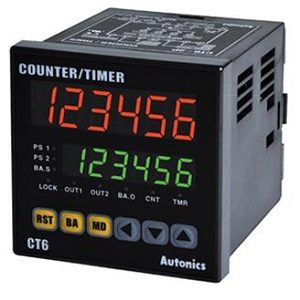
Counters78 Products
-
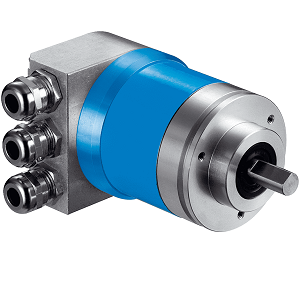
Encoder117 Products
-
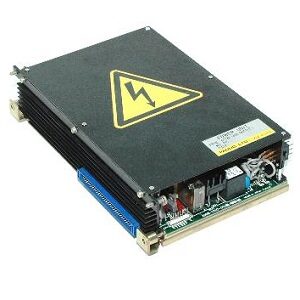
Fanuc Main Board1,376 Products
-
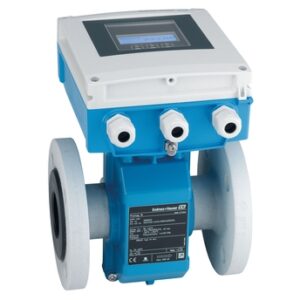
Flow Transmitter (Flow meter)286 Products
-
HMI/Touch Screen592 Products
-
Inverter911 Products
-
Network/Signal4 Products
-
Others4,668 Products
-
Power Supply218 Products
-
Pressure Transmitter143 Products
-
Programmable Logic Controller (PLC)6,288 Products
-
Relay927 Products
-
Sensor2,221 Products
-
Servo Motors & Motor Drives4,363 Products
-
Switch897 Products
-
Timer93 Products
-
Uncategorized1,148 Products
-
Valve Controller & Manifolds15 Products
-
Variable Frequency Drives (VFD)258 Products
-
Yokogawa Remote Indicators16 Products