
PLC vs RTU
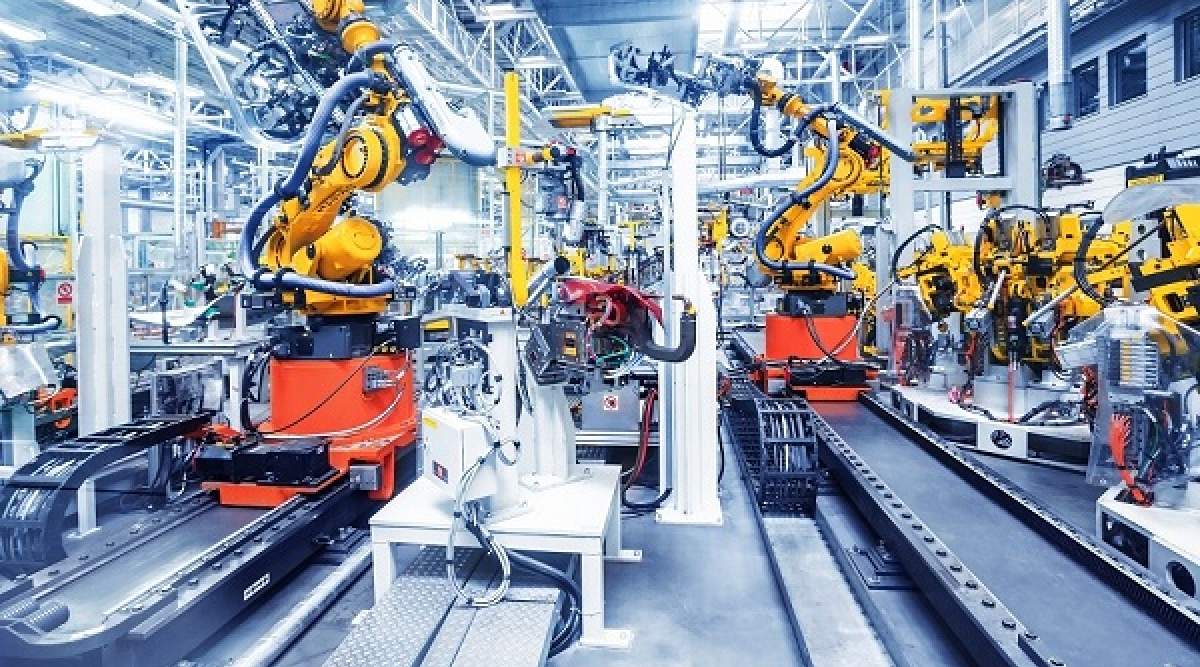
PLC vs RTU: Understanding the Differences in Industrial Automation
In industrial automation and control systems, engineers often encounter two critical devices: the Programmable Logic Controller (PLC) and the Remote Terminal Unit (RTU). Both are used to monitor and control industrial processes, and at first glance they can appear very similar. However, they are designed for different operational environments and serve distinct roles within automation architectures.
Understanding the difference between PLCs and RTUs is essential when designing industrial control systems, particularly in applications involving manufacturing, utilities, oil and gas, and large infrastructure networks.
In this guide, we will explore how PLCs and RTUs work, compare their architectures and applications, and explain when each device is the better choice for an automation system.
Understanding PLCs and RTUs in Industrial Automation
Industrial control systems rely on intelligent devices to collect data from sensors, process information, and control equipment such as motors, valves, and pumps.
Two of the most common controllers used for these tasks are PLCs and RTUs.
A PLC is an industrial computer designed to control machines and processes in real time. It executes programmed logic to operate equipment on production lines or within industrial facilities. PLCs typically interact directly with sensors and actuators and are widely used in manufacturing environments.
An RTU, on the other hand, is a device designed primarily for remote monitoring and data acquisition. RTUs collect information from field devices located across large geographic areas and transmit that data to central control systems such as SCADA platforms.
Although both devices can process signals and communicate with other systems, their design priorities and use cases differ significantly.
What Is a PLC (Programmable Logic Controller)?
How PLCs Work in Automation Systems
A programmable logic controller is a rugged industrial computer used to automate machinery and industrial processes. PLCs receive signals from field devices, execute control logic programmed by engineers, and send commands to actuators.
PLCs operate through a repeating process known as a scan cycle, where the controller reads inputs, processes logic instructions, and updates outputs continuously. This cycle often occurs within milliseconds, allowing PLCs to perform fast and precise control operations.
Because of their speed and reliability, PLCs are widely used in applications that require real-time control.
Core Functions of PLCs
PLC systems typically perform several essential functions within industrial operations.
Real-Time Machine Control
PLCs control equipment such as motors, conveyors, pumps, and robotic systems. They execute control logic to ensure machines operate in the correct sequence.
Process Monitoring
PLCs collect data from sensors measuring variables like temperature, pressure, flow rate, and level.
Industrial Communication
PLCs communicate with other controllers, HMIs, and SCADA systems through industrial networks such as Ethernet/IP, PROFINET, or Modbus TCP.
Data Processing and Logic Execution
Engineers program PLCs using standardized programming languages including:
Ladder Logic
Function Block Diagram
Structured Text
Instruction List
These programming languages allow PLCs to perform complex automation tasks.
Typical PLC Applications
PLCs are commonly used in environments where machines operate close together and require fast control response times.
Examples include:
manufacturing assembly lines
packaging machines
robotic production cells
food processing plants
automotive manufacturing systems
Because PLCs excel at controlling local equipment, they are often installed directly on factory floors or within industrial control panels.
What Is an RTU (Remote Terminal Unit)?
How RTUs Work in Industrial Control Systems
A remote terminal unit is a device used to monitor equipment located far from the central control facility. RTUs collect data from sensors and instruments in the field and transmit that information to control centers using communication networks.
Unlike PLCs, which focus on real-time control, RTUs emphasize data acquisition and remote communication. They are designed to operate reliably in distributed environments where devices may be located miles apart.
RTUs often communicate through radio, cellular networks, satellite systems, or long-distance industrial protocols.
Core Functions of RTUs
RTUs are specialized for telemetry and remote monitoring.
Data Acquisition
RTUs gather operational data from remote sensors, including pressure transmitters, flow meters, temperature sensors, and power meters.
Telemetry Communication
The collected data is transmitted to central SCADA systems for monitoring and analysis.
Event-Based Reporting
Unlike PLCs, which constantly transmit process data, RTUs typically send data only when changes occur or when requested by the control system.
Local Data Storage
Many RTUs can store large amounts of data locally, ensuring that measurements are preserved even if communication links fail.
Typical RTU Applications
RTUs are commonly used in industries where equipment is geographically distributed.
Examples include:
power transmission networks
water distribution systems
oil and gas pipelines
wind farms and solar plants
remote pumping stations
In these applications, devices may be located dozens or even hundreds of miles from the control center.
Key Differences Between PLC and RTU
Although PLCs and RTUs share some similarities, several fundamental differences distinguish them.
Primary Function
The main distinction between PLCs and RTUs lies in their core purpose.
PLCs focus primarily on real-time control of machines and industrial processes, while RTUs are designed mainly for remote data acquisition and telemetry communication.
In simple terms, PLCs control equipment, while RTUs report information from remote locations.
Operating Environment
PLCs are typically installed inside industrial facilities such as factories or processing plants.
RTUs, however, are designed for remote and harsh environments where temperature, humidity, and vibration may vary significantly. RTUs can operate across a much wider temperature range and are often deployed outdoors.
This rugged design makes RTUs suitable for applications such as pipelines, substations, and remote water stations.
Communication Capabilities
PLCs usually communicate through local industrial networks using wired connections such as Ethernet or fieldbus protocols.
RTUs are designed to communicate over long distances using technologies such as:
cellular networks
radio communication
satellite links
serial telemetry protocols
Because of these capabilities, RTUs play a critical role in large distributed control systems.
Data Processing and Control Logic
PLCs are optimized for executing complex control algorithms and automation logic. Their processors are designed to handle rapid scan cycles and respond to changes in milliseconds.
RTUs typically use event-driven processing and focus more on collecting and transmitting data rather than executing complex control logic.
This design difference reflects their primary role as telemetry devices rather than process controllers.
Power Consumption
Another important distinction is power usage.
PLCs usually operate in environments where reliable power is readily available.
RTUs, however, are often installed in remote locations where power may be limited. For this reason, many RTUs are designed to run on battery or solar power systems, allowing them to operate independently for extended periods.
Input and Output Capacity
PLCs typically support large numbers of input and output channels, allowing them to control complex industrial processes with hundreds or even thousands of signals.
RTUs usually have fewer I/O points because their primary function is monitoring rather than direct equipment control.
When to Use PLC vs RTU
Choosing between a PLC and an RTU depends largely on the nature of the automation system.
Situations Where PLCs Are Preferred
PLCs are the best choice when the application requires:
fast real-time control
complex logic execution
large numbers of I/O points
local machine automation
Manufacturing environments are a typical example where PLCs dominate.
Situations Where RTUs Are Preferred
RTUs are more suitable when the application involves:
remote monitoring of equipment
geographically distributed assets
telemetry communication
low power consumption
Utilities such as electricity, water distribution, and pipeline monitoring often rely heavily on RTUs.
Can PLCs and RTUs Work Together?
In many industrial systems, PLCs and RTUs are used together as part of a larger control architecture.
For example:
PLCs may control equipment at a local facility
RTUs may transmit operational data from remote sites
SCADA systems provide centralized monitoring and control
This hybrid architecture allows industries to manage both local automation and remote monitoring effectively.
Recommended Related Articles:
https://www.automationpioneer.com/news/what-is-industrial-automation
What Is Industrial Automation
https://www.automationpioneer.com/news/types-of-industrial-automation-systems
Types of Industrial Automation Systems
https://www.automationpioneer.com/news/plc-programming-basics
PLC Programming Basics
https://www.automationpioneer.com/news/plc-vs-dcs
PLC vs DCS Explained
https://www.automationpioneer.com/news/industrial-communication-protocols
Industrial Communication Protocols
https://www.automationpioneer.com/news/types-of-industrial-sensors
Types of Industrial Sensors
https://www.automationpioneer.com/news/industrial-iot-guide
Industrial IoT Guide
Frequently Asked Questions (FAQ)
What is the main difference between PLC and RTU?
The primary difference is that PLCs are designed for real-time machine control, while RTUs are designed for remote data acquisition and telemetry communication.
Which device is better for remote monitoring?
RTUs are generally better for remote monitoring because they are designed to operate in distributed environments and communicate over long distances.
Can a PLC function as an RTU?
In some cases, PLCs can be configured to perform similar tasks as RTUs by integrating communication modules and SCADA systems. However, dedicated RTUs are typically more efficient for telemetry applications.
Which industries commonly use RTUs?
RTUs are widely used in industries such as power utilities, oil and gas pipelines, water distribution systems, and renewable energy facilities.
Are PLCs faster than RTUs?
Yes. PLCs generally operate with faster scan cycles and are optimized for real-time control, while RTUs prioritize communication efficiency and remote monitoring capabilities.
-
AC Drives 18,160 Products
-
Butterfly Valve236 Products
-
Circuit Breakers2,226 Products
-
Contactors567 Products
-
Counters78 Products
-
Encoder117 Products
-
Fanuc Main Board1,376 Products
-
Flow Transmitter (Flow meter)286 Products
-
HMI/Touch Screen592 Products
-
Inverter911 Products
-
Network/Signal4 Products
-
Others4,668 Products
-
Power Supply218 Products
-
Pressure Transmitter143 Products
-
Programmable Logic Controller (PLC)6,288 Products
-
Relay927 Products
-
Sensor2,221 Products
-
Servo Motors & Motor Drives4,363 Products
-
Switch897 Products
-
Timer93 Products
-
Uncategorized1,148 Products
-
Valve Controller & Manifolds15 Products
-
Variable Frequency Drives (VFD)258 Products
-
Yokogawa Remote Indicators16 Products