Siemens PLC Programming Guide
Siemens PLC Programming Guide: A Practical Introduction for Automation Engineers
Siemens PLCs are among the most widely used controllers in industrial automation. From manufacturing plants and energy facilities to process industries and logistics systems, Siemens controllers power countless automated systems around the world.
Learning how to program Siemens PLCs is therefore an essential skill for automation engineers, technicians, and system integrators. Modern Siemens controllers—especially the SIMATIC S7-1200 and S7-1500 series—are typically programmed using the SIMATIC STEP 7 engineering environment inside the Totally Integrated Automation Portal (TIA Portal). This platform allows engineers to configure hardware, write control logic, simulate programs, and diagnose faults from a single integrated interface.
Understanding Siemens PLC Systems
Before diving into programming, it’s important to understand the components that make up a typical Siemens automation system.
A Siemens PLC system usually includes several key elements:
PLC hardware (such as SIMATIC S7-1200 or S7-1500)
Input and output modules
Industrial communication networks
Programming software (TIA Portal)
Human-machine interfaces (HMI)
The PLC itself acts as the central control unit of the automation system. It receives signals from sensors, processes logic based on the program stored in memory, and sends control commands to actuators such as motors, valves, and relays.
Modern Siemens PLC systems are designed to operate reliably in harsh industrial environments while supporting complex automation tasks.
The Role of TIA Portal in Siemens PLC Programming
The Totally Integrated Automation Portal (TIA Portal) is the primary engineering platform used to program Siemens PLCs.
It provides a unified environment for:
Hardware configuration
PLC programming
HMI development
network configuration
diagnostics and troubleshooting
Within TIA Portal, engineers can design complete automation solutions from a single interface. The software also supports simulation tools, allowing programs to be tested before deployment.
Engineers typically use TIA Portal with SIMATIC STEP 7 to configure and program controllers across different generations of Siemens PLC hardware. (Siemens Digital Industries Software)
Popular Siemens PLC Models
Several PLC families are commonly used in industrial automation.
SIMATIC S7-1200
The S7-1200 series is designed for small to medium automation applications.
Typical uses include: machine automation, packaging equipment, and small manufacturing systems.
These controllers are compact, cost-effective, and relatively easy to program.
SIMATIC S7-1500
The S7-1500 series is designed for advanced industrial automation.
Key features include:
higher processing power
improved diagnostics
integrated safety functions
advanced communication capabilities
These controllers are commonly used in large manufacturing plants and complex automation systems.
Siemens PLC Programming Languages
Siemens PLCs support several programming languages defined by the IEC 61131-3 standard, which establishes common programming methods for industrial controllers.
Each language has its own strengths depending on the type of automation task.
Ladder Logic (LAD)
Ladder Logic is one of the most widely used PLC programming languages.
It represents control logic using graphical symbols that resemble electrical relay circuits. Engineers familiar with traditional electrical control systems often find ladder logic easy to understand.
Typical uses include: motor control circuits, safety interlocks, and simple machine automation.
Because of its visual format, ladder logic is particularly useful for troubleshooting industrial control systems.
Function Block Diagram (FBD)
Function Block Diagram programming represents logic using interconnected blocks that perform specific functions.
Each block represents an operation such as: timers, counters, mathematical calculations, and logical comparisons.
FBD programming is commonly used in process industries where complex control functions are required.
Structured Control Language (SCL)
Structured Control Language (SCL) is a high-level programming language similar to Pascal or structured programming languages used in computer science.
This language is ideal for: complex algorithms, mathematical calculations, and data processing tasks.
SCL allows engineers to write compact and highly structured code for advanced automation applications.
Basic Structure of a Siemens PLC Program
A well-structured PLC program is essential for maintaining reliable and maintainable automation systems.
In Siemens controllers, PLC programs are typically organized using several types of program blocks.
Organization Blocks (OB)
Organization Blocks control the overall execution of the PLC program.
The most common organizational block is the main program cycle, which executes continuously while the PLC is running.
Other organization blocks handle special events such as: startup operations, hardware faults, and diagnostic events.
These blocks ensure the PLC responds properly to system conditions.
Function Blocks (FB)
Function Blocks are reusable program modules that can store internal data.
They are commonly used for: motor control logic, PID control loops, and machine operation sequences
Each instance of a function block can retain its own data, making them extremely useful in modular program designs.
Functions (FC)
Functions are similar to function blocks but do not retain internal data.
They are typically used for: mathematical calculations, logical operations, and data conversions.
Because they are reusable, functions help keep PLC programs organized and easier to maintain.
Data Blocks (DB)
Data Blocks store the data used by the PLC program.
These blocks may contain: process variables, configuration parameters, machine settings, and system data.
Global data blocks can be accessed by multiple program sections, allowing data to be shared across the entire automation system.
Step-by-Step Siemens PLC Programming Workflow
Developing a PLC program typically follows a structured workflow.
Step 1: Create a New Project in TIA Portal
The first step is to create a new project within the TIA Portal environment.
During this stage, engineers:
define the project name
configure hardware devices
add PLC controllers to the system
Hardware modules such as digital inputs, analog inputs, and communication interfaces are configured during this phase.
Step 2: Configure the PLC Hardware
Once the project is created, the PLC hardware configuration must be defined.
Typical configuration tasks include:
assigning IP addresses
defining communication networks
configuring input/output modules
After configuration, the hardware settings are downloaded to the PLC controller.
Step 3: Develop the Control Logic
The next stage involves writing the actual PLC program.
Engineers create program blocks and implement logic using one of the supported programming languages.
For example:
ladder logic for machine interlocks
function block diagrams for process control
structured control language for complex calculations
Proper program structuring is essential for large automation systems.
Step 4: Download and Test the Program
After programming is complete, the application is downloaded to the PLC controller.
Testing usually involves:
monitoring variable values
forcing input signals
checking output responses
Simulation tools inside TIA Portal allow engineers to test programs even without physical hardware.
Step 5: Debugging and Diagnostics
Once the system is running, engineers monitor system performance and diagnose issues.
Typical troubleshooting tools include:
watch tables
diagnostic buffers
online monitoring tools
These tools help identify faults and improve system reliability.
Best Practices for Siemens PLC Programming
Experienced automation engineers follow several best practices to ensure reliable and maintainable PLC programs.
Use Modular Program Design
Large automation systems should be divided into smaller logical modules.
Using function blocks and functions allows programs to be reused across different projects.
Modular programming also simplifies troubleshooting.
Use Descriptive Tag Names
Clear variable naming makes programs easier to understand.
Instead of generic names like M1 or Temp1, use descriptive names such as:
Motor_Start_CommandTank_Level_HighConveyor_Speed_Setpoint
Good naming conventions significantly improve code readability.
Document the Program
Well-documented PLC programs are easier to maintain.
Engineers should include:
comments in logic networks
descriptions for variables
documentation for program blocks
This becomes especially important when systems are maintained by multiple engineers.
Test Programs Before Deployment
Simulation tools allow engineers to test PLC logic before deploying it to live equipment.
Testing helps identify errors early and reduces system downtime.
Recommended Related Articles:
https://www.automationpioneer.com/news/plc-programming-basics
PLC Programming Basics
https://www.automationpioneer.com/news/what-is-industrial-automation
What Is Industrial Automation
https://www.automationpioneer.com/news/types-of-industrial-automation-systems
Types of Industrial Automation Systems
https://www.automationpioneer.com/news/plc-vs-dcs
PLC vs DCS Explained
https://www.automationpioneer.com/news/industrial-communication-protocols
Industrial Communication Protocols
https://www.automationpioneer.com/news/industrial-iot-guide
Industrial IoT Guide
https://www.automationpioneer.com/news/types-of-industrial-sensors
Types of Industrial Sensors
https://www.automationpioneer.com/news/pressure-transmitters-guide
Pressure Transmitters Explained
Frequently Asked Questions (FAQ)
What is Siemens PLC programming?
Siemens PLC programming refers to the process of developing control logic for Siemens programmable logic controllers using software such as TIA Portal and programming languages defined by IEC 61131-3.
What software is used to program Siemens PLCs?
The most commonly used software is SIMATIC STEP 7 within TIA Portal, which allows engineers to configure hardware, write programs, simulate systems, and perform diagnostics. (Siemens Digital Industries Software)
Which programming languages are supported by Siemens PLCs?
Siemens PLCs support several IEC-61131-3 languages including:
Ladder Logic (LAD)
Function Block Diagram (FBD)
Structured Control Language (SCL)
Each language is suited for different types of automation tasks.
Is Siemens PLC programming difficult to learn?
For beginners with basic electrical or automation knowledge, Siemens PLC programming can be learned relatively quickly. The graphical programming environment and simulation tools in TIA Portal make it easier to understand how programs interact with industrial equipment.
What industries use Siemens PLC systems?
Siemens PLC systems are widely used in industries such as: manufacturing, energy production, chemical processing, water treatment, and automotive production.
These controllers are known for reliability and scalability in complex automation environments
-
AC Drives 18,160 Products
-
Butterfly Valve236 Products
-
Circuit Breakers2,226 Products
-
Contactors567 Products
-
Counters78 Products
-
Encoder117 Products
-
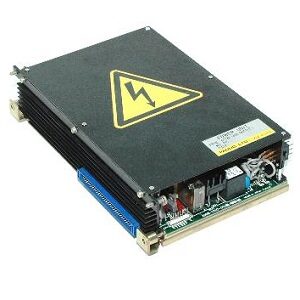
Fanuc Main Board1,376 Products
-
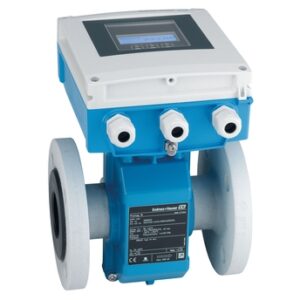
Flow Transmitter (Flow meter)286 Products
-
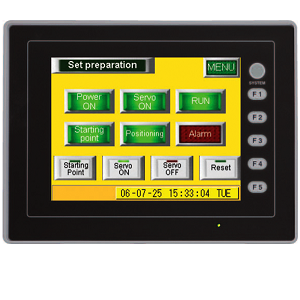
HMI/Touch Screen592 Products
-
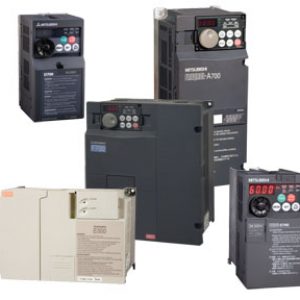
Inverter911 Products
-
Network/Signal4 Products
-
Others4,668 Products
-
Power Supply218 Products
-
Pressure Transmitter143 Products
-
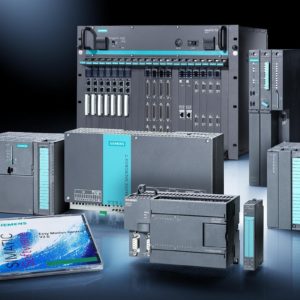
Programmable Logic Controller (PLC)6,288 Products
-
Relay927 Products
-
Sensor2,221 Products
-
Servo Motors & Motor Drives4,363 Products
-
Switch897 Products
-
Timer93 Products
-
Uncategorized1,148 Products
-
Valve Controller & Manifolds15 Products
-
Variable Frequency Drives (VFD)258 Products
-
Yokogawa Remote Indicators16 Products