
What Are Non-Contact Position Sensors and How They Work
Understanding What Non-Contact Position Sensors Are and How They Work: A Complete Industrial Automation Guide Explained in Factory Automation & Process Control
What is a non-contact position sensor?, What are the main types of non-contact position sensors? and Why are non-contact sensors better than contact sensors?
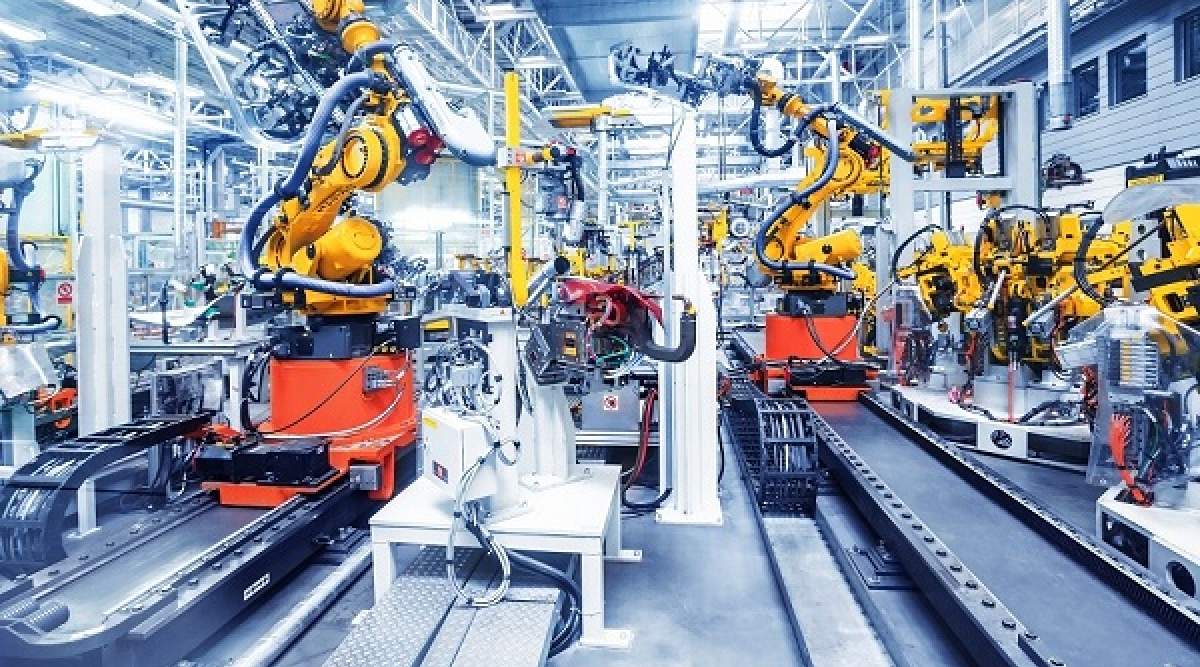
What Are Non-Contact Position Sensors and How They Work: A Complete Industrial Automation Guide
Position sensing is one of the most critical functions in modern industrial automation. Whether a robotic arm is assembling automotive components, a packaging machine is monitoring conveyor movement, or a CNC machine is controlling tool position, accurate position feedback is essential for maintaining productivity, safety, and product quality. Traditionally, many position measurement systems relied on mechanical contact between moving components and sensing devices. However, as industrial systems became faster, more precise, and more demanding, manufacturers increasingly adopted non-contact position sensors. Unlike mechanical switches or contact-based transducers, non-contact position sensors measure movement, distance, displacement, or object location without physically touching the target. As a result, they offer greater reliability, longer service life, improved accuracy, and reduced maintenance requirements.
What Are Non-Contact Position Sensors?
Non-contact position sensors are electronic devices that detect the position, movement, displacement, or presence of an object without requiring physical contact between the sensor and the target. These sensors use various physical principles to measure position, including:
Electromagnetic fields
Magnetic fields
Light waves
Ultrasonic waves
Capacitive effects
Eddy currents
Because no physical contact occurs during measurement, these sensors experience virtually no mechanical wear. Consequently, they often outperform contact-based sensors in demanding industrial environments. Position information generated by these sensors helps automation systems determine:
Linear position
Angular position
Rotational movement
Distance
Object presence
Speed and motion direction
Modern industrial automation systems rely heavily on non-contact sensing technology because it supports high-speed operation while maintaining exceptional accuracy.
Why Position Sensing Matters in Industrial Automation
Every automated machine must know where its components are located at any given moment. For example:
A robotic arm must know its exact joint position.
A conveyor system must track product locations.
A CNC machine must monitor tool movement.
An automated warehouse system must know pallet positions.
Without accurate position feedback, automation systems cannot maintain precision, repeatability, or safety. Position sensing enables:
Motion control
Process automation
Quality control
Equipment synchronization
Predictive maintenance
Machine safety systems
As manufacturing tolerances become tighter and production speeds increase, accurate non-contact sensing becomes even more important.
How Non-Contact Position Sensors Work
Although different technologies use different principles, all non-contact position sensors follow the same basic process. First, the sensor generates a field, signal, or wave. Next, the target object interacts with that field. Then, the sensor detects changes caused by the target. Finally, the sensor converts those changes into electrical signals that controllers can interpret. These signals are typically transmitted to:
PLC systems
Motion controllers
SCADA systems
Industrial computers
Robotics controllers
The automation system then uses this information to make operational decisions in real time.
Key Components of a Non-Contact Position Sensor
Most non-contact sensing systems contain several essential components.
Sensing Element
The sensing element generates the detection field. Depending on the sensor type, this may involve:
Light
Magnetism
Ultrasonic waves
Electric fields
Signal Processing Circuit
The signal processor analyzes changes detected by the sensing element. It converts raw sensor information into meaningful measurements.
Output Interface
The output stage communicates position data to control systems. Common output formats include:
Analog signals
Digital outputs
IO-Link
Ethernet/IP
Profinet
Modbus
Target Object
The target may be:
Metal
Plastic
Wood
Glass
Liquid
Magnetic material
The target’s properties often influence sensor selection.
Types of Non-Contact Position Sensors
Several technologies dominate modern industrial automation. Each offers unique advantages for specific applications.
Inductive Position Sensors
Inductive sensors detect metallic objects using electromagnetic fields. The sensor generates a high-frequency electromagnetic field around its sensing face. When a conductive metal target enters this field, eddy currents form within the target material. These eddy currents alter the electromagnetic field, allowing the sensor to determine position.
Advantages
Extremely reliable
Resistant to dirt and oil
High durability
Excellent for harsh industrial environments
Applications
Machine tools
Manufacturing equipment
Conveyor systems
Packaging machinery
Limitations
Detects only conductive materials
Limited sensing range
Inductive sensors remain one of the most widely used non-contact sensing technologies in manufacturing.
Capacitive Position Sensors
Capacitive sensors operate by detecting changes in electrical capacitance. The sensor creates an electrostatic field around its sensing surface. When an object enters this field, capacitance changes occur. The sensor measures these changes and converts them into position information.
Advantages
Detect metallic and non-metallic objects
High sensitivity
Good accuracy
Applications
Plastic manufacturing
Semiconductor production
Liquid level monitoring
Material thickness measurement
Limitations
Sensitive to humidity
May require calibration
Environmental conditions can affect performance
Despite these challenges, capacitive sensors are extremely useful when non-metallic targets must be detected.
Magnetic Position Sensors
Magnetic sensors measure position by detecting magnetic field changes. These sensors typically work alongside permanent magnets attached to moving components. Common magnetic sensing technologies include:
Hall-effect sensors
Magnetoresistive sensors
Reed switches
Hall-Effect Sensors
Hall-effect sensors generate an electrical signal proportional to magnetic field strength. As the magnet moves, the sensor measures position changes.
Advantages
Long sensing distances
High reliability
Compact design
Applications
Hydraulic cylinders
Pneumatic cylinders
Industrial actuators
Automotive systems
Magnetic sensing technology continues to grow due to its simplicity and durability.
Optical Position Sensors
Optical sensors use light to measure object position. These systems often employ:
Infrared light
Laser beams
LED sources
Photodetectors
When the target interrupts, reflects, or modifies the light beam, the sensor calculates position.
Laser Position Sensors
Laser-based systems provide exceptionally precise measurements. They are widely used when micron-level accuracy is required.
Advantages
Extremely high precision
Fast response times
Long sensing ranges
Applications
Robotics
Semiconductor manufacturing
Precision assembly
Quality inspection systems
Limitations
Sensitive to dust and contamination
Higher cost than many alternatives
However, when precision is the highest priority, optical sensors often provide the best solution.
Ultrasonic Position Sensors
Ultrasonic sensors use sound waves rather than light or magnetic fields. The sensor emits high-frequency sound pulses toward the target. The sound reflects back to the sensor. By measuring the return time, the sensor calculates distance and position.
Advantages
Works with many materials
Not affected by color
Performs well in low-light environments
Applications
Tank level measurement
Material handling
Vehicle positioning
Packaging systems
Limitations
Slower response than optical sensors
Environmental noise may affect readings
Even so, ultrasonic sensors remain highly versatile across many industries.
Eddy Current Position Sensors
Eddy current sensors specialize in measuring conductive targets. Like inductive sensors, they rely on electromagnetic principles. However, they provide much greater precision and can measure very small displacements.
Advantages
Exceptional accuracy
High-frequency response
Excellent for vibration monitoring
Applications
Turbine monitoring
Aerospace systems
Rotating machinery
Shaft displacement measurement
These sensors are commonly used where precision and reliability are critical.
Linear vs Rotary Non-Contact Position Sensors
Position sensors generally fall into two categories.
Linear Position Sensors
Linear sensors measure movement along a straight path. Examples include:
Cylinder stroke measurement
Conveyor travel measurement
Linear actuator positioning
Linear measurements are common in manufacturing and process automation.
Rotary Position Sensors
Rotary sensors measure angular movement. Examples include:
Motor shaft position
Valve position monitoring
Robotic joint movement
These sensors are essential for motion control systems.
Advantages of Non-Contact Position Sensors
The growing popularity of non-contact sensors stems from several significant benefits.
No Mechanical Wear
Since no physical contact occurs, sensor components experience minimal wear. As a result, service life increases dramatically.
Higher Reliability
Contact-based systems often fail due to friction and mechanical degradation. Non-contact technologies eliminate these issues.
Improved Accuracy
Many non-contact sensors achieve extremely precise measurements. This precision supports tighter manufacturing tolerances.
Faster Response Times
Advanced optical and magnetic sensors can respond within microseconds. This capability supports high-speed automation applications.
Reduced Maintenance
Fewer moving parts means fewer maintenance requirements. Consequently, downtime and maintenance costs decrease.
Enhanced Safety
Because sensing occurs remotely, operators remain farther from hazardous machinery. This improves overall workplace safety.
Limitations of Non-Contact Position Sensors
Although these sensors offer numerous benefits, engineers should understand their limitations.
Environmental Sensitivity
Certain technologies can be affected by:
Dust
Moisture
Extreme temperatures
Electromagnetic interference
Higher Initial Cost
Advanced sensing technologies often require greater upfront investment. However, lower maintenance costs frequently offset this expense.
Technology-Specific Constraints
Different sensor types work best with specific target materials and applications. Therefore, proper selection remains essential.
Applications of Non-Contact Position Sensors
Non-contact sensing technologies are found throughout industrial automation.
Industrial Robotics
Robots depend on accurate position feedback for:
Joint control
Motion planning
Collision avoidance
Without precise sensing, robotic systems cannot maintain accuracy.
CNC Machines
Machine tools use position sensors to monitor:
Tool location
Axis movement
Cutting accuracy
This ensures precision manufacturing.
Automated Warehouses
Warehouse automation systems track:
Storage locations
Vehicle movements
Product positioning
Non-contact sensing supports efficient inventory management.
Packaging Machinery
Packaging lines use sensors to:
Detect products
Position materials
Synchronize machine operations
This improves production speed and accuracy.
Process Industries
Oil and gas, water treatment, and chemical facilities use non-contact sensors to monitor:
Valve positions
Actuator movement
Tank levels
Equipment positioning
Reliable sensing improves operational safety and efficiency.
How to Select the Right Non-Contact Position Sensor
Choosing the correct sensor requires evaluating several factors.
Target Material
Different technologies perform better with certain materials.
Required Accuracy
Precision requirements often determine sensor selection.
Sensing Distance
Some applications require long detection ranges.
Environmental Conditions
Consider:
Dust
Moisture
Chemicals
Temperature
Communication Requirements
Verify compatibility with existing automation systems.
Budget
Balance performance requirements against project costs. A thorough evaluation helps ensure optimal performance and long-term reliability.
Recommended Related Articles
Frequently Asked Questions (FAQ)
What is a non-contact position sensor?
A non-contact position sensor is a device that measures the position, displacement, movement, or presence of an object without physically touching it.
What are the main types of non-contact position sensors?
The most common types include inductive, capacitive, magnetic, optical, ultrasonic, and eddy current position sensors.
Why are non-contact sensors better than contact sensors?
Non-contact sensors experience little to no mechanical wear, provide longer service life, require less maintenance, and often deliver higher accuracy.
Where are non-contact position sensors used?
They are widely used in robotics, CNC machines, automated warehouses, manufacturing equipment, packaging systems, and process industries.
Which non-contact position sensor is the most accurate?
Laser-based optical sensors and eddy current sensors typically provide the highest levels of measurement accuracy.
Can non-contact position sensors work in harsh industrial environments?
Yes. Inductive and magnetic position sensors are particularly well suited for environments containing dust, oil, vibration, and temperature fluctuations.
How do PLCs use position sensor data?
PLCs receive position information from sensors and use it to control machine movement, synchronize processes, trigger actions, and maintain production accuracy.
Are non-contact position sensors used in Industry 4.0 applications?
Absolutely. Non-contact sensors play a critical role in smart factories, Industrial IoT systems, predictive maintenance programs, robotics, and advanced automation platforms.
Your One-Stop Source for Reliable Automation & Process Control Equipment
Access trusted process control equipment, expert support, and fast sourcing—all in one place.
-
AC Drives 18,165 Products
-
Butterfly Valve236 Products
-
Circuit Breakers2,226 Products
-
Contactors567 Products
-
Counters78 Products
-
Encoder117 Products
-
Fanuc Main Board1,376 Products
-
Flow Transmitter (Flow meter)552 Products
-
HMI/Touch Screen592 Products
-
Industrial Device Servers125 Products
-
Inverter911 Products
-
Network/Signal2 Products
-
Others4,502 Products
-
Power Supply218 Products
-
Pressure Transmitter146 Products
-
Programmable Logic Controller (PLC)6,290 Products
-
Relay927 Products
-
Sensor2,221 Products
-
Servo Motors & Motor Drives4,675 Products
-
Switch897 Products
-
Timer93 Products
-
Uncategorized1,141 Products
-
Valve Controller & Manifolds17 Products
-
Variable Frequency Drives (VFD)257 Products
-
Yokogawa Remote Indicators16 Products