
What Is a Pressure Transmitter and How It Works
Understanding What Is a Pressure Transmitter? How It Works and Applications in Factory Automation Control
What is a pressure transmitter? and How does a pressure transmitter work?
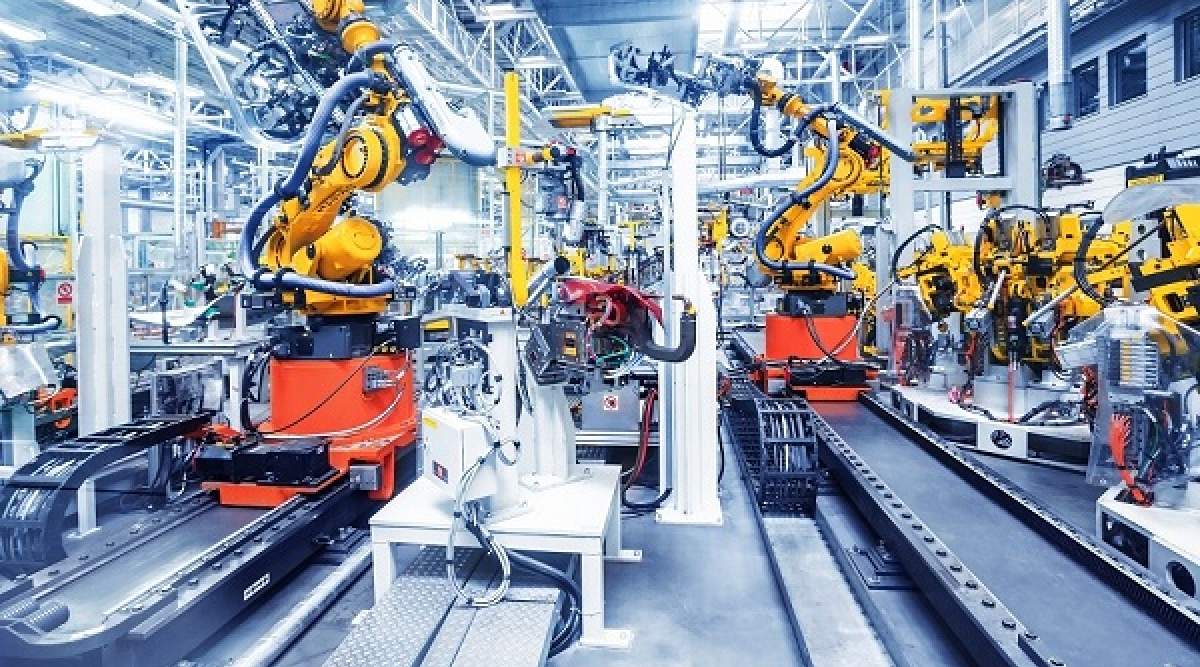
What Is a Pressure Transmitter? How It Works and Applications
In industrial environments, pressure is not just another measurement—it’s a critical process variable that directly affects safety, efficiency, and product quality. Whether you’re dealing with steam in a boiler, gas in a pipeline, or liquid in a storage tank, accurate pressure monitoring is essential. That’s where pressure transmitters come in. A pressure transmitter is one of the most widely used instruments in industrial automation and process control. It acts as the bridge between the physical process and the digital control system, converting pressure into a signal that operators and control systems can interpret and act upon. This guide walks through what a pressure transmitter is, how it works, the different types available, and where it’s used in real-world applications.
Understanding Pressure Transmitters
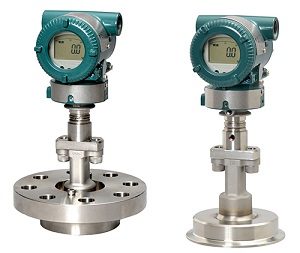
A pressure transmitter is an industrial instrument that measures the pressure of a fluid—whether liquid, gas, or vapor—and converts that measurement into a standardized electrical signal. Unlike a traditional pressure gauge that provides only a local reading, a pressure transmitter sends the measured value to control systems such as PLCs, DCS, or SCADA platforms. This allows operators to monitor and control processes remotely and in real time. In most industrial applications, the output signal is standardized—commonly 4–20 mA—so it can travel long distances without signal degradation and be interpreted consistently across different systems. At its core, a pressure transmitter performs three essential functions:
Measures process pressure
Converts the measurement into an electrical signal
Transmits that signal to a control or monitoring system
Why Pressure Transmitters Are Critical in Industry
Pressure transmitters are not just measurement devices—they are integral to process control and safety systems. They are used to:
Maintain safe operating conditions in pressurized systems
Control flow, level, and temperature indirectly
Detect abnormal conditions such as leaks or blockages
Enable automated decision-making in control systems
Because of this, pressure transmitters are considered foundational components in modern industrial automation and Industry 4.0 environments.
How a Pressure Transmitter Works
At a practical level, the working principle of a pressure transmitter is straightforward: it converts mechanical pressure into an electrical signal. But internally, the process involves several stages of sensing, conversion, and signal conditioning.
The Basic Working Principle
A pressure transmitter works by detecting pressure through a sensing element—typically a diaphragm—and converting that physical force into an electrical signal. The process typically follows three steps:
Pressure Detection
The process pressure acts on a sensing element, causing it to deform slightly.Signal Conversion
This deformation changes electrical properties such as resistance or capacitance.Signal Transmission
The signal is amplified and converted into a standardized output such as 4–20 mA or digital communication.
This output signal is then transmitted to control systems for monitoring and control.
Key Components of a Pressure Transmitter
Understanding the internal structure helps clarify how the device functions reliably in industrial environments.
1. Sensing Element (Sensor)
The sensing element is the heart of the transmitter. It detects pressure and responds physically—usually through deformation. Common sensing technologies include:
Strain gauge (piezoresistive)
Capacitive sensors
Piezoelectric sensors
MEMS-based sensors
When pressure is applied, the sensing element deforms slightly, creating a measurable electrical change.
2. Signal Conditioning Circuit
The raw signal from the sensor is typically very small and needs to be processed. This stage includes:
Amplification
Filtering
Temperature compensation
Linearization
Signal conditioning ensures that the output is accurate, stable, and suitable for industrial use.
3. Output and Transmission System
Finally, the processed signal is converted into a standardized output. Common outputs include:
4–20 mA analog signal
HART communication (digital over analog)
Modbus or other digital protocols
These signals allow the transmitter to integrate seamlessly with automation systems.
Types of Pressure Measurement
Pressure transmitters are designed to measure different types of pressure depending on the application.
Gauge Pressure
Measures pressure relative to atmospheric pressure. Example: measuring pressure in a water pipeline.
Absolute Pressure
Measures pressure relative to a perfect vacuum. Used in applications such as vacuum systems and aerospace processes.
Differential Pressure
Measures the difference between two pressure points. Widely used in:
Flow measurement
Filter monitoring
Level measurement in tanks
Differential pressure transmitters are among the most commonly used in industrial applications.
Types of Pressure Transmitters
Pressure transmitters can also be categorized based on their sensing technology and application requirements.
Piezoresistive Pressure Transmitters
These are the most widely used type. They operate by detecting changes in electrical resistance when pressure is applied to a sensing element. They offer:
High accuracy
Good stability
Wide industrial use
Capacitive Pressure Transmitters
These measure pressure by detecting changes in capacitance between two plates. They are commonly used for:
Low-pressure applications
Differential pressure measurement
Piezoelectric Pressure Transmitters
These generate an electrical charge when pressure is applied. They are typically used for:
Dynamic pressure measurement
High-frequency applications
Silicon-on-Sapphire and MEMS Transmitters
Modern transmitters often use advanced semiconductor technologies. These offer:
High precision
Compact design
Improved temperature stability
Applications of Pressure Transmitters
Pressure transmitters are used across nearly every industrial sector. Their ability to provide accurate, real-time data makes them indispensable in process control.
Oil and Gas Industry
In oil and gas operations, pressure transmitters are used to monitor pipelines, wells, and processing systems. Applications include:
Pipeline pressure monitoring
Wellhead pressure measurement
Leak detection systems
Chemical and Process Industries
Chemical plants rely heavily on pressure transmitters to maintain safe and controlled reactions. They are used to:
Monitor reactor pressure
Control flow and level
Ensure process stability
Power Generation
In power plants, pressure transmitters are used to monitor steam pressure, boiler systems, and turbine performance. Accurate pressure measurement is critical for both efficiency and safety.
Water and Wastewater Treatment
Pressure transmitters are used to monitor pump systems, filtration processes, and water distribution networks. They help ensure:
Proper flow rates
System reliability
Leak detection
Food and Beverage Industry
In hygienic environments, pressure transmitters are used in:
Processing systems
Filling lines
Sterilization equipment
These transmitters are designed to meet strict sanitary standards.
Advantages of Pressure Transmitters
Pressure transmitters offer several key advantages that make them essential in industrial automation.
High Accuracy and Reliability
Modern transmitters provide precise measurements even in harsh environments.
Remote Monitoring Capability
Signals can be transmitted over long distances, allowing centralized control and monitoring.
Integration with Automation Systems
Pressure transmitters integrate easily with PLC, DCS, and SCADA systems, enabling automated control.
Improved Safety
By continuously monitoring pressure, transmitters help prevent equipment failure and hazardous conditions.
Recommended Related Articles:
- Industrial Automation Fundamentals
- Industrial Communication Protocols
- Industrial Instrumentation Control
- Industrial Sensors & Measurement
- Motion and Process Control
- PLC Programming & Controllers
- SCADA and DCS Systems
- Servo Motors and Motor Drives
Frequently Asked Questions (FAQ)
What is a pressure transmitter in simple terms?
A pressure transmitter is a device that measures the pressure of a liquid or gas and converts it into an electrical signal that can be read by control systems.
How does a pressure transmitter work?
It works by detecting pressure using a sensor, converting that pressure into an electrical signal, and transmitting the signal to a control system for monitoring and control.
What is the difference between a pressure sensor and a pressure transmitter?
A pressure sensor measures pressure and produces a raw signal, while a pressure transmitter processes that signal and outputs a standardized signal suitable for industrial systems.
What industries use pressure transmitters?
Pressure transmitters are used in oil and gas, power generation, chemical processing, water treatment, manufacturing, and food processing industries.
What is a 4–20 mA signal?
A 4–20 mA signal is a standard analog signal used in industrial systems, where 4 mA represents the minimum value and 20 mA represents the maximum measurement range.
Why are pressure transmitters important?
They provide accurate, real-time pressure data that helps maintain safety, optimize processes, and enable automation in industrial systems.
Your One-Stop Source for Reliable Automation & Process Control Equipment
Access trusted process control equipment, expert support, and fast sourcing—all in one place.
-
AC Drives 18,165 Products
-
Butterfly Valve236 Products
-
Circuit Breakers2,226 Products
-
Contactors567 Products
-
Counters78 Products
-
Encoder117 Products
-
Fanuc Main Board1,376 Products
-
Flow Transmitter (Flow meter)552 Products
-
HMI/Touch Screen592 Products
-
Inverter911 Products
-
Network/Signal4 Products
-
Others4,613 Products
-
Power Supply218 Products
-
Pressure Transmitter146 Products
-
Programmable Logic Controller (PLC)6,290 Products
-
Relay927 Products
-
Sensor2,221 Products
-
Servo Motors & Motor Drives4,499 Products
-
Switch897 Products
-
Timer93 Products
-
Uncategorized1,143 Products
-
Valve Controller & Manifolds15 Products
-
Variable Frequency Drives (VFD)257 Products
-
Yokogawa Remote Indicators16 Products