
What Is HART Communication Protocol?

A Complete Guide to HART Communication Protocol
In modern industrial automation, communication between field instruments and control systems is everything. Whether you’re dealing with pressure transmitters, flow meters, or control valves, the ability to access accurate, real-time data—and more importantly, diagnostic information—can make the difference between smooth operation and costly downtime.
That’s where the HART Communication Protocol comes in.
HART (Highway Addressable Remote Transducer) has quietly become one of the most widely adopted communication standards in process industries. What makes it unique is its ability to bridge the gap between legacy analog systems and modern digital intelligence—without forcing a complete infrastructure overhaul.
In this guide, we’ll walk through how HART works, why it’s still relevant, and how it fits into today’s industrial automation landscape.
What Is HART Communication Protocol?
HART (Highway Addressable Remote Transducer) is an open communication protocol used in industrial automation to enable bidirectional data exchange between smart field devices and control systems.
Unlike purely digital protocols, HART is a hybrid system. It combines:
- A traditional 4–20 mA analog signal for the primary process variable
- A digital signal superimposed on the same wiring for additional data
This dual-channel approach allows HART devices to transmit both real-time process values and detailed diagnostic information simultaneously.
The key advantage here is backward compatibility. Plants can continue using their existing 4–20 mA infrastructure while gaining access to advanced digital capabilities such as device diagnostics, configuration, and multi-variable data.
How HART Communication Works
At its core, HART operates by overlaying a digital signal onto the analog current loop without disrupting it.
Hybrid Analog + Digital Communication
Traditional 4–20 mA systems can only transmit one variable—typically pressure, temperature, or flow. HART extends this capability by adding a digital communication layer.
- The analog signal carries the primary measurement
- The digital signal carries additional information such as diagnostics and configuration
Both signals coexist on the same pair of wires, which is what makes HART so practical in real-world applications.
Frequency Shift Keying (FSK) Technology
HART uses a technique called Frequency Shift Keying (FSK) to transmit digital data.
- Digital signals are encoded using two frequencies
- These signals are superimposed onto the analog current loop
- The analog signal remains unaffected
This ensures that communication is reliable and does not interfere with control operations.
In practice, this means you can read process values and device diagnostics at the same time—without compromising signal integrity.
Communication Modes in HART
HART supports different communication configurations depending on system requirements.
Point-to-Point Mode
- One device connected to one controller
- Analog signal represents the primary variable
- Digital signal provides additional data
This is the most common configuration in process industries.
Multidrop Mode
- Multiple devices share the same communication loop
- Each device has a unique address
- Analog signal is fixed, and communication is primarily digital
This setup is useful when multiple instruments need to be connected efficiently.
Master-Slave Communication Structure
HART operates as a master-slave protocol, meaning:
- A host system (PLC, DCS, or handheld communicator) sends a request
- The field device responds with data
Devices only communicate when prompted, ensuring controlled and efficient data exchange.
Key Components of a HART System
A typical HART communication system consists of several integrated components.
Field Devices (Transmitters and Sensors)
These include instruments such as:
- Pressure transmitters
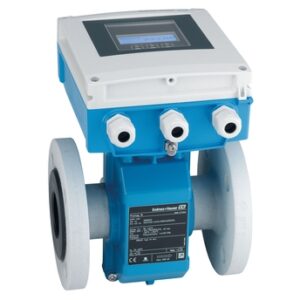
- Flow meters
- Temperature sensors
- Level transmitters
HART-enabled devices are “smart,” meaning they can provide not just measurements, but also diagnostics and configuration data.
Control Systems (PLC / DCS / SCADA)
Control systems act as the “master” in HART communication.
They: Receive process data, Send commands to devices, and Monitor system performance.
To understand how these systems interact with HART devices, see:
https://www.automationpioneer.com/news/what-is-scada-system
HART Communicator
A HART communicator is a handheld device used by technicians for:
- Device configuration
- Calibration
- Diagnostics
- Troubleshooting
It allows direct communication with field instruments without disrupting the control system.
Communication Infrastructure
HART uses standard instrumentation wiring:
- 4–20 mA current loops
- Shielded twisted pair cables
This makes it easy to integrate into existing systems without additional infrastructure costs.
HART Protocol Commands and Data Structure
One of the reasons HART is so widely adopted is its standardized command structure.
Types of HART Commands
HART defines three main categories of commands:
Universal Commands
- Supported by all HART devices
- Used for basic functions such as reading process variables
Common Practice Commands
- Used for configuration tasks
- Examples include setting ranges and calibration
Device-Specific Commands
- Unique to each manufacturer
- Provide advanced functionality for specific devices
This structure ensures interoperability while still allowing flexibility for advanced features.
Data Transmission Capabilities
HART devices can transmit:
- Primary process variable (PV)
- Secondary variables (temperature, pressure, etc.)
- Device status and health
- Diagnostic data
This level of detail enables predictive maintenance and improved system reliability.
Advantages of HART Communication Protocol
HART has remained dominant in process industries for decades—and for good reason.
Backward Compatibility
HART works with existing 4–20 mA systems, allowing gradual upgrades without replacing infrastructure.
Low Cost Implementation
Because it uses existing wiring, HART is one of the most cost-effective communication solutions available.
Enhanced Diagnostics
HART devices provide detailed diagnostic information, helping engineers detect issues before they lead to failures.
Real-time diagnostics can identify problems such as:
- Sensor drift
- Device malfunction
- Signal integrity issues
Simultaneous Analog and Digital Communication
The ability to transmit both analog and digital signals simultaneously provides:
- Reliable control via analog signals
- Advanced insights via digital data
Wide Industry Adoption
HART is used globally across industries such as:
- Oil and gas
- Chemical processing
- Power generation
- Water treatment
Its widespread adoption ensures compatibility across devices and vendors.
Limitations of HART Protocol
Despite its advantages, HART is not without limitations.
Limited Data Speed
HART operates at relatively low speeds (around 1200 bps), which is sufficient for instrumentation but not for high-speed data applications.
Not Ideal for Complex Networks
For large-scale, high-speed communication networks, protocols like Ethernet-based systems may be more suitable.
Legacy Dependency
While backward compatibility is an advantage, it also means HART is tied to older infrastructure, which may limit scalability in some applications.
Applications of HART Protocol in Industry
HART is widely used in process industries where reliable measurement and control are critical.
Process Instrumentation
HART is commonly used with:
- Pressure transmitters
- Flow meters
- Level sensors
To understand these devices better, see:
https://www.automationpioneer.com/news/pressure-transmitters-guide
Asset Management Systems
HART enables advanced asset management by providing detailed device diagnostics and performance data.
Calibration and Maintenance
Technicians use HART communicators to:
- Calibrate instruments
- Configure devices
- Diagnose faults
Integration with Control Systems
HART integrates seamlessly with:
- PLC systems
- SCADA platforms
- Distributed Control Systems (DCS)
HART vs Other Industrial Communication Protocols
While HART remains widely used, it often works alongside other protocols.
Compared to fully digital protocols:
- HART is simpler and more cost-effective
- Digital protocols offer higher speed and scalability
HART is best suited for instrument-level communication, while other protocols may handle plant-wide networking.
Recommended Related Articles:
https://www.automationpioneer.com/news/plc-programming-basics
PLC Programming Basics
https://www.automationpioneer.com/news/what-is-scada-system
What Is SCADA System
https://www.automationpioneer.com/news/plc-vs-dcs
PLC vs DCS Explained
https://www.automationpioneer.com/news/types-of-industrial-sensors
Types of Industrial Sensors
https://www.automationpioneer.com/news/industrial-communication-protocols
Industrial Communication Protocols Guide
https://www.automationpioneer.com/news/industrial-iot-guide
Industrial IoT Guide
https://www.automationpioneer.com/news/flow-measurement-technologies
Flow Measurement Technologies
https://www.automationpioneer.com/news/pressure-transmitters-guide
Pressure Transmitters Explained
Frequently Asked Questions (FAQ)
What does HART stand for?
HART stands for Highway Addressable Remote Transducer, a communication protocol used in industrial automation.
What is the main purpose of HART protocol?
The main purpose of HART is to enable communication between field devices and control systems, allowing both process data and diagnostic information to be transmitted.
How is HART different from 4–20 mA?
The 4–20 mA signal transmits only one variable, while HART adds a digital layer that allows additional data such as diagnostics and configuration to be communicated.
What industries use HART protocol?
HART is widely used in industries such as oil and gas, chemical processing, power generation, and water treatment.
Is HART still used today?
Yes. HART remains one of the most widely used communication protocols in process industries due to its reliability, simplicity, and compatibility with existing systems.
What is a HART communicator used for?
A HART communicator is used to configure, calibrate, and troubleshoot HART-enabled devices in the field.
-

AC Drives 18,160 Products
-
Butterfly Valve236 Products
-
Circuit Breakers2,226 Products
-
Contactors567 Products
-

Counters78 Products
-
Encoder117 Products
-
Fanuc Main Board1,376 Products
-
Flow Transmitter (Flow meter)286 Products
-
HMI/Touch Screen592 Products
-

Inverter911 Products
-
Network/Signal4 Products
-
Others4,668 Products
-

Power Supply218 Products
-
Pressure Transmitter143 Products
-

Programmable Logic Controller (PLC)6,288 Products
-
Relay927 Products
-
Sensor2,221 Products
-
Servo Motors & Motor Drives4,363 Products
-
Switch897 Products
-
Timer93 Products
-

Uncategorized1,148 Products
-
Valve Controller & Manifolds15 Products
-
Variable Frequency Drives (VFD)258 Products
-
Yokogawa Remote Indicators16 Products