
PLC vs DCS
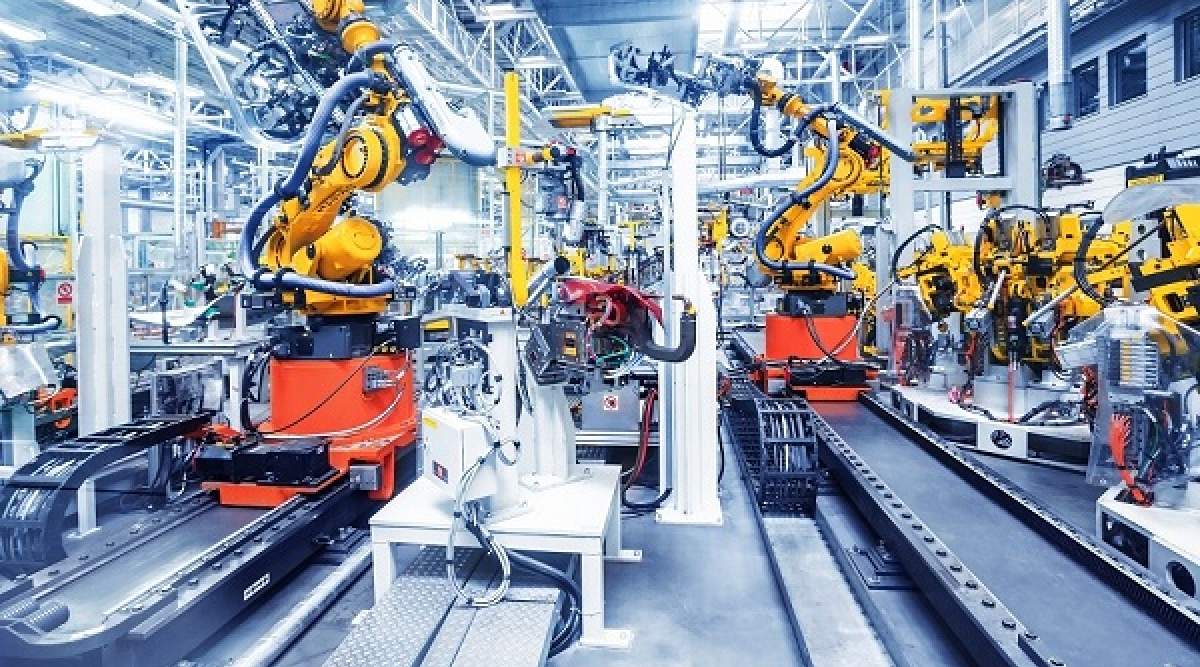
PLC vs DCS: Understanding the Key Differences in Industrial Control Systems
In the world of industrial automation, two control technologies dominate modern production environments: Programmable Logic Controllers (PLCs) and Distributed Control Systems (DCS). Both systems are used to monitor and control industrial processes, but they serve different purposes and are designed for different types of operations.
Engineers often encounter the question: Should we use a PLC or a DCS? The answer depends on factors such as process complexity, production scale, reliability requirements, and system architecture.
This guide explains the differences between PLC and DCS, how each system works, and when one approach is better suited than the other. Whether you are an automation engineer, instrumentation specialist, or industrial operations manager, understanding these systems is essential for designing reliable automation solutions.
Understanding Industrial Control Systems
Industrial control systems are technologies used to monitor, control, and automate manufacturing processes and industrial operations. They integrate sensors, controllers, communication networks, and software to ensure processes run safely and efficiently.
Two of the most widely used control platforms are:
Programmable Logic Controllers (PLC)
Distributed Control Systems (DCS)
While both systems perform automation tasks, they were developed to address different types of industrial challenges.
Generally speaking, PLCs are designed to control machines, while DCS platforms control entire industrial processes or plants.
What Is a PLC (Programmable Logic Controller)?
A Programmable Logic Controller is an industrial computer used to automate machines and discrete manufacturing processes.
PLCs were originally developed to replace complex relay-based control panels in factories. Instead of wiring hundreds of relays, engineers could program logic into a controller that manages inputs and outputs electronically.
Today, PLCs are used across many industries including:
Automotive manufacturing
Packaging and material handling
Robotics and assembly lines
Food processing equipment
Conveyor and logistics systems
How PLC Systems Work
A PLC receives input signals from sensors and field devices, processes the data according to its program, and then sends output signals to actuators such as motors or valves.
The process typically follows these steps:
Sensors detect changes in the process (temperature, position, pressure).
Input signals are sent to the PLC.
The PLC executes its control logic.
Output signals control machines or equipment.
PLCs are particularly effective at discrete control tasks, such as switching devices on or off, controlling motors, or sequencing machine operations.
Key Features of PLC Systems
PLCs are widely used because they offer several advantages:
Fast Response Time
PLCs are designed for high-speed applications and can respond to events in milliseconds.
Flexible Programming
Engineers can customize control logic using programming languages such as:
Ladder logic
Function block diagrams
Structured text
Modular Architecture
PLC systems are built with modular components that allow engineers to expand input/output capacity when required.
Reliability in Harsh Environments
PLCs are designed to operate in extreme industrial conditions including high temperatures, vibration, and electrical noise.
What Is a DCS (Distributed Control System)?
A Distributed Control System is an automation platform used to control large industrial processes across an entire facility.
Unlike PLCs, which typically control individual machines, a DCS manages multiple process areas using a network of distributed controllers connected to a central supervisory system.
DCS systems are commonly used in industries such as:
Oil and gas processing
Chemical manufacturing
Power generation plants
Water treatment facilities
Pharmaceutical production
These industries rely on continuous processes that must operate reliably for long periods.
How DCS Systems Work
A DCS uses multiple controllers distributed throughout the plant. Each controller manages a section of the process while communicating with other controllers through a central network.
This architecture allows the system to control thousands of process variables simultaneously.
A typical DCS architecture includes:
Distributed controllers
Operator workstations
engineering stations
process historians
alarm management systems
The distributed design ensures high reliability and process stability.
Key Features of DCS Systems
DCS platforms are designed for complex industrial processes and offer several unique capabilities.
Plant-Wide Process Control
A DCS can manage thousands of input and output signals across an entire facility.
Built-in Redundancy
Many DCS systems include redundant controllers, communication networks, and power supplies to ensure continuous operation.
Integrated Monitoring Tools
DCS platforms include built-in monitoring tools such as alarms, historical data analysis, and trending systems.
Advanced Process Control
DCS systems are optimized for continuous process control using advanced algorithms such as PID control loops.
PLC vs DCS: Core Differences
Although PLC and DCS systems perform similar automation functions, their design philosophies differ significantly.
Below are the most important differences engineers should understand.
System Architecture
PLC systems are typically centralized controllers that manage machines or production lines.
A DCS system, on the other hand, distributes control across multiple controllers located throughout the plant. These controllers communicate through a centralized network.
This distributed architecture improves system reliability and scalability.
Process Type
PLC systems are most effective for discrete manufacturing processes, such as machine automation, packaging, and material handling.
DCS systems are designed for continuous processes, such as chemical reactions, refining, or power generation.
System Size and Scalability
PLCs are usually implemented in small or medium-sized systems.
DCS platforms are designed to handle thousands of control loops and input/output points across large industrial plants.
Programming Approach
PLC systems are typically programmed using customized logic tailored to specific applications.
DCS systems, however, often rely on predefined control functions that engineers configure rather than program from scratch.
Response Time
PLCs offer extremely fast response times, making them ideal for high-speed machine control.
DCS systems prioritize process stability rather than speed because they regulate slower process variables such as temperature, pressure, and flow.
Redundancy and Reliability
DCS platforms are designed with built-in redundancy to prevent process interruptions.
PLC systems can also include redundancy, but this typically requires additional hardware and configuration.
Advantages of PLC Systems
PLC systems remain extremely popular in industrial automation because they provide several advantages.
Cost-Effective for Machine Automation
PLCs are generally more affordable than large-scale control systems.
High-Speed Control
They are ideal for applications requiring rapid response times.
Flexibility
PLCs can easily be reprogrammed to support different machine operations.
Easy Integration
They integrate well with other automation components such as robotics and motion control systems.
Advantages of DCS Systems
DCS platforms provide benefits that are critical for complex industrial environments.
Process Stability
DCS systems maintain stable control of continuous processes over long periods.
Centralized Monitoring
Operators can monitor and control the entire plant from a single control room.
High Reliability
Built-in redundancy minimizes the risk of system failure.
Advanced Data Analysis
DCS systems offer advanced tools for process optimization and predictive maintenance.
When to Use PLC vs DCS
Choosing between PLC and DCS depends on the specific requirements of the industrial process.
PLC Is Best For
Discrete manufacturing systems
Machine automation
Packaging lines
Robotics applications
Small to medium automation projects
DCS Is Best For
Continuous process industries
Large-scale industrial plants
Applications requiring high reliability
Complex process control systems
In many modern facilities, engineers combine both technologies.
For example, PLCs may control individual machines while a DCS supervises the overall process.
The Future of PLC and DCS Systems
The boundaries between PLC and DCS technologies are gradually becoming less distinct.
Modern PLC platforms now support advanced process control functions, while modern DCS systems offer greater flexibility and modular architectures.
In many modern facilities, hybrid systems combine the strengths of both technologies.
As Industry 4.0 technologies continue to evolve, automation systems are increasingly integrating:
Industrial Internet of Things (IIoT)
Cloud-based analytics
artificial intelligence
predictive maintenance tools
These technologies are reshaping how industrial control systems operate.
Recommended Related Articles:
https://www.automationpioneer.com/news/plc-programming-basics
PLC Programming Basics
https://www.automationpioneer.com/news/what-is-scada-system
What Is SCADA System
https://www.automationpioneer.com/news/types-of-industrial-sensors
Types of Industrial Sensors
https://www.automationpioneer.com/news/industrial-communication-protocols
Industrial Communication Protocols
https://www.automationpioneer.com/news/industrial-iot-guide
Industrial IoT Guide
https://www.automationpioneer.com/news/flow-measurement-technologies
Flow Measurement Technologies
https://www.automationpioneer.com/news/pressure-transmitters-guide
Pressure Transmitters Explained
https://www.automationpioneer.com/news/types-of-industrial-automation-systems
Types of Industrial Automation Systems
Frequently Asked Questions (FAQ)
What is the main difference between PLC and DCS?
The main difference is that PLCs typically control individual machines, while DCS systems control entire industrial processes or plants.
Which system is better: PLC or DCS?
Neither system is universally better. PLCs are ideal for machine automation and discrete manufacturing, while DCS systems are designed for complex continuous processes.
Can PLC replace a DCS?
In some cases, multiple PLCs combined with SCADA systems can perform similar functions to a DCS. However, large process industries often prefer DCS platforms because they provide built-in integration and reliability.
Which industries use DCS systems?
DCS systems are widely used in industries such as oil and gas, power generation, chemical processing, pharmaceuticals, and water treatment.
Do modern factories use both PLC and DCS?
Yes. Many industrial facilities combine PLC and DCS technologies. PLCs control individual machines while DCS systems coordinate plant-wide processes.
-
AC Drives 18,160 Products
-
Butterfly Valve236 Products
-
Circuit Breakers2,226 Products
-
Contactors567 Products
-
Counters78 Products
-
Encoder117 Products
-
Fanuc Main Board1,376 Products
-
Flow Transmitter (Flow meter)286 Products
-
HMI/Touch Screen592 Products
-
Inverter911 Products
-
Network/Signal4 Products
-
Others4,668 Products
-
Power Supply218 Products
-
Pressure Transmitter143 Products
-
Programmable Logic Controller (PLC)6,288 Products
-
Relay927 Products
-
Sensor2,221 Products
-
Servo Motors & Motor Drives4,363 Products
-
Switch897 Products
-
Timer93 Products
-
Uncategorized1,148 Products
-
Valve Controller & Manifolds15 Products
-
Variable Frequency Drives (VFD)258 Products
-
Yokogawa Remote Indicators16 Products