What Is a PLC?
What Is a PLC? A Complete Guide to Programmable Logic Controllers
Industrial automation relies on reliable control systems that can operate machines, monitor processes, and respond to changing conditions in real time. One of the most important technologies enabling this level of control is the Programmable Logic Controller (PLC).
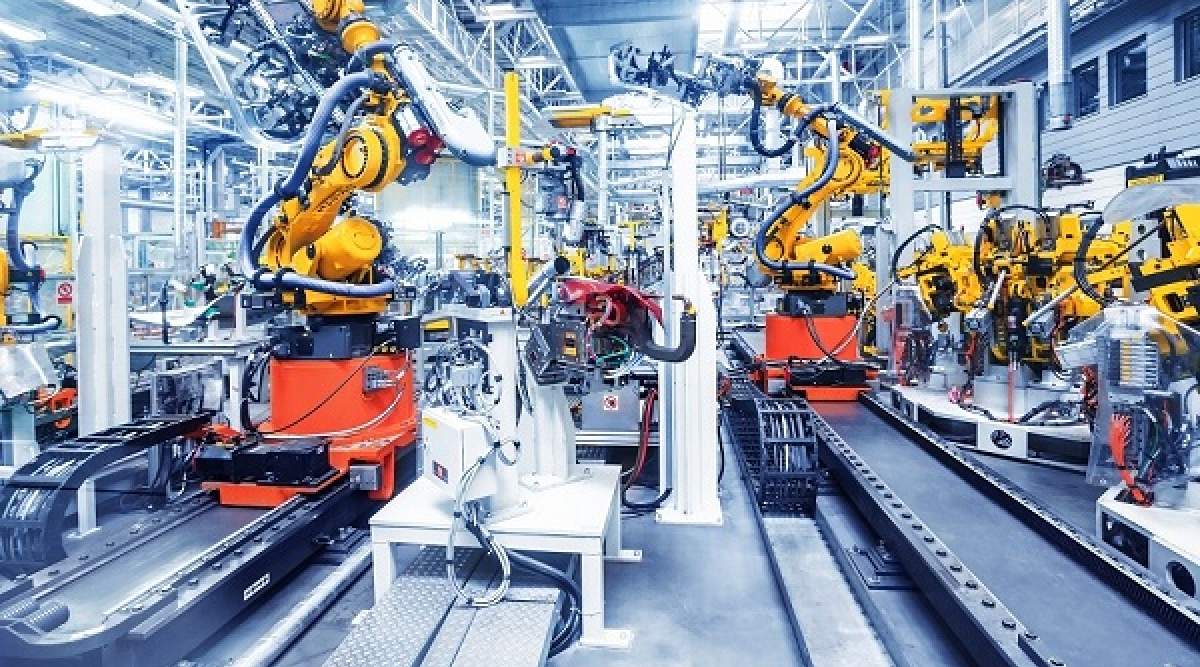
PLCs are the backbone of modern industrial automation. They manage production lines, control industrial equipment, and ensure that machines operate safely and efficiently. From manufacturing plants to water treatment facilities, PLCs have become a standard technology used across many industries.
Understanding Programmable Logic Controllers
A Programmable Logic Controller (PLC) is a specialized industrial computer designed to control machines and automated processes. Unlike standard computers, PLCs are built specifically for industrial environments where reliability, durability, and real-time performance are essential.
PLCs are widely used to control machinery, assembly lines, robotic systems, and industrial processes. They monitor inputs from sensors and switches, process that information using programmed logic, and send commands to outputs such as motors, valves, and actuators.
In simple terms, a PLC acts as the decision-making unit of an automated system. It receives data from the field, processes that data based on a program, and triggers actions that control industrial equipment.
PLCs replaced older relay-based control systems that were difficult to modify and required complex wiring. Modern PLCs offer far greater flexibility because engineers can modify machine behavior simply by updating the program rather than rewiring hardware.
The History of PLCs
The first PLC was developed in the late 1960s for the automotive industry. It was designed to replace complex relay control systems that required extensive wiring and maintenance.
The earliest PLC, known as the Modicon 084, was introduced for automotive manufacturing systems and allowed engineers to modify machine logic through software instead of physical wiring changes.
Over time, PLC technology evolved to support:
larger numbers of inputs and outputs
advanced communication networks
complex control algorithms
integration with SCADA and industrial networks
Today, PLCs are used in nearly every sector of industrial automation.
How a PLC Works
At its core, a PLC operates through a continuous cycle that reads inputs, processes logic, and updates outputs. This process is known as the PLC scan cycle.
A typical PLC scan cycle includes three primary steps:
Reading input signals from sensors and devices
Executing the control program stored in memory
Updating output signals that control machines and equipment
This cycle runs continuously, often completing in milliseconds, which allows PLCs to react quickly to changes in industrial processes.
Inputs: Gathering Data from the Field
Inputs are signals received from devices that monitor conditions within an industrial system.
Examples of input devices include:
proximity sensors
limit switches
temperature sensors
pressure switches
level transmitters
push buttons
These devices send electrical signals to the PLC so it can determine the current status of the process.
Processing: Executing the Control Program
The PLC’s processor analyzes input signals using a program written by automation engineers.
These programs define how the system should respond to different conditions. For example:
If a sensor detects a product on a conveyor belt, the PLC may start a motor.
If temperature exceeds a safety limit, the PLC may activate cooling systems.
If a machine door is opened, the PLC may shut down equipment for safety.
The PLC executes these instructions continuously while monitoring input signals.
Outputs: Controlling Machines and Equipment
After processing inputs, the PLC sends commands to output devices.
Common output devices include: electric motors, solenoid valves, indicator lights, relays, alarms, motor drives.
By controlling these devices, the PLC ensures that industrial processes operate according to the programmed logic.
Key Components of a PLC System
A PLC system typically consists of several hardware modules that work together to perform automation tasks.
Central Processing Unit (CPU)
The CPU is the brain of the PLC.
It performs several critical functions:
executing the control program
processing input signals
controlling output signals
managing communication with other systems
The CPU also handles system diagnostics and memory management.
Input and Output Modules (I/O)
Input and Output modules connect the PLC to field devices such as sensors and actuators.
Input Modules
Input modules receive signals from field devices.
Examples include: digital inputs from switches, analog inputs from temperature or pressure sensors
Output Modules
Output modules send signals from the PLC to equipment such as: motors, control valves, indicator lights, alarms.
These modules allow the PLC to interact directly with industrial equipment.
Power Supply
The power supply converts incoming electrical power into the voltage required by the PLC system.
Most PLC systems use low-voltage DC power to ensure stable operation.
Memory
PLC memory stores several types of information:
the control program
system configuration data
process variables
historical data logs
Programs are usually stored in non-volatile memory so that they remain intact even if power is lost.
Communication Modules
Modern PLC systems include communication modules that allow them to connect with other automation systems.
Common communication technologies include:
Industrial Ethernet
Modbus
Profibus
Profinet
EtherNet/IP
These networks allow PLCs to communicate with other PLCs, SCADA systems, and industrial computers.
PLC Programming Languages
PLC programs are written using standardized programming languages defined by the IEC 61131-3 international standard.
The most commonly used PLC programming languages include:
Ladder Logic
Ladder Logic is the most widely used PLC programming language.
It resembles electrical relay circuits and uses graphical symbols to represent control logic.
Because many early PLC programmers had electrical backgrounds, Ladder Logic became the standard programming approach.
Function Block Diagram (FBD)
Function Block Diagrams use graphical blocks to represent control functions and relationships between inputs and outputs.
This approach is particularly useful for complex control systems.
Structured Text
Structured Text is a high-level programming language similar to traditional programming languages.
It uses commands such as: IF/THEN, loops, variables
Structured Text is commonly used for complex mathematical operations and advanced control algorithms.
Sequential Function Charts
Sequential Function Charts describe automation processes as a sequence of steps.
This language is often used in complex systems where operations occur in a defined sequence.
Applications of PLCs in Industry
PLCs are used in a wide range of industrial applications because of their reliability and flexibility.
Some of the most common industries using PLCs include manufacturing, oil and gas, energy production, and water treatment.
Manufacturing Automation
Manufacturing plants rely heavily on PLC systems to control production lines.
Typical applications include:
assembly lines
packaging machines
robotic welding systems
conveyor belt systems
PLCs ensure that machines operate in precise sequences to maintain production efficiency.
Oil and Gas Industry
In oil refineries and pipelines, PLC systems monitor and control critical variables such as:
pressure
flow rate
temperature
pump operation
These systems help maintain safe and efficient operations.
Power Generation
Power plants use PLCs to control turbines, generators, and auxiliary equipment.
Automation ensures that power generation processes operate safely and efficiently.
Water Treatment Facilities
Municipal water treatment plants use PLC systems to control pumps, filtration systems, and chemical dosing processes.
Automation ensures consistent water quality and reliable plant operation.
Advantages of PLC Systems
PLCs offer several advantages compared to traditional control systems.
Reliability
PLCs are designed to operate in harsh industrial environments with exposure to vibration, electrical noise, dust, and extreme temperatures.
Flexibility
Control logic can be modified by updating the PLC program rather than changing physical wiring.
Easy Troubleshooting
Most PLC systems include diagnostic tools that help engineers quickly identify and resolve system faults.
Scalability
Many PLC systems use modular hardware, allowing engineers to expand the system by adding additional I/O modules.
Real-Time Operation
PLCs operate in real time, allowing them to respond immediately to changes in industrial processes.
PLC vs Traditional Relay Control
Before PLCs became widely used, industrial machines were controlled using relay logic systems.
Relay-based systems had several disadvantages:
complex wiring
difficult troubleshooting
limited flexibility
expensive modifications
PLCs replaced relay systems by providing a programmable and flexible alternative.
Engineers can now modify control logic through software rather than rewiring entire control panels.
The Future of PLC Technology
Although PLCs have been used for decades, they continue to evolve with advances in industrial automation.
Modern PLC systems now support:
Industrial Internet of Things (IIoT) connectivity
cloud-based monitoring
advanced data analytics
cybersecurity integration
These technologies allow PLCs to play a central role in smart factories and Industry 4.0 systems.
As industries continue to digitize their operations, PLCs will remain a critical technology for controlling automated processes.
Recommended Related Articles:
https://www.automationpioneer.com/news/what-is-industrial-automation
What Is Industrial Automation
https://www.automationpioneer.com/news/types-of-industrial-automation-systems
Types of Industrial Automation Systems
https://www.automationpioneer.com/news/what-is-scada-system
What Is SCADA System
https://www.automationpioneer.com/news/plc-vs-dcs
PLC vs DCS
https://www.automationpioneer.com/news/types-of-industrial-sensors
Types of Industrial Sensors
https://www.automationpioneer.com/news/industrial-communication-protocols
Industrial Communication Protocols
https://www.automationpioneer.com/news/industrial-iot-guide
Industrial IoT Guide
https://www.automationpioneer.com/news/flow-measurement-technologies
Flow Measurement Technologies
Frequently Asked Questions (FAQ)
What does PLC stand for?
PLC stands for Programmable Logic Controller, a specialized industrial computer used to control machines and automated processes.
What is the main function of a PLC?
The main function of a PLC is to monitor input signals, process programmed logic, and control output devices such as motors, valves, and alarms.
Where are PLCs used?
PLCs are used in many industries, including manufacturing, oil and gas, power generation, water treatment, food processing, and transportation systems.
What programming languages are used in PLCs?
Common PLC programming languages include Ladder Logic, Function Block Diagram, Structured Text, Instruction List, and Sequential Function Charts.
Why are PLCs important in industrial automation?
PLCs are essential because they provide reliable, flexible, and real-time control of industrial machines and processes.
-
AC Drives 18,160 Products
-
Butterfly Valve236 Products
-
Circuit Breakers2,226 Products
-
Contactors567 Products
-
Counters78 Products
-
Encoder117 Products
-
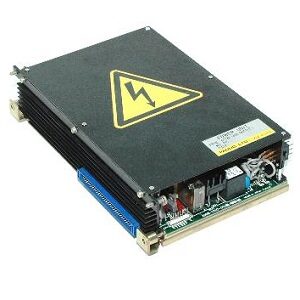
Fanuc Main Board1,376 Products
-
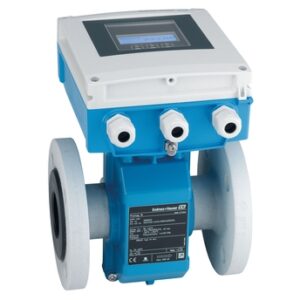
Flow Transmitter (Flow meter)286 Products
-
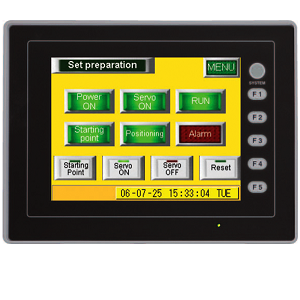
HMI/Touch Screen592 Products
-
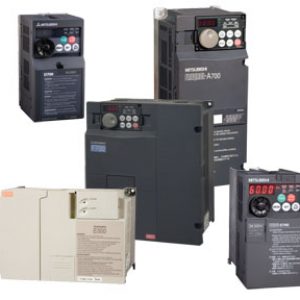
Inverter911 Products
-
Network/Signal4 Products
-
Others4,668 Products
-
Power Supply218 Products
-
Pressure Transmitter143 Products
-
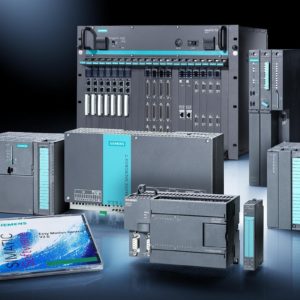
Programmable Logic Controller (PLC)6,288 Products
-
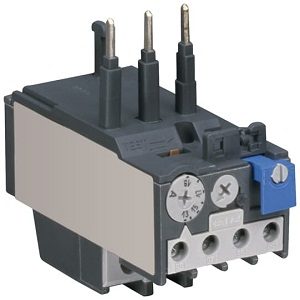
Relay927 Products
-
Sensor2,221 Products
-
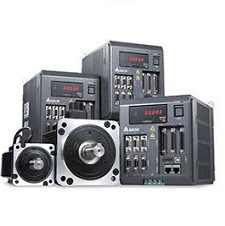
Servo Motors & Motor Drives4,363 Products
-
Switch897 Products
-
Timer93 Products
-
Uncategorized1,148 Products
-
Valve Controller & Manifolds15 Products
-
Variable Frequency Drives (VFD)258 Products
-
Yokogawa Remote Indicators16 Products